















How to Choose a B2B UI/UX Design Agency?


You’ve probably seen this movie before.
Act 1: Your team decides, “We need a redesign.” You pick an agency with the best portfolio and the smoothest deck.
Act 2: Kickoff! Figma files are flying, and stakeholders love the mockups. Launch day feels like a win.
Act 3: A quarter later, your activation rate hasn’t picked up, and churn is still high. Your CEO asks: “So... what did we actually get for $80K?”
Credits roll (No sequel planned).
You hired a UI/UX design agency that redesigned your interface, but not your experience. This guide is about avoiding that movie. By the end of this guide, you’ll have a practical decision framework to choose the right UI/UX design agency for B2B and SaaS.
Let’s go!
TL;DR
Here’s the short version of how to choose a UI/UX design agency for B2B and SaaS:
- Start with the business problem and define success in activation, retention, expansion, or ACV uplift.
- Prioritize B2B and SaaS expertise. A strong SaaS UI/UX design agency will speak in terms of funnels, cohorts, and user states.
- Stress-test their process and UI/UX design services. Look for a clear flow: discovery → research → IA → prototypes → UI → handoff → post-launch optimization.
- Read case studies for outcomes. You want reduced churn by X% or +Y% trial-to-paid, not just “We redesigned the dashboard.”
- Understand pricing and models upfront. Most B2B projects fall between $10,000 and $50,000, with extensive platforms often exceeding this range.
- Run a paid pilot. Start with a narrow scope (onboarding, one key flow) before trusting an agency with your entire product.
If you want a quick feel for what strong SaaS-focused partners look like in the wild, you can cross-reference this with ThunderClap’s roundup of the top B2B web design agencies.
What a UI/UX design agency really does for B2B and SaaS products
A good agency understands users and jobs-to-be-done. This means conducting interviews, observations, and analyses to understand how people use your product. When someone tells you, “IT admins want a clean dashboard,” ask them how they know.
- Did they watch 12 IT admins fail the same task?
- Did they run task-based usability tests?
- Or are they guessing based on best practices from 2019?
The best UI/UX design agency for B2B will hand you a journey blueprint that shows where users drop off and why. They map sign-up, onboarding, upgrade, renewal, and support flows. Then they reduce friction at each step.
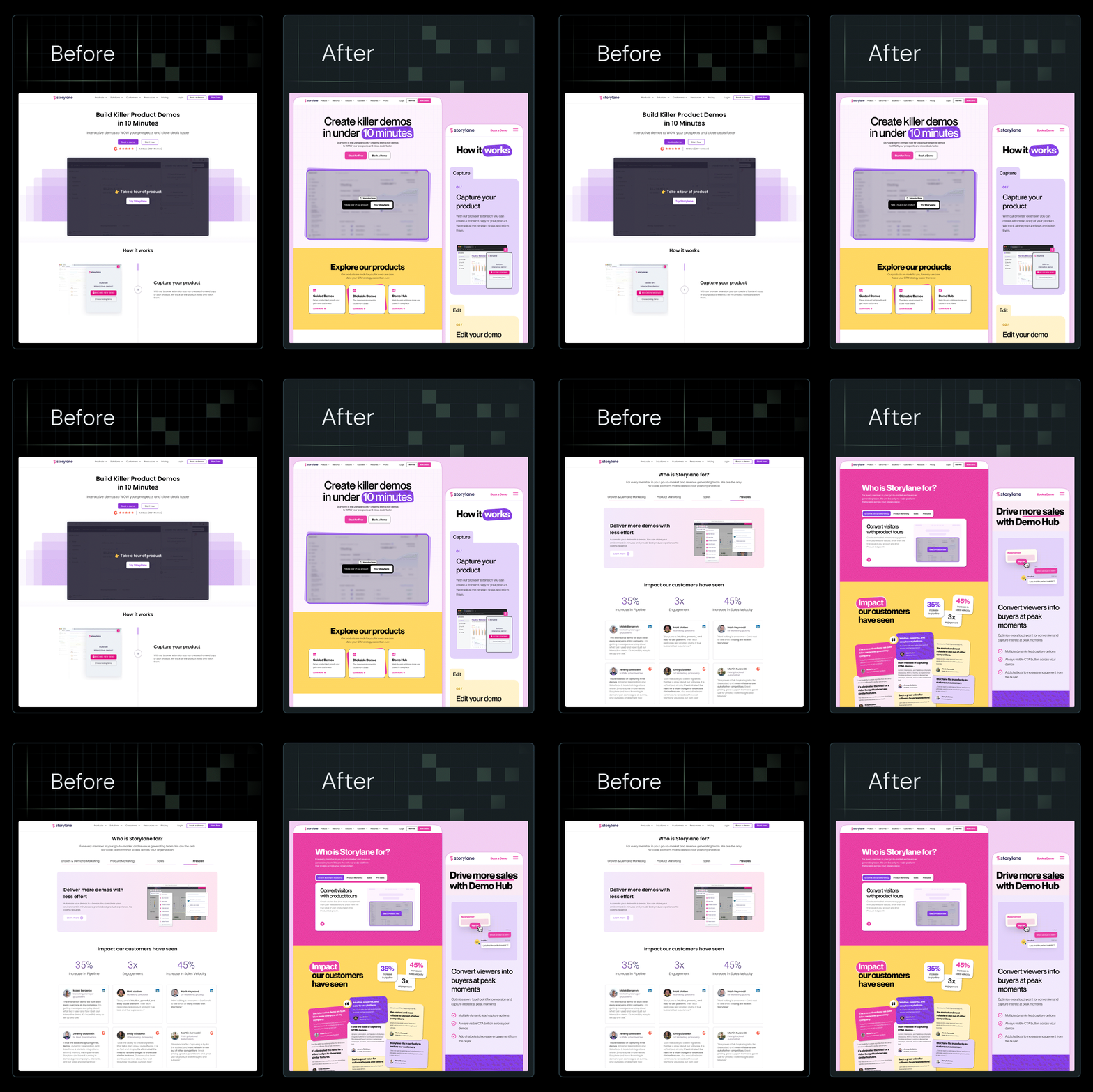
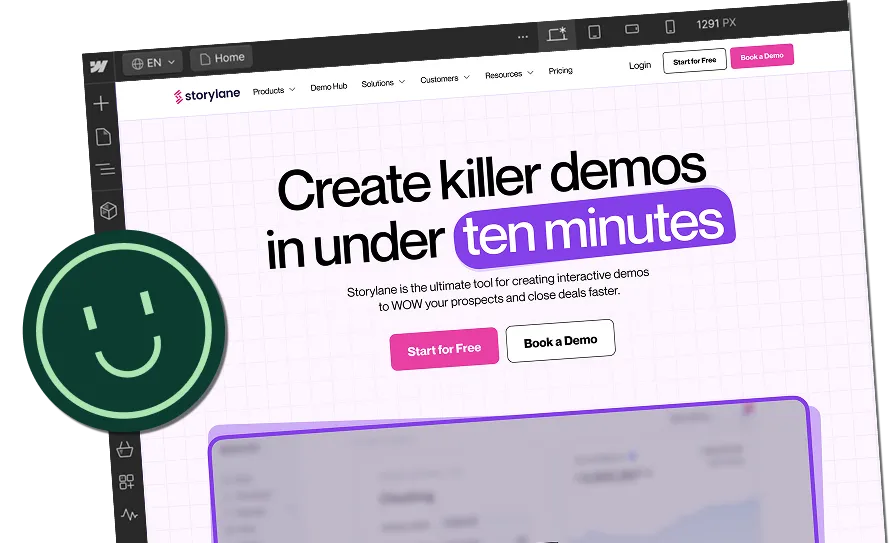
For example, when your PM says, “We need a settings page for the new AI feature,” you shouldn’t start from scratch. You can reuse components that already work. For Supademo (an interactive demo platform), ThunderClap delivered a Webflow component library that the Supademo team could update without compromising design consistency.
Also, look at the UI/UX design services page for any serious agency, and you’ll see the same building blocks: UX research, journey mapping, information architecture, wireframing, prototyping, UI design, and design systems. If an agency jumps straight to color palettes and animations, you’re not looking at the best UI/UX design agency for B2B; you’re looking at a surface-level studio.
For context on how UX and web design intersect for B2B growth, ThunderClap’s B2B Website Optimization Strategy is a helpful companion read.
Step 1: Define the business problem before you shop for “the best UI/UX design agency.”
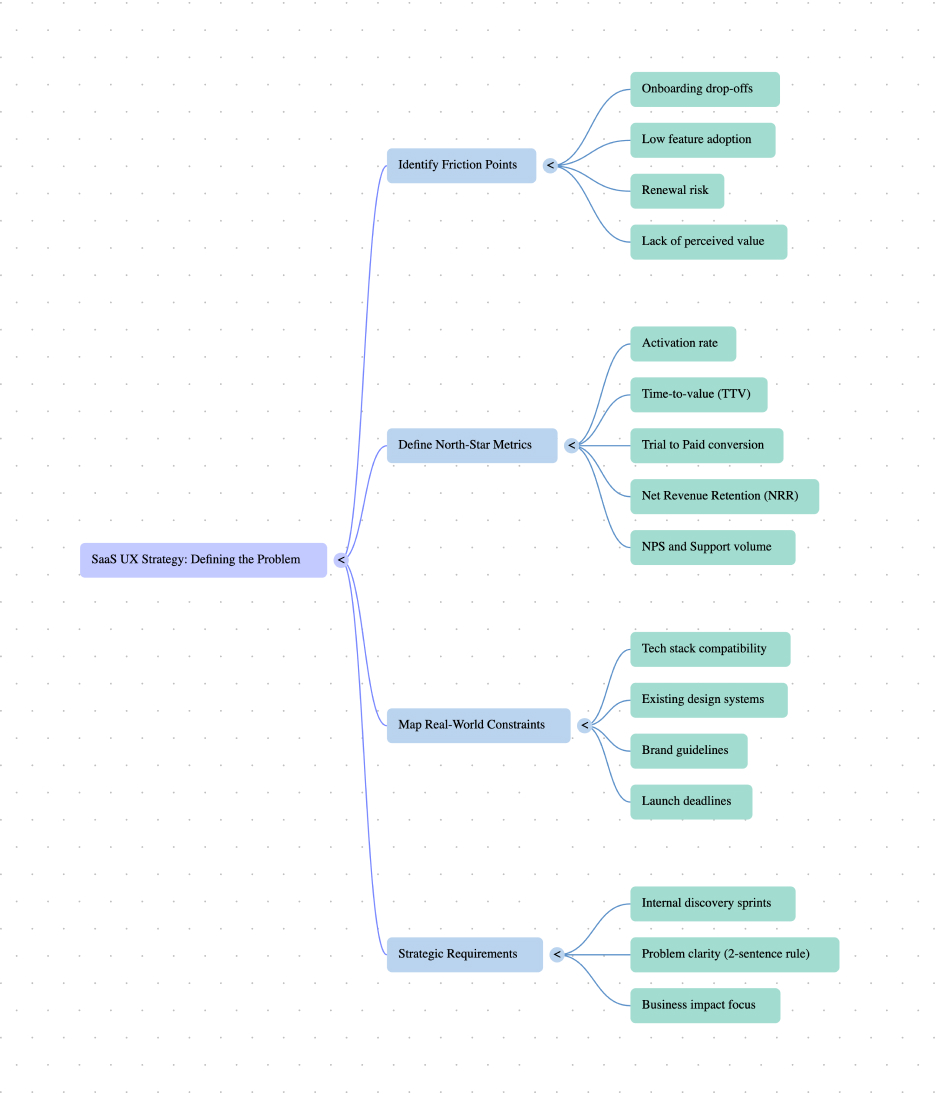
Most RFPs start with: “We need a redesign”. Instead, write a one-page “why now” doc before you speak to any UI/UX design agency. Many strong agencies (and every real UI/UX design agency for SaaS) will push you to clarify these before talking about UI.
Where are you leaking value?
Onboarding drop-offs? Feature adoption stuck at 12%? Renewal risk is rising because users are not receiving the new dashboard?
Which metrics matter?
Activation rate, time-to-value, NPS, support ticket volume, trial-to-paid conversion, expansion MRR, or net revenue retention? Pick 2-3 north-star KPIs and write them down.
What are your constraints?
Tech stack (React? Vue? Legacy Rails?), design tokens already in use, non-negotiable brand assets, or release timelines dictated by board meetings or funding milestones?
Step 2: Shortlist agencies with B2B and SaaS depth
Designing simple apps or marketing websites is different from building enterprise products with multi-step onboarding, role-based dashboards, and workflows that span teams and regions.
When vetting agencies, look specifically for SaaS-relevant websites. Do not judge by intricate landing pages. Check for a portfolio in a similar or sister industry. Also, see if they reference the SaaS vocabulary. For fintech and AI, see if they reference compliance (SOC 2, HIPAA, GDPR), data sensitivity, and industry-specific UX constraints.
You can cross-check agencies you’re considering against ecosystem players in lists like Top SaaS design agencies.
Ayush Barnwal, Partner and CEO, ThunderClap, runs us through common mistakes that happen during SaaS website development in this detailed piece:
Step 3: Read their UI/UX design services page like a product spec
Don’t just skim. Treat them like product documentation. Ask: what do they do, who do they work with, and what proof do they show?
Clear, end-to-end design services
Don’t just skim. Treat them like product documentation. Ask: what do they do, who do they work with, and what proof do they show?
What to look for
You should clearly understand how they go from research to final product. Don’t focus on a long list of deliverables. Focus on whether their process is clear and repeatable for products like yours.
- Research
- User journey mapping
- Prototyping
- Implementation support
ThunderClap focuses on B2B and SaaS work.
- Work connects website experience with product experience
- Their process covers strategy → structure → UI → implementation
How to compare
When you look at other agencies, ask:
- Do they talk about business outcomes?
- Do they understand SaaS workflows?
- Or do they just show generic redesigns and visuals?
The closer their work is to your product and users, the more useful they’ll be as a long-term partner.
“The team is thoughtful, responsive, and has exceptional design sensibility. Bringing our collective brand vision to life wasn’t easy, but the results speak for themselves - it looks amazing!” - Darryl Pinto, Growth Marketing Manager, Amazon
{{specficService}}
Step 4: Tear down their case studies for outcomes and constraints
Every UI/UX design agency claims they’re strategic. The proof is in their case studies. When evaluating, ask:
Do they state the problem in business terms?
“Reduce onboarding drop-off by 20%” is very different from “modernize the interface.” The best UI/UX design agency will frame the problem as a revenue or retention issue.
Are there real numbers?
Even directional metrics (+35% trial-to-paid, -25% support tickets, +80% organic demos) matter more than “great feedback from users.” If a case study doesn’t include a single KPI, it’s a portfolio piece.
Do they mention constraints?
Legacy tech, strict branding, partial rollouts, or short timelines all show they’ve executed in real-world conditions.
For example, when ThunderClap worked with 101 Gen AI (an AI for healthcare platform), we built to explain the product while maintaining a coherent visual language across every touchpoint. Find the entire case study here:
Step 5: Understand UI/UX pricing, models, and what drives costs
Budget shouldn’t be the only filter, but it’s a real one. The ranges below are directional, not quotes, but they’ll help you spot outliers. From multiple pricing guides and Clutch data, you can expect:
- Project-based pricing: Many UI/UX redesigns range from $8,000 to $50,000, with SaaS platforms and design systems exceeding $ 100,000.
- Hourly rates:
- India / South Asia: roughly $20–$60/hour
- US / Canada / Australia: often $100–$150/hour or more
- UK / Western Europe: typically $50–$100/hour
- Retainers: For ongoing UI/UX design services (continuous UX improvements, experiments, and support), agencies offer monthly retainers based on a fixed number of hours or a dedicated designer.
What influences cost?
- Scope (number of flows and screens, depth of research)
- Complexity (multi-role permissions, heavy data viz, mobile + web parity)
- Research intensity (field studies vs light usability testing)
- Location and seniority of the team
For web-and-UX combined projects, ThunderClap’s research on web design cost vs. ROI is a useful reference point for evaluating investment vs. outcomes.
{{specficBlog}}
Step 6: Evaluate collaboration style and process (beyond the pitch deck)
Finding the best UI/UX design agency for your product is as much about fit as it is about craft. On your discovery calls, look for these signs:
- Concrete examples: Can they describe how their process played out on a real project, what changed after research, what they cut, and what they shipped first?
- Engineering empathy: Mature agencies talk about design + dev handoff, not just handing over Figma files. They’ll mention design tokens, responsive behavior, and component libraries.
- Communication: Weekly reviews? Async Loom updates? Slack channels? The UI/UX design agency for SaaS you pick should mesh with how your product team already works.
(🎁 Bonus) Build vs Buy vs Partner: A decision tree for UI/UX design capacity
Before you hire any UI/UX design agency, ask: Should you even outsource this? Here’s a simple decision tree to help:
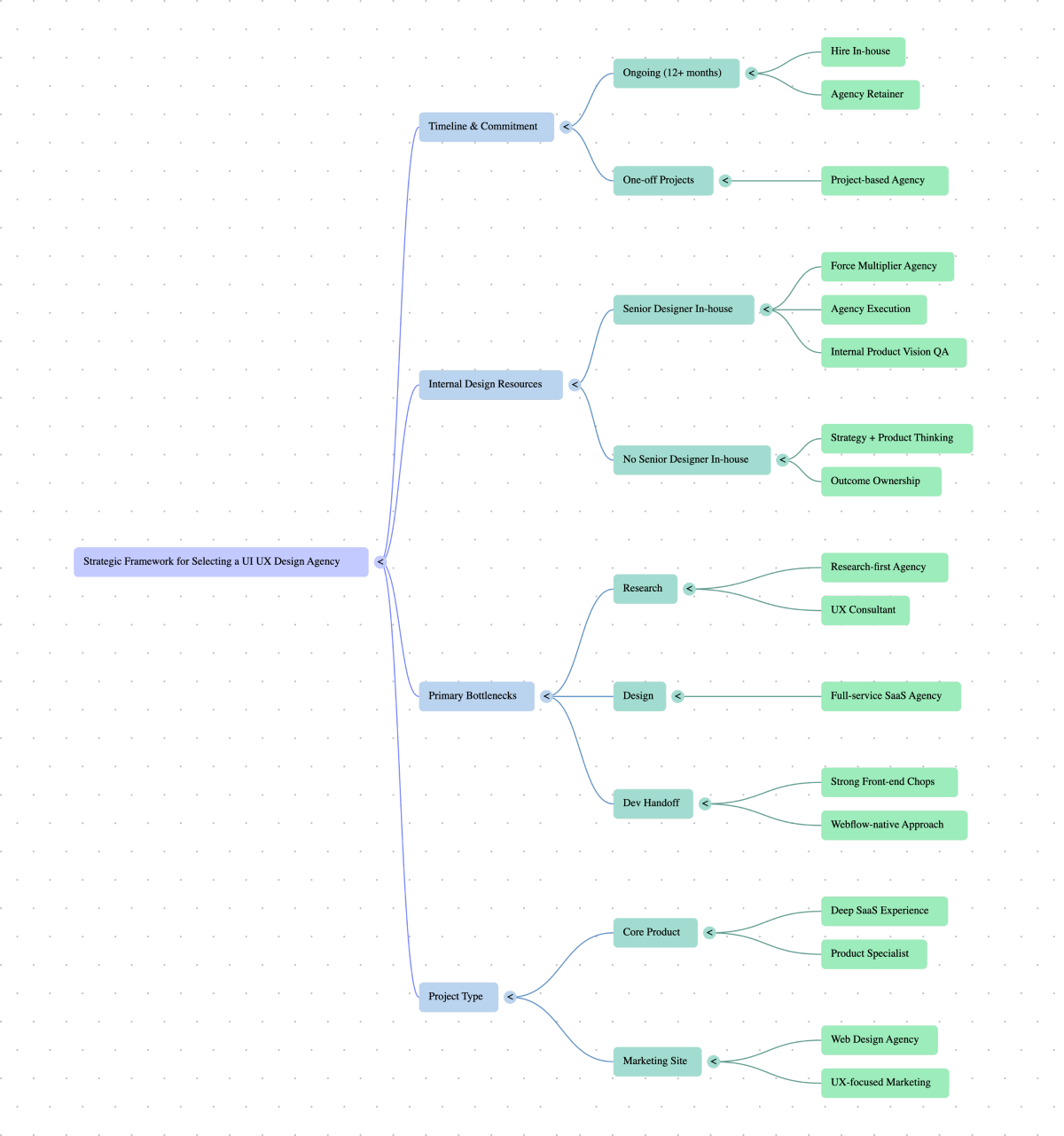
Where ThunderClap fits into your UI, UX, and website stack
ThunderClap’s sweet spot is where website, product story, and growth meet. With 140+ B2B websites shipped for numerous SaaS, fintech, AI, and B2B service brands, including Amazon, Razorpay, Storylane, Factors AI, roommaster, Rezolv, Shopline, and Deductive AI, ThunderClap behaves less like a generic “design factory” and more like a focused UI/UX design partner for revenue teams for:
- B2B marketing sites
- Product-led storytelling across web, demo, and trial
- Conversion architecture that aligns UI, copy, and funnels
If you already work with a UI/UX design agency for SaaS on your in-app experience, ThunderClap can own the “website + narrative + conversion” layer, tying together what users see on your site with what they experience in-product. For a sense of how that looks in practice, explore:
Factors (marketing attribution SaaS): ThunderClap redesigned their website to better position their product-led growth motion, resulting in higher-quality demo requests.
{{ctaBlock}}
FAQs
1. How to choose a UI/UX design agency
Start with your business goals, not a moodboard. Shortlist agencies with solid B2B or SaaS work, strong UX research, and outcome-focused case studies. Review their UI/UX design services, process, and collaboration style. Then compare pricing, run reference checks, and start with a focused pilot before committing to a full redesign.
2. How is a UI/UX design agency different from a web design agency?
A UI/UX design agency focuses on how your product works, including flows, usability, dashboards, and in-app experiences. A web design agency is typically focused on website marketing, storytelling, SEO, and page conversions for pages such as home, pricing, and resources. There’s overlap, but product usability and retention are firmly in the UI/UX territory.
3. How much does it cost to hire a UI/UX design agency?
Costs vary by scope, complexity, and region. Many UI/UX projects range from $8,000 to $50,000, with SaaS platforms often exceeding $100,000. Hourly rates often range from $20-$60 in South Asia to $100-$150+ in the US and other high-cost markets.



.webp)
Browse Similar Articles
Leading 5 SaaS Branding Agencies in Florida (That Actually Understand SaaS Growth)

.svg)
How to Turn Your B2B Website into a Self-Serve Growth Engine? (PLG Ready in 2026)

9-Step Website Copy Audit Checklist to Improve Conversions (Examples from Top B2B Brands)

.webp)
How to Choose the Right Fintech Web Development Company for Your Business
Top B2B Website Design Principles That Turn Visitors into Qualified Leads
%20Audit%20That%20Actually%20Improves%20Revenue.webp)
How to Do a Conversion Rate Optimization (CRO) Audit That Actually Improves Revenue
Web Design Agency vs. Freelancer vs. In-House: What Actually Works in 2026
5 CRO Agencies in London and How to Choose the Best CRO Agency for Your Business
The Ultimate Fintech B2B Positioning Guide for 2026 (That Actually Drives Conversions)
Mapping the B2B Buyer Journey to Improve Conversions Across Every Touchpoint
.webp)
7 Best Website Maintenance Companies in India for Growth-Led B2B Teams (2026)

.webp)
8 Best Healthcare Website Design Agencies for HIPAA-Compliant Sites in 2026
How to Find the Best Web Design Company in Houston, Texas for B2B Brands (6 Best Picks)
Positioning That Wins: How to Make Complex B2B Products Clear and Compelling
The Step-by-Step Website Redesign Process B2B Teams Use to Increase Conversions (Without Killing SEO and Pipeline)
7 Best Video Production Agencies for SaaS Product Walkthroughs and Feature Videos
How to Choose the Best B2B Website Maintenance Company: 9 Questions to Ask Before You Hire One

How to Choose a Web Design Company in San Francisco in 2026 (with Examples)

10 Best Web Design Companies in Florida in 2026 and How to Choose the Right One
How to Use Brand Storytelling on Your Website to Close More B2B Deals and Build Buyer Trust
SaaS CRO Best Practices: What High-Growth Brands Do Differently to Win Conversions
How a Rebranding Agency Can Redefine Your B2B SaaS Identity and Boost Pipeline
B2B Marketing Trends in 2026 That Directly Influence Pipeline and Revenue
Top 7 Video Marketing Agencies Driving B2B SaaS Brand Awareness in 2026
Why Partnering with a B2B Brand Positioning Agency Accelerates Market Differentiation

The Complete Website Redesign Checklist for B2B SaaS Teams Ready to Scale
.avif)
10 Best Webflow Development Agencies in India for 2026 (In-Depth Review)
10 Product Marketing Companies Powering the Fastest-Growing SaaS Brands in 2026
Website Copywriting Services vs In-House: What's Right for Your Business?

How to Choose a Marketing Agency That Understands B2B SaaS Growth Metrics

How to Choose a Video Marketing Agency That Understands B2B Storytelling
Outsourcing Web Design: Cost-Benefit Analysis for Mid-Market & Enterprise Brands
From Leads to Lifetime Value: How Growth Marketing Agencies Scale SaaS Revenue
Build a B2B Website Strategy That Aligns with Sales and Marketing Goals
Webflow vs WordPress: Which Platform Is Better for Your Business Website in 2026?
Fintech Web Design That Builds Trust: 8 UX Principles Every Fintech Site Needs
Optimizing for Intent: How B2B Website Messaging and UX Changes Help Capture Top-Funnel Buyers


12 Best B2B Web Development Agencies in the US to Build Scalable Websites

From Audit to Action: 8-Step Process to Optimize Your B2B Website Strategy for 2026 Buyers
How to Design a High-Converting Landing Page from Scratch (2026 Edition)
From Click to Customer: Proven Landing Page Conversion Optimization Techniques

How to Write Website Copy That Converts: A Step-by-Step Guide for 2026

How to Optimize a Landing Page for Maximum ROI: A Step-by-Step Breakdown

AI Landing Pages That Convert: 7 Design Principles Every AI Platform Should Follow
From Traffic to Pipeline: B2B Website Growth Strategy for Scaling Teams
B2B Website Optimization Strategy: Speed, UX, SEO, and CRO in One Playbook




Interested in seeing what we can do for your website?



.webp)
