















B2B Marketing Trends in 2026 That Directly Influence Pipeline and Revenue


TL;DR
- B2B marketing is moving beyond traffic and lead counts because buyers now choose vendors early, with 94% selecting before engaging sales and winning 77% of the time.
- That means websites, content, and AI tools must guide, personalize, reduce buyer risk, and grab attention.
- Teams that align marketing, sales, and RevOps, focus on proof-driven content, and run continuous experiments outperform fragmented approaches, learning faster and optimizing smarter.
- ThunderClap helps B2B brands turn these trends into action, building pipeline-first websites and trust-focused content that converts visitors into revenue.
The last two years have overwhelmed B2B teams with tools, dashboards, and AI promises. Between 2024 and 2025, almost every marketing organization published more content, launched more campaigns, tested more channels, and reported more activity. On paper, marketing looked busy. In reality, many pipelines stayed flat. That disconnect is no longer anecdotal.
According to a recent report, 94% of B2B buying groups now choose a preferred vendor before ever engaging sales, and that early choice wins the deal nearly 77% of the time. Meanwhile, 89% of recent purchases now include AI capabilities, and 58% of buyers are engaging sellers earlier, specifically to clarify gaps in AI-related information.
That gap is precisely where 2026 steps in.
Leaders will no longer ask how many blogs you published or how much site traffic you drove. They will ask questions like “Which campaigns created opportunities?” and “How many sales conversations did marketing influence?” rather than “How many sessions did we generate?”
At ThunderClap, we believe 2026 will draw a sharp line between teams that chase attention and teams that build trust and revenue. We’ve seen this shift across 129+ projects, including Amazon, Storylane, Deductive.ai, ClearlyRated, and Factors, helping SaaS brands, fintech, AI, and enterprise tech clients earn visibility and conversions by aligning content, SEO, and buyer intent in a way AI systems and humans both reward.
This blog breaks down the B2B marketing trends that actually change pipeline behavior. These trends are already reshaping how buyers evaluate vendors and how leadership evaluates marketing.
Trend 1: Pipeline-First Marketing Becomes the Default Operating Model
B2B marketing is moving decisively away from lead volume and toward pipeline creation. In 2026, marketing success will no longer start and end with MQLs. Teams that still focus on leads risk losing credibility with sales and the C-suite because those numbers rarely predict actual opportunities.
Most organizations know the shift is happening. According to benchmark research, 74% of B2B organizations now claim pipeline or revenue as their primary metric, but only 16–20% have achieved true revenue marketing maturity where marketing directly impacts pipeline and bookings. That means most teams still optimize for the wrong things, even as expectations change.
Forrester’s 2025 B2B marketing and sales predictions highlight that organizations must reorient their strategies around customer buying behavior and digital self-serve channels to influence deals effectively. When MQL metrics dominate dashboards, it reduces credibility because the numbers no longer reflect real impact on the pipeline or bookings.
For example, Snowflake provides a prime example of pipeline-first marketing in action. Their ABM team used Snowflake AI to predict which accounts were most likely to respond and book meetings. This approach drove a 2.3x lift in meetings booked and a 54% increase in CTR while optimizing both budget and engagement. By focusing on high-potential accounts, the team cut spend by 38% while delivering measurable pipeline impact.
The ABM team built a “meeting propensity” AI model that enabled smarter budget allocation, increased accountability, and real-time optimization. They also personalized ad copy at scale using AI, improving engagement with top-priority accounts and demonstrating that efficiency and personalization can coexist.
Trend 2: Websites Evolve from Brand Assets to Revenue Engines
In B2B, the website carries much of what sales used to do. According to Gartner research, 61% of B2B buyers now prefer a rep-free buying experience and rely on self-service information for the early stages of evaluation.
Buyers increasingly complete 70–90% of their research before contacting a sales rep, and digital channels such as self-service ecommerce and online interactions now account for 34% of total B2B sales revenue. Websites have become frontline revenue drivers, and buyers expect seamless experiences across every touchpoint.
As a WebFlow Enterprise Partner, ThunderClap creates high‑converting, responsive, scalable websites designed to drive revenue. Our expert team focuses on SEO and CRO best practices to ensure websites perform, not just look good. We stay up to date on design and development standards so our clients get results that matter.
In fact, our work speaks for itself.
.webp)
For example, Factors, a B2B marketing analytics and attribution platform, needed to translate a complex, data‑heavy product into a site that felt intuitive, approachable, and confidence‑building for marketers. We anchored the experience around the “Marketing Compass” concept, positioning Factors as a guide that helps teams navigate buyer journeys with clarity and direction.
Here’s what we did:
- Balance precision with warmth through hand‑drawn illustrations and contour‑line motifs
- Use a distinct orange‑led palette to stand apart from blue‑heavy, data‑centric competitors
- Structure layouts and hierarchy to keep the product story clear and scannable
- Design interaction patterns to support understanding, not distract from core messaging
The result was a website that supported product storytelling, reinforced brand positioning, and set a strong foundation for growth‑focused engagement. Ayush Barnwal, Partner at ThunderClap, highlights how the redesign created a premium, globally‑ready brand for Factors.ai while keeping their existing messaging intact.
{{specficBlog}}
Trend 3: B2B Content Shifts from Volume to Proof‑Driven Authority
The web is flooded with AI‑generated content, and buyers can tell. Algorithms can tell, too. Research shows that as many as 52% of customers will disengage if content appears AI‑generated or emotionally detached. Authentic, human, experience-driven content captures attention and builds connection.
In short, the era of publishing endless blogs is ending. High-performing B2B teams now create content that answers buyer questions, demonstrates experience, and earns trust. Last year, many marketers kept their content strategies “meh,” constituting average effort, stable results, and little change. This year, 97% of marketers report having a content strategy.
Among them:
- 13% say it significantly improved results and ROI
- 48% see modest gains
- 30% remain stable
- 8% say the decline somewhat
- 1% say the decrease is significant
Most content still generates minimal business impact, but content that focuses on comparison pages, in-depth use-case explainers, case studies, and thought leadership drives far more value with less volume. Buyers respond to substance, not noise.
Trend 4: AI Moves from Content Creation to Conversion & Revenue Optimization
AI is no longer just a content-writing tool. In B2B marketing, teams apply AI to improve personalization, qualification, routing, and conversion efficiency. AI now sits inside the funnel, shaping buyer experiences rather than just fueling the content calendar. Research shows AI‑driven personalization can boost engagement by up to 42% and conversions by 20-40% when it tailors messaging and experiences to individual buyer behavior.
You can achieve this by allocating about 30% of your content and digital experience budget to:
- Deploying conversational AI tools that tailor responses in real time
- Using reasoning models and sentiment analysis to refine messaging
- A/B testing AI‑driven interactions against human‑led engagement to refine performance
The data shows the average conversion rate without AI sits near 2% across many channels, yet AI‑augmented experiences, especially chatbots and personalized journeys, can achieve conversion rates as high as 33%.
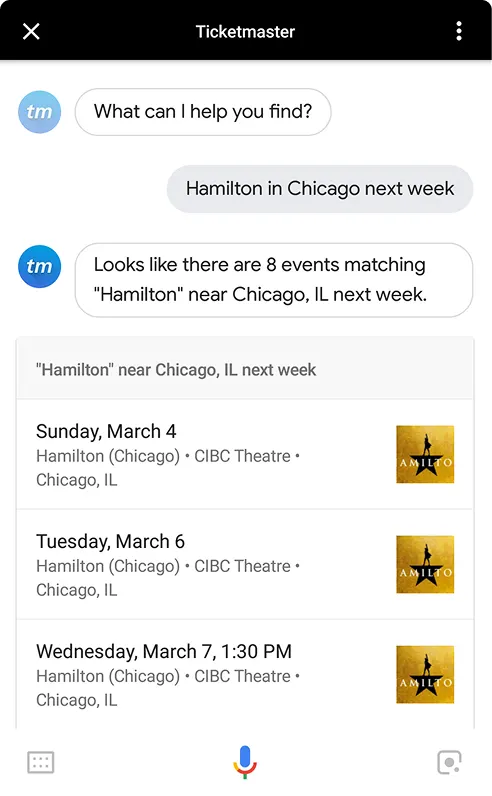
For example, Ticketmaster implemented a voice-enabled AI assistant to provide faster, more personalized interactions. Customers can ask, “What events are happening this weekend?” and the system delivers tailored recommendations while enabling purchases directly within the interface. This AI-driven workflow reduces friction, improves engagement, and accelerates conversions, showing how conversational AI can enhance routing, personalization, and revenue outcomes at scale.
Suggested read: B2B Website Optimization Strategy: Speed, UX, SEO, and CRO in One Playbook
Trend 5: RevOps + Marketing + Sales Alignment Becomes Non-Negotiable
In 2026, high-performing B2B teams will no longer tolerate silos. Marketing, sales, and customer success will align, and RevOps will serve as the default operating model. RevOps brings those teams together using shared data, accountability, and real‑time visibility across the buyer journey. This unified approach eliminates conflicting goals and disconnected reporting that slow growth and obscure actual performance.
Account-based strategies (ABM and ABA) will thrive within this framework. ABM relies on cross-functional coordination, making it a natural extension of RevOps. With shared data and tighter collaboration, teams identify the right accounts and deliver consistent experiences from first touch through renewal. AdRoll’s 2026 ABA study shows aligned teams achieve 60% higher win rates and 72% stronger customer engagement, proving that coordinated go-to-market motions outperform fragmented efforts.
Moreover, organizations with mature revenue operations were 1.4× more likely to exceed revenue goals by at least 10% compared with those without. This performance reflects more efficient lead routing, better handoffs, and unified forecasting across departments.
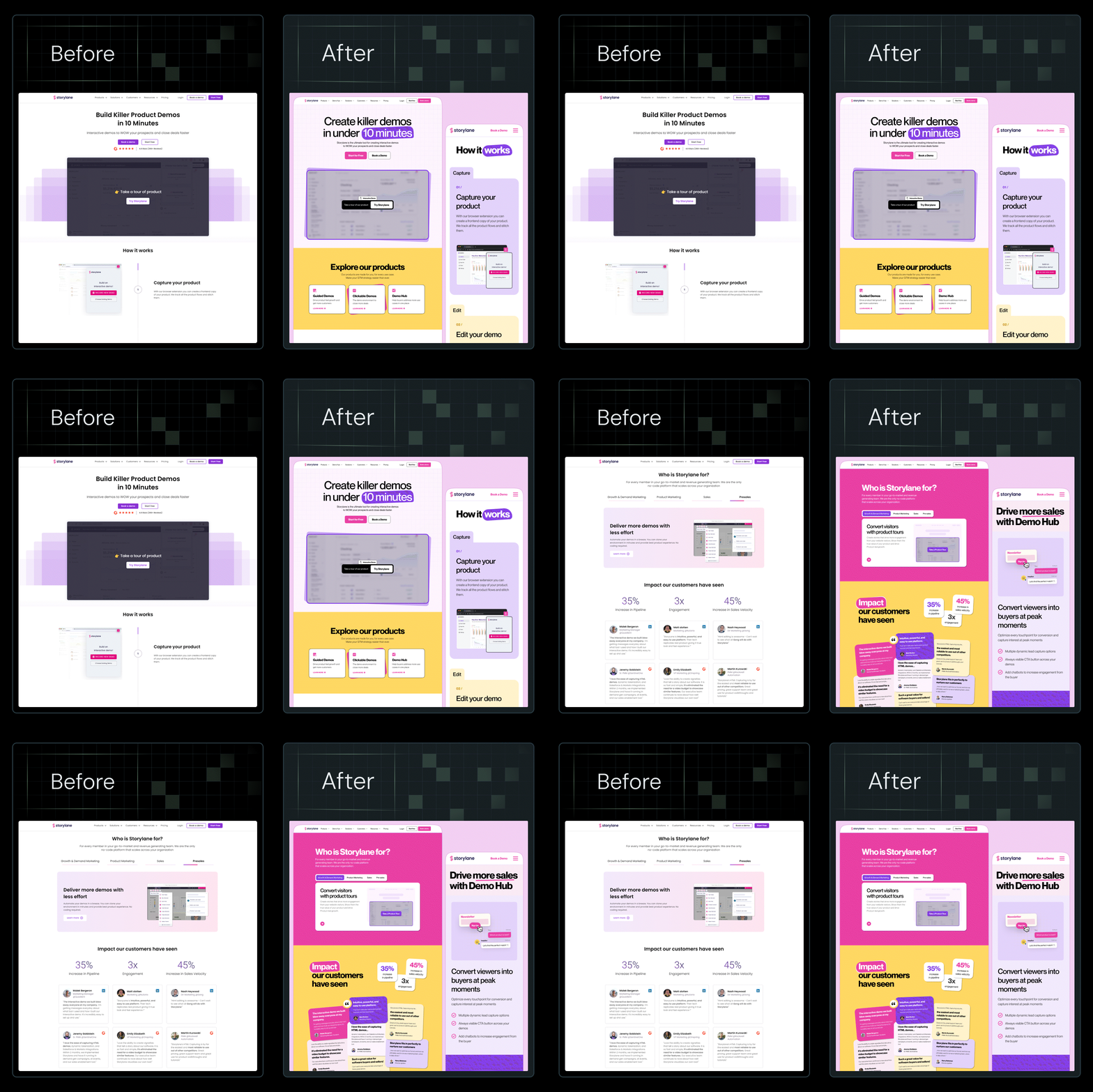
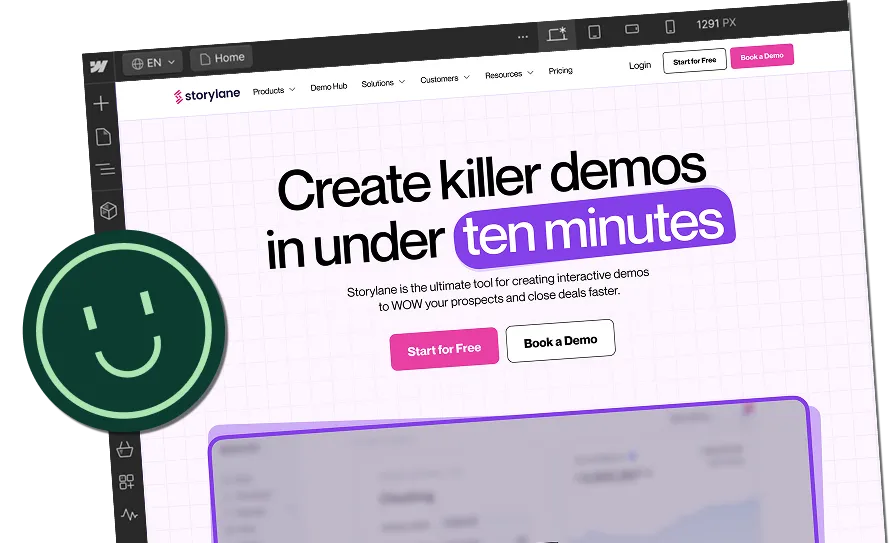
When we redesigned Storylane’s website, we leaned into this alignment. We introduced mood boards, a clean yet playful visual identity, and custom illustrations. The copy remained unchanged, yet impressions rose by 36%, and demo requests increased by 30%.
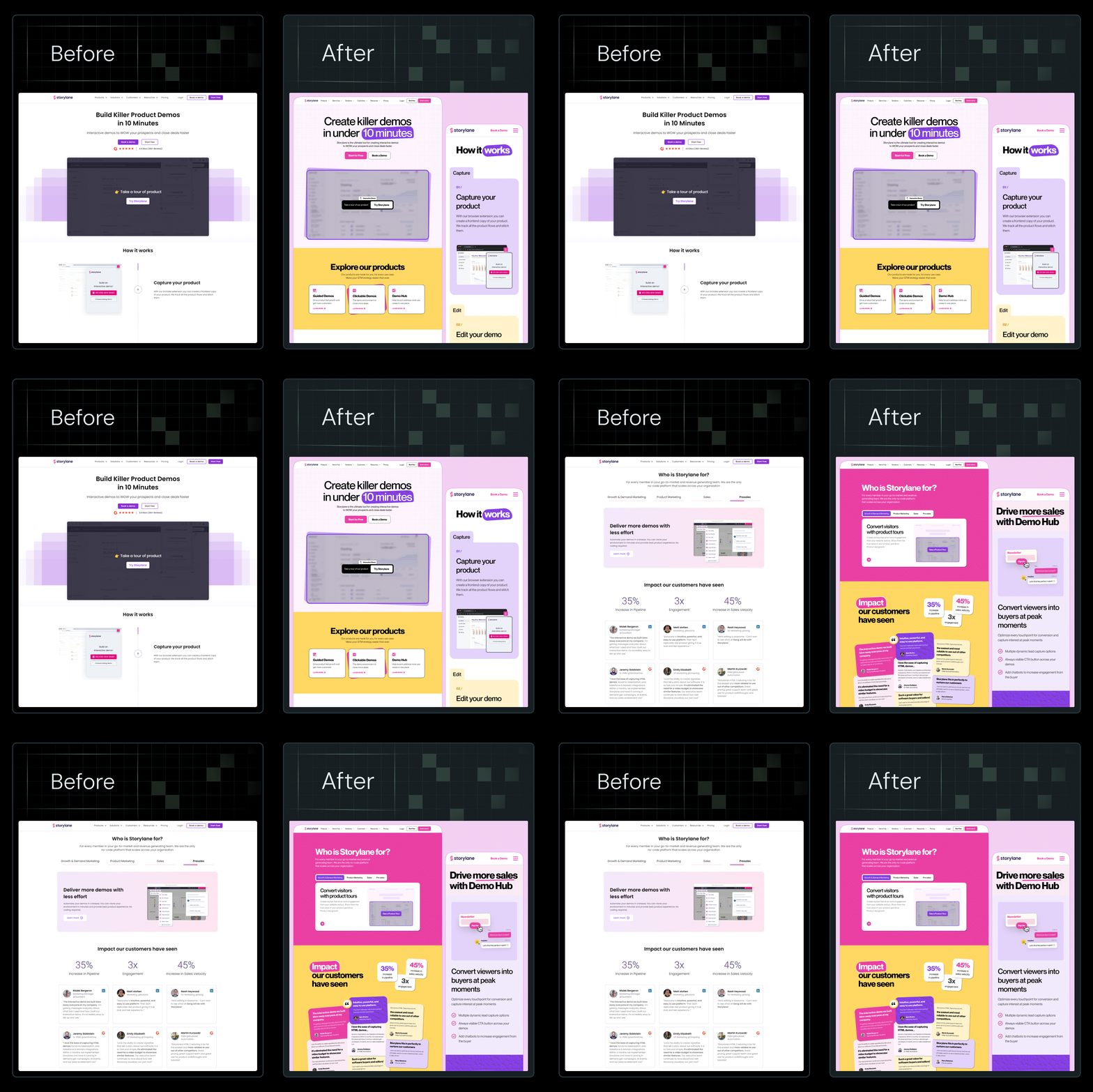
Every change supported alignment between marketing and sales. Form submissions flowed directly into CRM pipelines, routed by ICP scoring, and analytics dashboards allowed RevOps to monitor demo-to-SQL conversions. This integrated approach mirrors what leading B2B companies are doing today.
Here’s a complete breakdown in this LinkedIn post by Kiran Kulkarni, Partner and Head of Growth at ThunderClap, where she shares the detailed process and before-and-after results.
Trend 6: Trust, Proof, and Risk Reduction Outperform Differentiation Messaging
Longer buying cycles and larger committees force buyers to minimize risk before engaging vendors. Clever positioning or brand language no longer convinces prospects. They demand visible proof that a company delivers on its promises. Companies that fail to show trust and credibility early lose buyers before sales conversations begin.
The 2025 Edelman Trust Barometer highlights that widespread grievance and declining institutional trust have put pressure on businesses to act transparently and authentically to earn credibility. Buyers are less inclined to take promises at face value and more likely to evaluate evidence that companies do what they say they will do.
In fact, half of mid‑market technology buyers rank trust above cost when selecting vendors. This signals that risk avoidance often outweighs traditional purchasing criteria such as price or innovation. This means buyers expect proof, not promises, from vendors.
Here’s what you need to do:
- Surface trust signals early and often on your website and in campaigns
- Show customer logos and case studies next to calls-to-action
- Highlight awards, compliance badges, and security certifications
- Include independent review scores to provide third-party validation of your credibility
- Display ROI evidence, documented results, and real user outcomes
- Focus on transparency and proof in every interaction
HubSpot illustrates this strategy effectively. They publicly showcase customer reviews, awards, and third‑party validation directly on their product and marketing pages, helping visitors assess credibility before conversion.
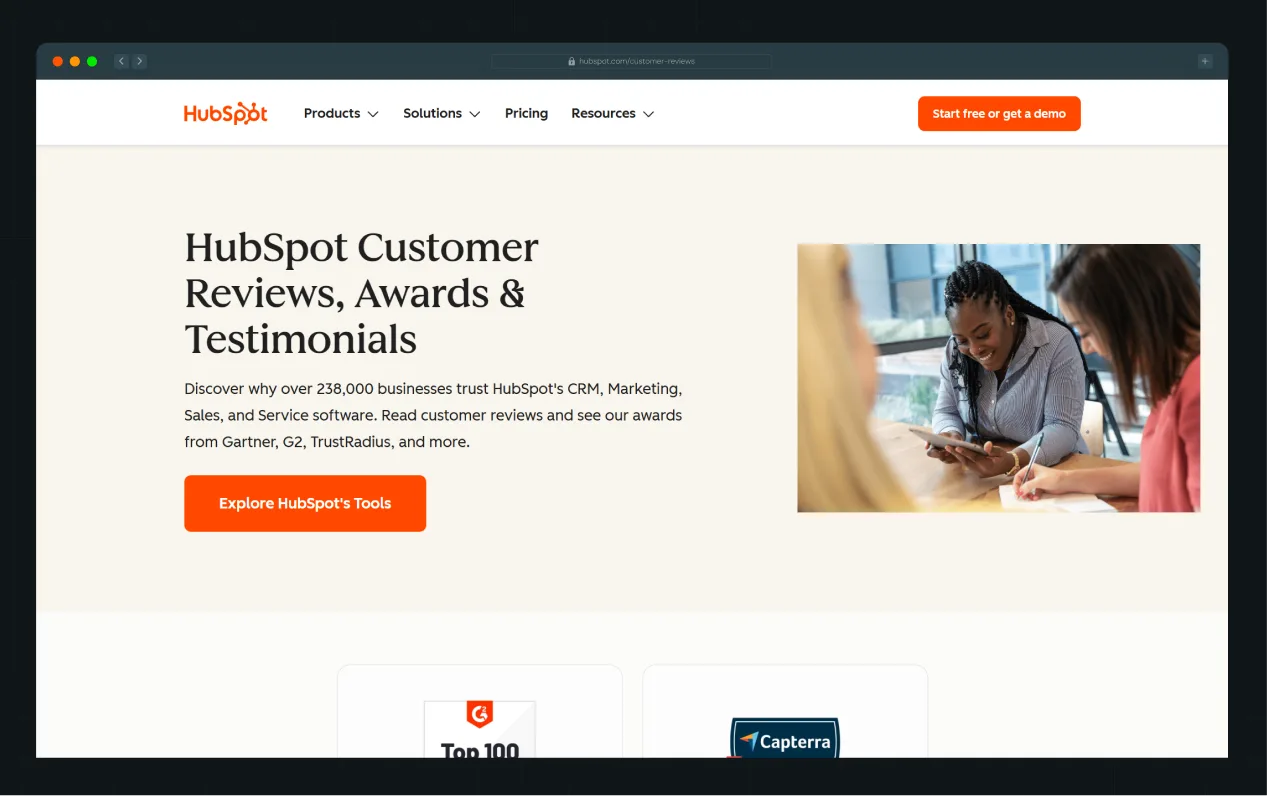
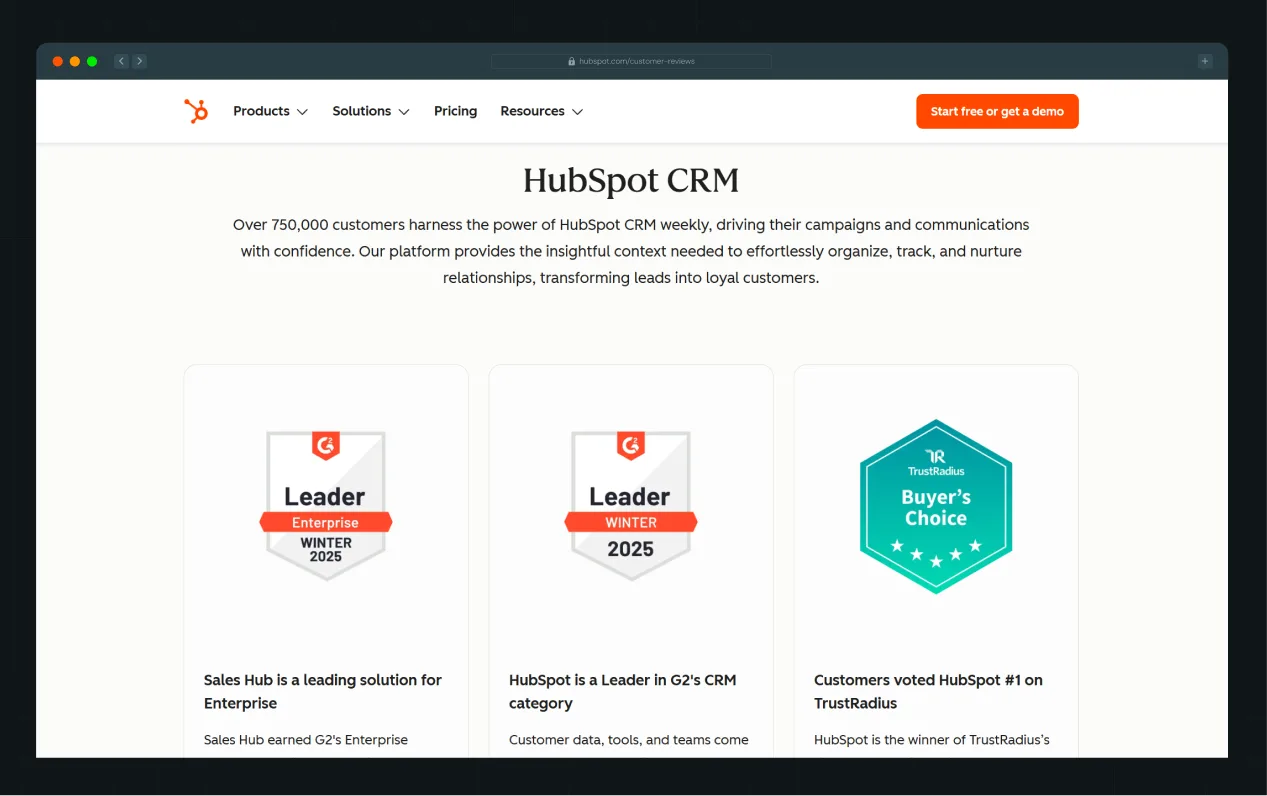
Its reviews portal highlights recognition from G2, TrustRadius, and Gartner, showing how thousands of businesses rate HubSpot products across core categories, which reinforces buyer trust.
Trend 7: Continuous Experimentation Replaces Big Campaign Launches
One of the biggest B2B marketing shifts for 2026 is this. Marketing teams no longer rely on infrequent, big launches to drive growth.
Most high-performing teams now test weekly across messaging, offers, and conversion paths. Research shows that companies running 10+ experiments per month grow roughly 2.1× faster than those that don’t.
This means marketing now operates more like a product team. Teams push changes, measure results, and iterate quickly instead of waiting for a single big release. Advanced experimentation, including AI-driven and multi-variant testing, allows marketers to allocate traffic to the highest-performing variations dynamically, speeding up learning and improving conversions across channels.
How to build a culture of continuous experimentation:
- Create a testing roadmap with weekly experiments across messaging, offers, and pages
- Measure results consistently and use data to refine subsequent experiments
- Test everything that impacts buyer decisions, including copy, CTA placement, forms, and page layouts
- Leverage AI tools to optimize variations in real time
- Document learnings so insights scale across teams and campaigns
2026 is the Year Marketing Proves Revenue Impact
As we’ve seen, all the trends point in one direction: accountability.
Marketing leaders can no longer measure success by activity alone. They must tie every campaign, every interaction, and every touchpoint directly to the pipeline and revenue. Technology provides the tools, but disciplined execution makes the difference between insight and impact.
At ThunderClap, we help B2B teams turn these trends into action, from pipeline-first websites to AI-driven personalization, content that builds authority, and conversion-focused experimentation systems. Our process starts with mood boards that capture brand personality, establish scalable systems for consistency, and bring products to life with custom illustrations, clean layouts, and trust-driven storytelling.
With us, you get:
- Bold design that reflects your product’s personality
- Bold design and messaging that differentiate your product in competitive markets
- Scalable systems that maintain visual consistency as you grow
- CRO playbooks proven across SaaS, fintech, and AI enterprise tech
- A partnership mindset, acting as an extension of your team
If you’re ready to make your website and landing pages your #1 salesperson, we’ll audit your funnel, identify challenges, and build a roadmap that delivers measurable results in weeks, not months. Book a demo now to get started.
{{ctaBlock}}
FAQs
1. What are the biggest B2B marketing trends to watch in 2026?
Pipeline-first marketing, revenue-driven websites, proof-led content, AI-powered optimization, and tighter RevOps alignment are the most impactful trends in 2026. At ThunderClap, we help SaaS and B2B clients drive measurable pipeline growth by linking campaigns to opportunities, guiding buyers with conversion-focused websites, creating ROI-driven content, leveraging AI for personalization, and aligning marketing, sales, and RevOps for predictable results.
2. Are AI and automation essential in B2B marketing today?
Yes. AI is increasingly used to personalize experiences, improve conversion rates, and reduce speed-to-lead, all of which directly influence revenue.
3. How can B2B marketers stay updated on upcoming marketing trends?
To stay updated, you must follow operator-level voices on LinkedIn, track SaaS benchmarks, review reports from Gartner and HubSpot, and regularly audit how marketing impacts pipeline metrics. ThunderClap also publishes insights and case studies on B2B trends that connect marketing actions directly to revenue outcomes.



.webp)
Browse Similar Articles





Leading 5 SaaS Branding Agencies in Florida (That Actually Understand SaaS Growth)

.svg)


How to Turn Your B2B Website into a Self-Serve Growth Engine? (PLG Ready in 2026)


9-Step Website Copy Audit Checklist to Improve Conversions (Examples from Top B2B Brands)

.webp)

How to Choose the Right Fintech Web Development Company for Your Business

Top B2B Website Design Principles That Turn Visitors into Qualified Leads

%20Audit%20That%20Actually%20Improves%20Revenue.webp)
How to Do a Conversion Rate Optimization (CRO) Audit That Actually Improves Revenue
Web Design Agency vs. Freelancer vs. In-House: What Actually Works in 2026

5 CRO Agencies in London and How to Choose the Best CRO Agency for Your Business

The Ultimate Fintech B2B Positioning Guide for 2026 (That Actually Drives Conversions)

Mapping the B2B Buyer Journey to Improve Conversions Across Every Touchpoint
.webp)
7 Best Website Maintenance Companies in India for Growth-Led B2B Teams (2026)


.webp)

8 Best Healthcare Website Design Agencies for HIPAA-Compliant Sites in 2026




How to Find the Best Web Design Company in Houston, Texas for B2B Brands (6 Best Picks)

Positioning That Wins: How to Make Complex B2B Products Clear and Compelling
The Step-by-Step Website Redesign Process B2B Teams Use to Increase Conversions (Without Killing SEO and Pipeline)

7 Best Video Production Agencies for SaaS Product Walkthroughs and Feature Videos



How to Choose the Best B2B Website Maintenance Company: 9 Questions to Ask Before You Hire One




How to Choose a Web Design Company in San Francisco in 2026 (with Examples)

10 Best Web Design Companies in Florida in 2026 and How to Choose the Right One

How to Use Brand Storytelling on Your Website to Close More B2B Deals and Build Buyer Trust

SaaS CRO Best Practices: What High-Growth Brands Do Differently to Win Conversions


How a Rebranding Agency Can Redefine Your B2B SaaS Identity and Boost Pipeline


Top 7 Video Marketing Agencies Driving B2B SaaS Brand Awareness in 2026

Why Partnering with a B2B Brand Positioning Agency Accelerates Market Differentiation

The Complete Website Redesign Checklist for B2B SaaS Teams Ready to Scale

.avif)
10 Best Webflow Development Agencies in India for 2026 (In-Depth Review)

10 Product Marketing Companies Powering the Fastest-Growing SaaS Brands in 2026
Website Copywriting Services vs In-House: What's Right for Your Business?


How to Choose a Marketing Agency That Understands B2B SaaS Growth Metrics


How to Choose a Video Marketing Agency That Understands B2B Storytelling

Outsourcing Web Design: Cost-Benefit Analysis for Mid-Market & Enterprise Brands

From Leads to Lifetime Value: How Growth Marketing Agencies Scale SaaS Revenue
Build a B2B Website Strategy That Aligns with Sales and Marketing Goals

Webflow vs WordPress: Which Platform Is Better for Your Business Website in 2026?
Fintech Web Design That Builds Trust: 8 UX Principles Every Fintech Site Needs



Optimizing for Intent: How B2B Website Messaging and UX Changes Help Capture Top-Funnel Buyers




12 Best B2B Web Development Agencies in the US to Build Scalable Websites

From Audit to Action: 8-Step Process to Optimize Your B2B Website Strategy for 2026 Buyers


How to Design a High-Converting Landing Page from Scratch (2026 Edition)

From Click to Customer: Proven Landing Page Conversion Optimization Techniques

How to Write Website Copy That Converts: A Step-by-Step Guide for 2026



How to Optimize a Landing Page for Maximum ROI: A Step-by-Step Breakdown


AI Landing Pages That Convert: 7 Design Principles Every AI Platform Should Follow
From Traffic to Pipeline: B2B Website Growth Strategy for Scaling Teams


B2B Website Optimization Strategy: Speed, UX, SEO, and CRO in One Playbook




Interested in seeing what we can do for your website?



.webp)
