















What Is Brand Messaging? A Practical Framework for B2B & SaaS Companies


TL;DR
- Brand messaging defines how you communicate value, not just what you sell, which shapes how your audience understands your business from the very first interaction.
- That first interaction matters because the strongest SaaS companies communicate value within seconds of a website visit, helping visitors quickly decide whether to stay or leave.
- This is exactly where a clear brand messaging strategy comes into play, as it removes confusion and guides users to take action.
- To make that strategy effective, your messaging must focus on customer outcomes rather than product features, since buyers care about results, not technical details.
- When you consistently communicate those outcomes across your website, sales, and marketing channels, you create a unified experience that builds trust faster.
When was the last time a prospect landed on your website, clicked around for a few seconds… and left without taking any action?
If you're like most SaaS companies, it probably happened today.
Now picture the opposite: You land on a page, read one line, and instantly understand the value. You stay, explore, and take action.
This may have happened today, too.
That difference comes down to one thing: brand messaging.
Many B2B and SaaS companies invest heavily in design, ads, and product development, yet struggle to communicate their value clearly. And when your message isn’t clear, no amount of traffic or features can fix the problem.
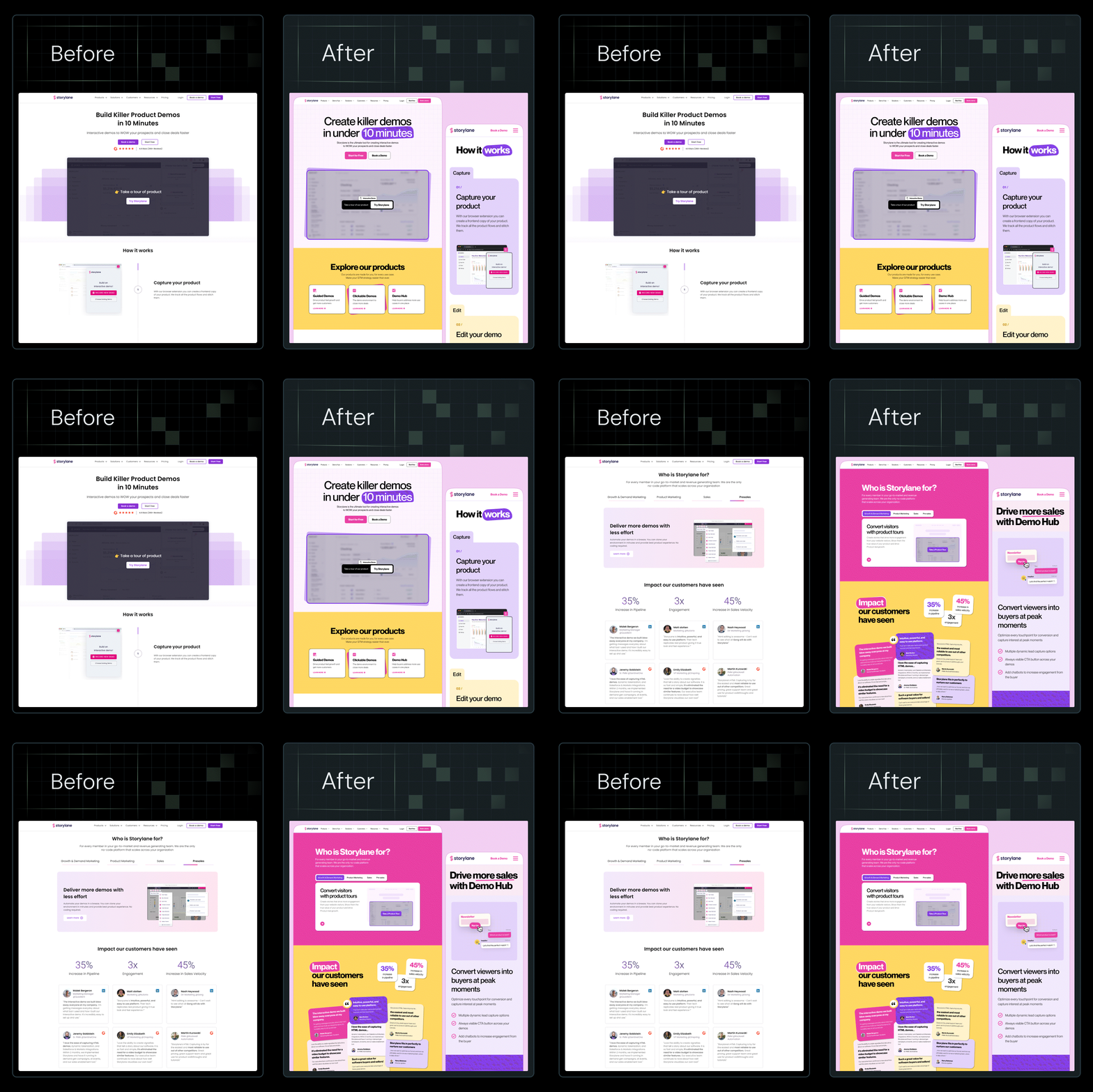
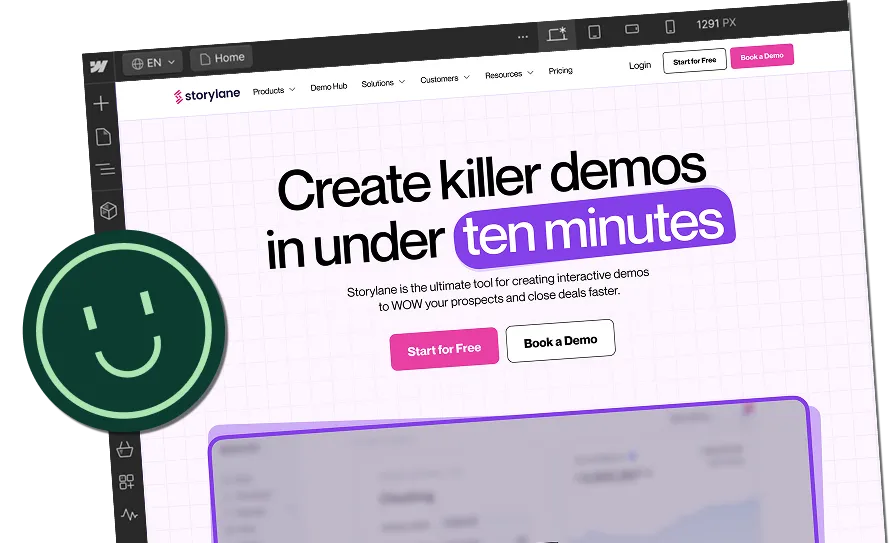
That’s exactly why more SaaS leaders are turning to branding agencies, especially those that specialize in B2B tech, SaaS positioning, and website rebrands, to rebuild not just how their brands look but also how they communicate. At ThunderClap, we have rebuilt more than 129 B2B websites for SaaS, fintech, AI, and enterprise tech companies, including Amazon, Storylane, Factors, Roommaster, Zamp, Dropit, Wizcommerce, and DPDZero, and created high-converting landing pages that deliver measurable results.
In this guide, you will learn what brand messaging is, why it matters, and how to build a practical framework that turns your messaging into a growth engine.
What Is Brand Messaging in Marketing?
Brand messaging in marketing is the set of messages and narratives a company uses to communicate its value to customers.
It typically includes:
- Value proposition
- Positioning statement
- Brand voice and tone
- Core messaging pillars
Think of it as the foundation of every conversation your business has with its audience.
Where brand messaging appears
Brand messaging isn’t just your homepage headline or a catchy tagline. It shows up everywhere your prospects interact with your business, often shaping their perception before they ever speak to your team.
Here are the key places where your messaging needs to be clear, consistent, and compelling:
1. Your website
This is the most obvious and most critical touchpoint. From your homepage to product pages, your messaging should instantly answer three questions:
- What you do
- Who it’s for
- Why it matters
If visitors have to “figure it out,” you’ve already lost them.
2. Landing pages
Whether it’s for ads, campaigns, or specific features, landing pages need sharper, more focused messaging. This is where clarity directly impacts conversions, where every word should drive action.
3. Sales conversations
Your sales team relies on messaging more than anyone else. If your positioning isn’t clear, they end up improvising, which leads to inconsistent pitches and lost deals.
4. Marketing campaigns
From ads to email sequences, your messaging determines whether someone clicks, engages, or ignores you. Strong messaging makes your campaigns feel relevant instead of generic.
5. Product experience
Your onboarding flows, in-app copy, and feature descriptions are all part of your messaging. If users don’t understand how to quickly get value, they won’t stick around.
6. Content and thought leadership
Blogs, case studies, and social content reinforce how your brand thinks and communicates. This is where you build trust and differentiate beyond features.
Why messaging matters more in B2B and SaaS
The last thing you want is for a salesperson, or any representative of your company, not to be able to describe your brand in a sentence or two. If your own team can’t explain what you do with confidence, how will a prospective customer ever understand your value?
A simple exercise can reveal the shortcomings.
To begin with, gather your team and ask everyone to define your brand in their own words. If the answers aren’t perfectly aligned, and it’s okay if they’re not, that’s a clear signal that it’s time to build a messaging framework.
In B2B, there’s immense pressure to be omnipresent online. But pumping out content isn’t enough. Quality trumps quantity for discerning SaaS and B2B buyers. Every piece of content needs to be original, thoughtful, on-brand, and well-crafted.
Good brand messaging solves multiple problems at once. As Jasmine Bina, CEO of Concept Bureau, explains:
“A strong story can make issues around user behavior, trust, retention, and competitive forces disappear. Just look at Airbnb and their brilliant ‘Belong Anywhere’ positioning.”
Effective messaging distills complex ideas into simple, memorable statements. Airbnb’s positioning is a perfect example:
“At Airbnb, our mission is to create a world where anyone can belong anywhere.”
This short, clear, and instantly recognizable messaging allows the brand to stand out and resonate with audiences worldwide. When you know exactly who your audience is and what you want to communicate, as any good business writer should, your brand’s identity begins to shine naturally.
Brand Messaging vs Branding: What’s the Difference?
It’s easy to confuse brand messaging and branding, but they serve distinct (and rather complementary) purposes. Understanding the difference is key to creating a cohesive, effective identity.
What branding includes
Branding typically refers to the visual and aesthetic elements of your company, including:
- Visual identity (colors, typography, imagery)
- Logo and design systems
- Brand guidelines that ensure consistency across touchpoints
For example, when roommaster, a property management system (PMS), migrated its website from WordPress to Webflow, maintaining its visual identity across dozens of pages and CMS collections was crucial.
Through reusable components and consistent styles, their branding remained intact while the team gained the flexibility to update content quickly, ensuring the brand's look and feel stayed uniform even as the site scaled.
This insight reshaped the entire approach:
- Concept: Treated the software like a blueprint, drawing inspiration from floor plan motifs and grid structures.
- Logo: Designed the logo so the letters “R” and “M” form a doorway, symbolizing welcome and accessibility.
- Palette: Updated the legacy blue to a vibrant Royal Blue, paired with warm beige, creating a modern yet human feel.
The results speak for themselves. In fact, roommaster’s redesign boosted demo requests and organic traffic by 80%, putting the product front and center and making it the hero of the experience.
What brand messaging includes
Messaging, on the other hand, is about the story your brand tells. It focuses on:
- The narrative behind your brand
- How your company communicates value to prospects and customers
- How the product is positioned in the market
Strong messaging translates complex ideas into clear, compelling narratives that resonate with buyers.
Take Factors, for example. Their landing page headline, “Know how your buyers move. Run campaigns that win,” immediately communicates value.
The page guides visitors through a step-by-step story. It explains why fragmented signals create challenges, shows how Factors solves them, and reinforces credibility with client logos and testimonials. A standout feature is the execution timeline, which guides visitors through the process of turning messy signals into actionable campaigns in just three weeks.
This is a detail most B2B pages overlook.
We brought the story to life with bold patterns, vibrant colors, and human elements like customer quotes to create emotional engagement. Calls to action remain simple and consistent, with “Get a demo” and “Learn more” guiding visitors throughout the journey. Enterprise-grade security badges and recognizable brand logos further reinforce trust and demonstrate relevance.
Tanvi, Product Marketing Lead at Factors AI, said,
"ThunderClap delivered our website revamp on extremely tight deadlines without compromising on quality. The team was always responsive, quick to act, and highly collaborative. The final output exceeded our expectations - modern, clean, and exactly what we envisioned."
As Kiran Kulkarni, Website Revamp Expert at ThunderClap, shared on LinkedIn, the Factors rebrand was a full-circle moment:
Similarly, as Diane Wiredu of Lion Words points out on her LinkedIn post, B2B messaging must resonate across entire buying groups:
“There's a huge disconnect between what B2B companies think they're communicating and what their audience actually understands.”
With multiple stakeholders influencing a single purchase, sometimes 10–11 people or more, a clear narrative gives everyone a shared language. Strong messaging enables each decision-maker to understand, justify, and communicate value internally, align messaging across departments, and reduce confusion.
How branding and messaging work together
Think of messaging as the story and branding as the look and feel of that story. Messaging defines what you say and why it matters, while branding defines how your story is experienced visually and emotionally.
The roommaster migration illustrates this perfectly, with structured content and consistent messaging aligned with visual branding. By using reusable design components and a clear content hierarchy, the team maintained brand integrity while improving messaging clarity and ease of use.
As Qamar Aziz, Webflow Lead and GSAP Developer at ThunderClap, noted:
“roommaster’s marketing team struggled with updating content quickly because every new page required developer intervention. By moving to Webflow, we were able to implement global classes and reusable components, so the team could launch new property and campaign pages without risking brand inconsistency.”
When branding and messaging work in harmony, your brand becomes memorable, recognizable, and persuasive across every touchpoint.
As Factors shows, strong messaging paired with purposeful design guides prospects through a story they can understand and act on. And as Lion Words reminds us, clear messaging helps align and communicate internally, even for complex B2B decisions.
The Brand Messaging Framework for B2B & SaaS Companies
If you want your brand to be memorable, trusted, and instantly understandable, you need more than a catchy tagline. You need a brand message strategy that’s clear, consistent, and repeatable across every touchpoint.
At ThunderClap, we use the F.R.A.M.E. framework to help B2B and SaaS companies turn complex offerings into messaging that sticks:
F.R.A.M.E. = Focus → Reality → Advantage → Message Pillars → Everywhere
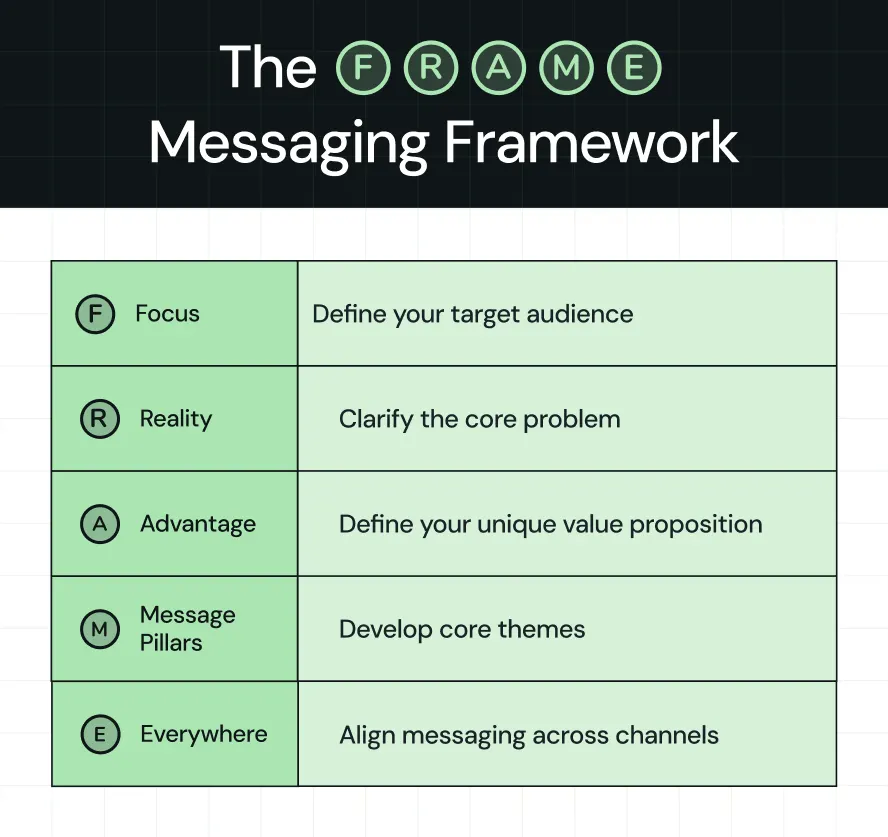
Step 1: Focus – Define your target audience
Before you write a single headline, know who you’re talking to. Identify your primary customer segments, their biggest pain points, and the decision-makers involved in purchasing.
Enterprise solutions rarely involve just one evaluator. In fact, finance, IT, operations, and leadership may all have different priorities. Messaging must speak to each persona while giving them a shared language to understand and justify your solution internally.
{{specficBlog}}
Step 2: Reality – Clarify the core problem
Once you know your audience, define the key problem your product solves. Use precise language that describes the problem in a way everyone can understand.
The clearer the problem, the stronger your solution will shine in contrast.
A recent project with FillHQ, a HIPAA-compliant eSignature platform for healthcare, finance, and legal industries, illustrates this approach. FillHQ needed a website that emphasized security, compliance, and workflow automation while driving trial signups.
We mapped the buyer journey and highlighted core features: unlimited eSignatures, automated workflows, real-time audit trails, AI-powered document generation, and secure data intake forms. The site guides visitors from problem recognition to decision-making, showcasing FillHQ’s differentiators, including HIPAA, SOC 2, and GDPR compliance, healthcare-specific workflows, automation, and cost advantages.
Meanwhile, educational resources, case studies, and feature showcases positioned FillHQ as a thought leader and drove qualified leads to trials and enterprise demos.
Step 3: Advantage – Define your unique value proposition
Now, articulate what makes your product different from alternatives. Your value proposition should be concise, clear, and repeatable.
This is the statement that helps a prospect instantly grasp why they should care. Every headline, CTA, and marketing touchpoint should reinforce this advantage, making your brand unmistakable.
Step 4: Message Pillars – Develop core themes
Next, create 3–4 core pillars that support your value proposition. These pillars act as anchors for all future messaging. Some of the examples for B2B SaaS include:
- Efficiency & automation: How your product saves time or reduces effort
- Scalability: How it grows with the customer’s business
- Security & reliability: How it protects sensitive data and ensures uptime
At this stage, storytelling is key. Instead of merely listing the pillars, illustrate them with examples, visuals, or proof points.
For example, when we redesigned the ClearlyRated website, we worked closely with sales, marketing, and product teams to clarify messaging and restructure key pages so visitors could immediately understand the product’s value.
.webp)
Some of the improvements included:
- Auditing and refining messaging on signup and landing pages
- Optimizing CTAs to move users faster from awareness to trial
- Redesigning onboarding steps to reduce friction during the first login
- Monitoring first-dashboard engagement to measure time to value
These changes helped turn the website into a stronger extension of the product experience rather than just a marketing surface. After launch, the redesign led to a 35% increase in impressions and clicks.
The collaboration behind the project also played a key role in its success. As Stephen Banbury, VP of Marketing at ClearlyRated, shared:
“A big thank you to the whole team. The entire team was a pleasure to work with and quickly understood our vision. It was a super collaborative effort. No egos and everyone was open to feedback. Happy to recommend the team anytime for B2B design.”
Step 5: Everywhere – Align messaging across channels
Finally, messaging only works when it’s consistent across all touchpoints:
- Website copy
- Marketing campaigns and ads
- Product marketing materials
- Sales enablement collateral
Consistency builds trust. Buyers notice when language, tone, and narrative align across every channel. Clear messaging makes your story easy to understand, recommend, and choose, turning complex solutions into a cohesive, recognizable brand.
One example comes from Z47, one of India’s leading VC funds. We revamped their website to clarify messaging, simplify page purposes, and optimize content structure. The redesign included a full audit of engagement metrics, competitor benchmarking, a “founders first” messaging strategy, clear wireframes, a refreshed visual system, and a content hub to showcase thought leadership.
In just six weeks post-launch, Z47 saw:
- +59% website traffic
- +54% active users
- +50% engagement
- +121% direct traffic
- +465% social traffic
Ayush Barnwal shared on LinkedIn how this redesign elevated both brand perception and user engagement, showing the power of consistent, aligned messaging across channels.
{{specficService}}
How B2B SaaS Companies Use Brand Messaging on Their Websites
If your website doesn’t clearly communicate your value, visitors leave, no matter how polished the design is.
Every page is an opportunity to clarify your value, guide prospects, and build trust. At ThunderClap, as a leading branding agency, we help B2B SaaS companies translate their messaging into high-performing web experiences that convert.
Homepage messaging
Your homepage is often the first impression. It needs a clear, concise headline that immediately communicates:
- The problem your product solves
- The outcome that your user can expect
Homepage messaging should answer the question in seconds: “Why should I care?”
Every design element, hero section, and CTA should reinforce this clarity. When done well, visitors instantly understand your value and are guided naturally to explore more.
Product page messaging
Once a prospect dives deeper, your product page becomes the make-or-break moment.
Because the real problem often isn’t the product—it’s how it’s explained.
After auditing 70+ B2B websites, we’ve seen this pattern repeatedly: strong, differentiated products held back by weak messaging. The result? Confusion, drop-offs, and a subtle “this isn’t for me” reaction from the right audience.
To fix this, every product page should answer six things clearly:
- Clarity: Is it instantly obvious what this product does?
- Explain: Are you breaking down how it works in simple terms?
- Resonate: Does it speak to the right ICP’s actual pain points?
- Tie: Is it connected to the larger brand narrative?
- Trust: Are you backing claims with proof (use cases, outcomes, credibility)?
- Next Step: Is the action obvious and frictionless?
This is the same CERTTN framework we use in our messaging audits.
Supporting messaging through proof
Messaging is only as credible as the proof behind it. Use your website to reinforce trust and confidence through:
- Case studies that show real-world impact
- Customer testimonials that humanize your solution
- Data points that quantify success
Integrating proof into your messaging strengthens perception, reduces friction in buying decisions, and positions your brand as both authoritative and relatable.
Common Brand Messaging Mistakes B2B Companies Make
Over the years, we’ve worked with countless B2B companies, and one thing we see time and time again is that brands rarely fail because of one big mistake.
They fail because of small blind spots that quietly build up. A headline that doesn’t land. A visual that feels dated. A website that reads like a technical manual instead of having a real conversation.
Below, we’ll talk about a few of such mistakes:
- Talking about features instead of outcomes: A common mistake we see is brands focusing on features rather than the results those features deliver. Buyers care about what your product actually helps them accomplish. When messaging only lists capabilities, it reads like a checklist. Instead of saying “advanced analytics dashboard,” say “track performance and make faster decisions.”
- Trying to speak to everyone: When you try to appeal to every possible audience, your message loses focus. Prospects skim pages and leave without understanding. Clarity comes from knowing your target audience and speaking directly to what matters to them.
- Inconsistent messaging across channels: When different teams tell different stories, your brand feels fractured. Your website, social media, and sales collateral should all tell the same story. Consistency builds trust and makes your brand feel credible. A brand that communicates clearly is a brand that wins.
- Overly complex language: Jargon and long sentences bury your message. Clear and human language communicates value quickly and keeps your audience engaged.
Turn Messaging Into Your Growth Engine
If you take one thing from this guide, it’s the fact that clarity drives growth.
The difference between messaging that works and messaging that fails comes down to whether your message actually connects with real buyer problems, and shows how you’re different from alternatives, speaks directly to the right stakeholders, and keeps that story consistent from the first website visit to a closed deal.
Most B2B companies we work with are making at least one of these mistakes. Those that fix these gaps see faster sales cycles, higher win rates, and start capturing deals competitors leave behind.
At ThunderClap, we combine messaging frameworks, website design, and visual identity to create brand messaging that is clear, credible, and scalable. Here’s what happens when strategy meets execution:
- Stakeholders immediately understand your product’s value
- Your brand feels professional, credible, and persuasive
- Marketing and sales assets scale without losing consistency
- Your website drives more demos, trials, and sign-ups
Over time, this approach turns your brand into a measurable growth engine that engages audiences, accelerates the pipeline, and positions your company as a market leader.
Ready to see how strong brand messaging can drive growth? Book a B2B SaaS messaging audit to uncover opportunities that make your story clear, memorable, and high-impact.
{{ctaBlock}}
FAQs
1. How is brand messaging different from branding?
Brand messaging explains how a company communicates its value and story to its audience. On the other hand, branding focuses on visual identity such as logos, colors, and design systems. Messaging drives clarity, while branding shapes perception and emotional connection.
2. Why is brand messaging important for business growth?
Clear brand messaging helps potential customers quickly understand the value and take action. It improves marketing performance, increases conversions, and aligns teams around a single narrative. Strong messaging also builds trust, which leads to better customer relationships and long-term growth.



.webp)
Browse Similar Articles



Leading 5 SaaS Branding Agencies in Florida (That Actually Understand SaaS Growth)

.svg)

How to Turn Your B2B Website into a Self-Serve Growth Engine? (PLG Ready in 2026)

9-Step Website Copy Audit Checklist to Improve Conversions (Examples from Top B2B Brands)

.webp)

How to Choose the Right Fintech Web Development Company for Your Business
Top B2B Website Design Principles That Turn Visitors into Qualified Leads
%20Audit%20That%20Actually%20Improves%20Revenue.webp)
How to Do a Conversion Rate Optimization (CRO) Audit That Actually Improves Revenue
Web Design Agency vs. Freelancer vs. In-House: What Actually Works in 2026
5 CRO Agencies in London and How to Choose the Best CRO Agency for Your Business
The Ultimate Fintech B2B Positioning Guide for 2026 (That Actually Drives Conversions)
Mapping the B2B Buyer Journey to Improve Conversions Across Every Touchpoint
.webp)
7 Best Website Maintenance Companies in India for Growth-Led B2B Teams (2026)

.webp)
8 Best Healthcare Website Design Agencies for HIPAA-Compliant Sites in 2026
How to Find the Best Web Design Company in Houston, Texas for B2B Brands (6 Best Picks)

Positioning That Wins: How to Make Complex B2B Products Clear and Compelling
The Step-by-Step Website Redesign Process B2B Teams Use to Increase Conversions (Without Killing SEO and Pipeline)
7 Best Video Production Agencies for SaaS Product Walkthroughs and Feature Videos
How to Choose the Best B2B Website Maintenance Company: 9 Questions to Ask Before You Hire One

How to Choose a Web Design Company in San Francisco in 2026 (with Examples)

10 Best Web Design Companies in Florida in 2026 and How to Choose the Right One
How to Use Brand Storytelling on Your Website to Close More B2B Deals and Build Buyer Trust
SaaS CRO Best Practices: What High-Growth Brands Do Differently to Win Conversions

How a Rebranding Agency Can Redefine Your B2B SaaS Identity and Boost Pipeline
B2B Marketing Trends in 2026 That Directly Influence Pipeline and Revenue

Top 7 Video Marketing Agencies Driving B2B SaaS Brand Awareness in 2026
Why Partnering with a B2B Brand Positioning Agency Accelerates Market Differentiation

The Complete Website Redesign Checklist for B2B SaaS Teams Ready to Scale
.avif)
10 Best Webflow Development Agencies in India for 2026 (In-Depth Review)

10 Product Marketing Companies Powering the Fastest-Growing SaaS Brands in 2026
Website Copywriting Services vs In-House: What's Right for Your Business?

How to Choose a Marketing Agency That Understands B2B SaaS Growth Metrics


How to Choose a Video Marketing Agency That Understands B2B Storytelling
Outsourcing Web Design: Cost-Benefit Analysis for Mid-Market & Enterprise Brands

From Leads to Lifetime Value: How Growth Marketing Agencies Scale SaaS Revenue
Build a B2B Website Strategy That Aligns with Sales and Marketing Goals

Webflow vs WordPress: Which Platform Is Better for Your Business Website in 2026?
Fintech Web Design That Builds Trust: 8 UX Principles Every Fintech Site Needs
Optimizing for Intent: How B2B Website Messaging and UX Changes Help Capture Top-Funnel Buyers


12 Best B2B Web Development Agencies in the US to Build Scalable Websites

From Audit to Action: 8-Step Process to Optimize Your B2B Website Strategy for 2026 Buyers
How to Design a High-Converting Landing Page from Scratch (2026 Edition)

From Click to Customer: Proven Landing Page Conversion Optimization Techniques

How to Write Website Copy That Converts: A Step-by-Step Guide for 2026

How to Optimize a Landing Page for Maximum ROI: A Step-by-Step Breakdown

AI Landing Pages That Convert: 7 Design Principles Every AI Platform Should Follow
From Traffic to Pipeline: B2B Website Growth Strategy for Scaling Teams

B2B Website Optimization Strategy: Speed, UX, SEO, and CRO in One Playbook




Interested in seeing what we can do for your website?



.webp)
