














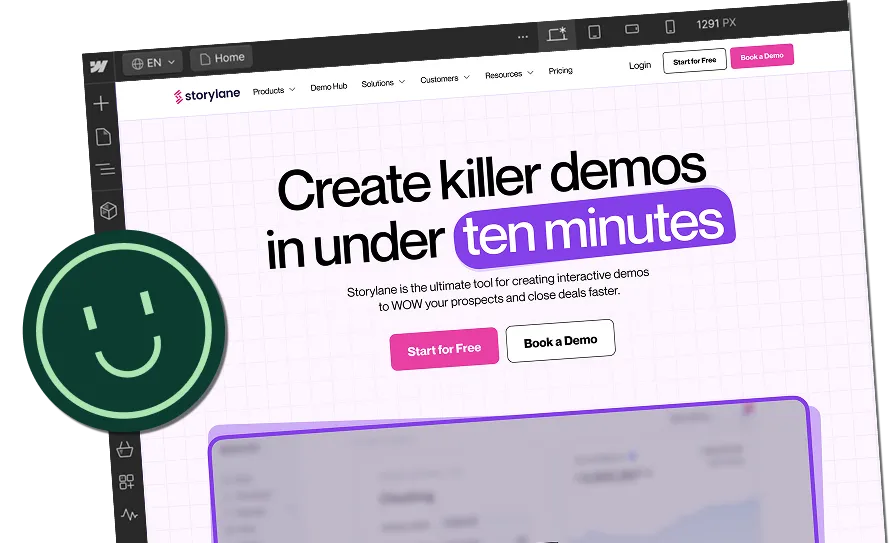

Build a B2B Website Strategy That Aligns with Sales and Marketing Goals


"The website doesn't reflect our brand maturity."
"We're targeting the wrong ICP."
"We're getting leads, but conversions are low."
Been there?
Here's what's really happening: Your marketing team celebrates a 50% uptick in traffic, but your sales team is miserable because of the rise in low-quality leads. And your CEO asks why a $ 200,000 redesign isn't generating any new revenue.
This isn’t a design or a targeting problem. It's a B2B website strategy problem. The one that happens when your website, sales process, and marketing goals operate in three different universes.
After building over 139 B2B websites, we've observed this pattern negatively impacting conversion rates and resulting in millions of dollars wasted on marketing spend. And the good news is, it’s fixable.
In this blog, we give you a practical guide to fix this disconnect once and for all. Read along to know ThunderClap’s step-by-step process to build a B2B website strategy that aligns with sales and marketing goals.
You’ll also get our insider website alignment playbook (the one that helped Amazon, Storylane, and Factors.ai turn their sites into conversion engines), so you know how to translate your team’s pains into actionable website goals.
What Is A Website Strategy That Aligns With Sales And Marketing Goals?
A website strategy that aligns with sales and marketing goals is the one that transforms your website into a conversion engine. It’s a structured plan to break down the silos between website, marketing, and sales and make your website work toward one goal: boosting conversions and growing revenue.
But isn't every website supposed to work in tandem with sales and marketing goals? Yes, but that’s not the reality for many brands. And in most cases, misalignment often stems from one of these scenarios.
Sound familiar?
The solution isn't to compromise between marketing and sales goals, but to build a website strategy where both functions win. But what that looks like depends entirely on your company's growth stage: early, growth, or scale stage. Here's how.
B2B Website Strategy Guide: Aligning Sales and Marketing Goals Across Different Company Stages (Early, Growth, and Scale Stage)
1. B2B Website Strategy for Early-stage Companies
If you belong here, you're either a solo founder or a lean team with 1-2 sales/marketing hires. You run a high-touch sales model, where every call gives rich insights into your target audience's pains, objections, and wants. This direct feedback loop makes B2B lead gen strategies effective at this stage, helping you refine your website positioning in days, not months.
Here's what a sales-and-marketing-aligned website strategy looks like at this stage:
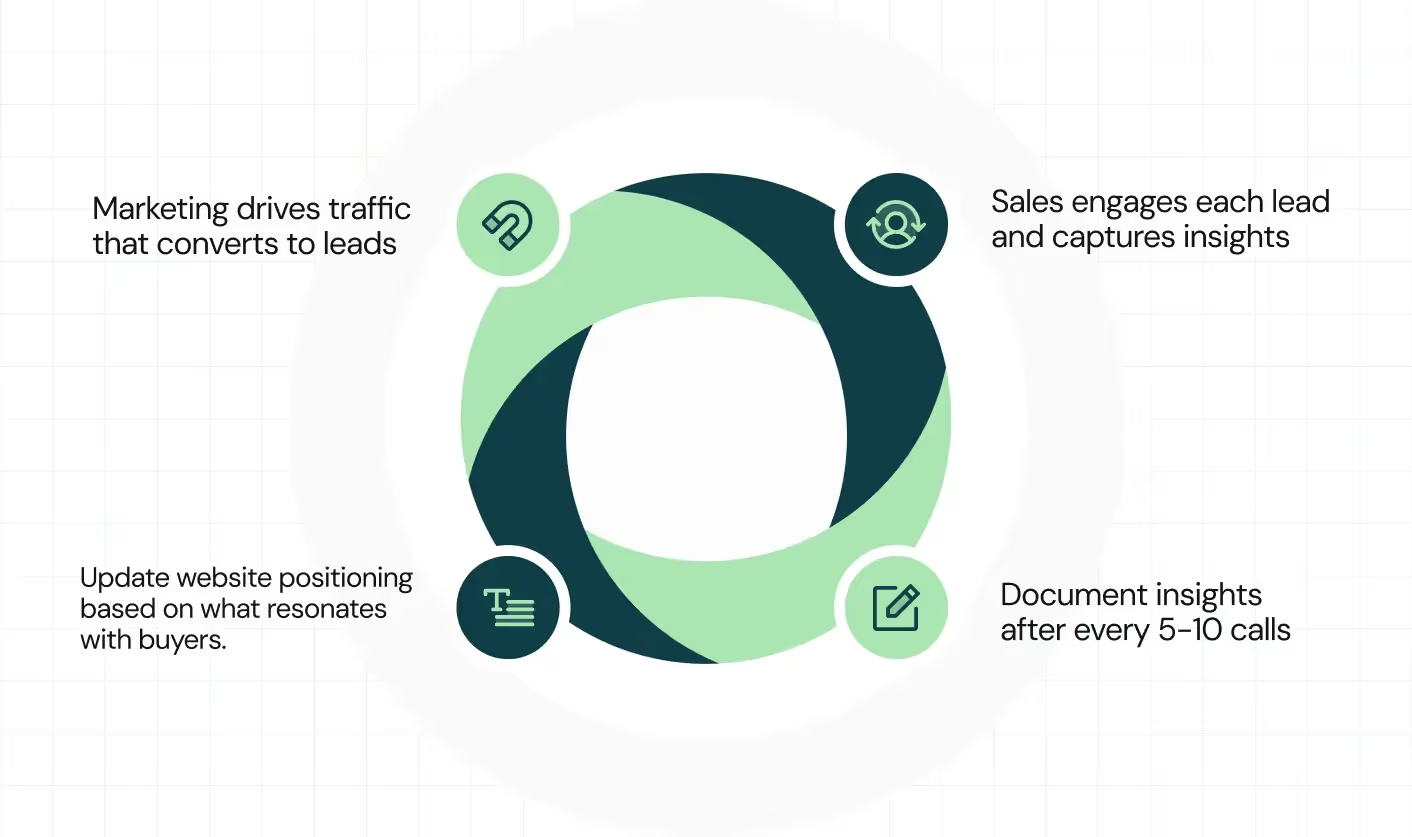
Marketing drives traffic that converts to leads → Sales (or you) engages each lead and captures insights → After every 5-10 calls, insights get documented → Website positioning gets updated based on what's actually resonating with buyers.
Steps you can take to achieve this:
- Aggressive lead capture through beta access forms or waitlist signups. This identifies prospects who want early access and are willing to engage.
- Sell credibility through founder-led branding. If you don't have customers yet, leverage your founder's background, whether that's ex-MAANG experience, industry expertise, or a compelling problem story, to build trust.
- Use a single CTA on your website. At this stage, there's only one aim: to start conversations. Pick based on your product readiness: waitlist if pre-launch, founder call if validating, or demo if you have a working product.
Case in point
Deductive.ai, an observability tool, had a promising product but lacked clear positioning and brand identity. As a new player, they weren't communicating their value effectively or building the credibility needed to convert visitors.
Our website revamp led to a 10x increase in website engagement. Here's what we implemented:
- We refined their positioning and messaging using insights collected from their target audience during their pilot launch.
- We leveraged the founders' background, Rakesh Kothari (ex-Meta) and Sameer Agarwal (ex-Amazon), to build credibility. We also showcased their panel of investors and advisors, including representatives from Databricks and Google.
- We used one CTA type, "Book a Demo", consistently across the homepage and product page to attract high-intent leads.
{{specficBlog}}
2. B2B Website Strategy for Growth-stage Companies
At this stage, you've nailed product-market fit and built a repeatable sales motion. The next big challenge is scaling your pipeline without scaling headcount. Your website becomes a qualification engine, routing visitors to the right path so sales can focus on deals that truly deserve their time.
Note: This applies whether you're PLG, sales-led, or hybrid. We're focusing on a hybrid lens here, so you can use what fits now and keep the rest for when you add another motion.
Here's what a sales-and-marketing-aligned website strategy looks like at this stage:
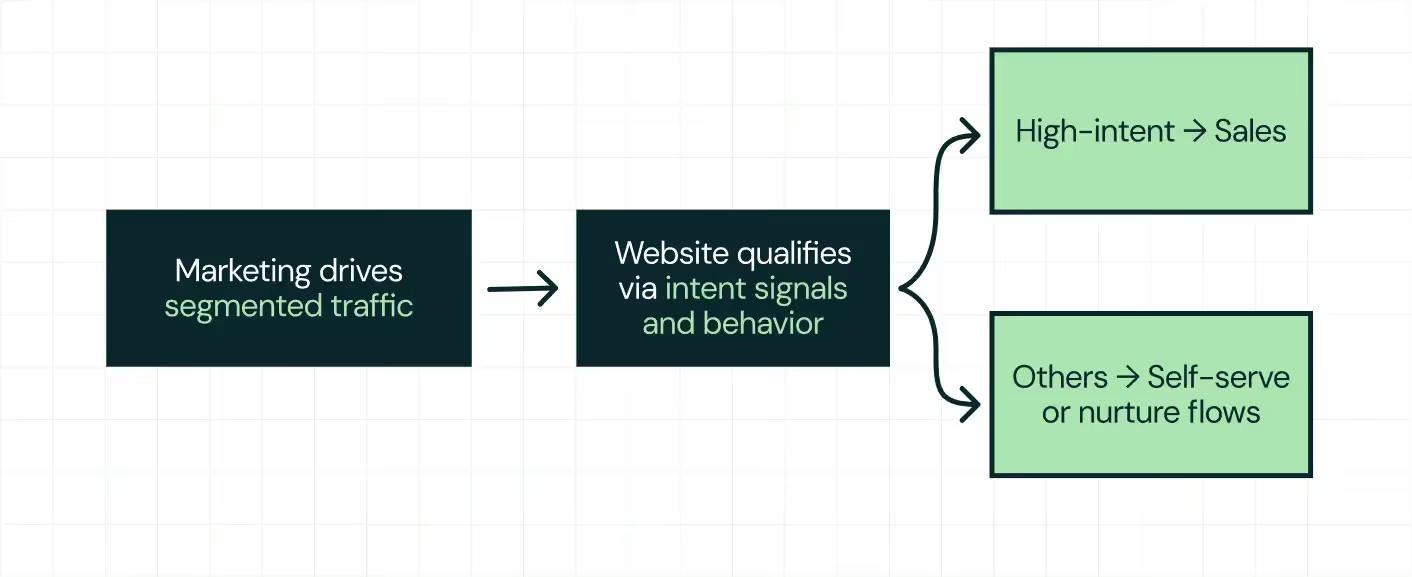
Marketing drives targeted traffic through segmented campaigns → Website qualifies visitors through intent signals and behavior→ High-intent buyers route to sales, others to automated paths like self-serve or nurture flows.
Steps you can take to achieve this:
- Create targeted pages for different industries, use cases, and company sizes, rather than sending everyone to the same homepage. This ensures that each prospect sees relevant messaging tailored to their specific challenges and needs.
- Build a resource hub with guides, e-books, and playbooks to engage early-stage visitors. Gate valuable content to capture leads and use form fields like company size and role to qualify intent. Map out clear next steps for high-intent downloads.
- Add friction-free paths for buyers who want to move fast: interactive demos (voted most useful resource for SaaS purchase), instant trial access, or product tours. Not everyone needs (or wants) a sales call to convert.
- Use different CTAs based on page context and user intent. For example, "Book a Demo" for pricing page visitors, "Start Free Trial" on product pages, and "Download Guide" for top-of-funnel content. Match the ask to where they are in their journey.
Case in point
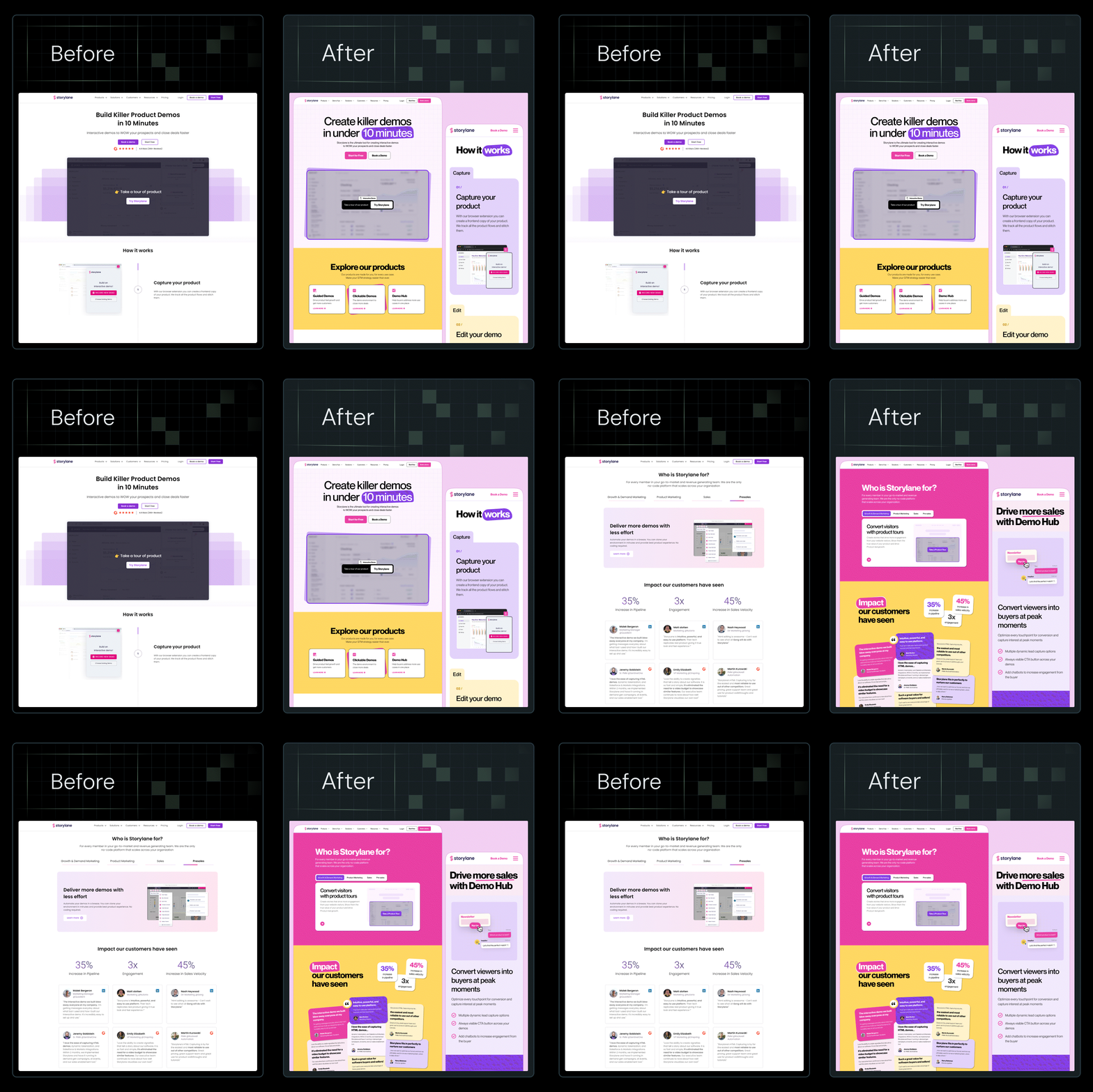
Storylane already had a compelling website copy and architecture in place. But their visuals didn't match their brand maturity, as there was no coherent identity or personality coming through.
Our design revamp led to a 30% increase in demo requests. But here's what they were already doing right on the strategy front:
- Persona-specific pages for sales teams, marketers, and customer success, each speaking to role-specific challenges.
- A playbook hub with actual demo templates and use-case walkthroughs to help first-time creators reduce their learning curve.
- Three CTAs to match different intent levels: "Take a Tour" for browsers, "Book a Demo" for buyers who want guidance, and "Start Free" for users ready to dive in.
- Gated interactive demo on the homepage for quick access to self-serve buyers while capturing leads for the marketing team.
”ThunderClap played a key role in elevating our brand’s maturity and professionalism with the website revamp. Their ability to understand our needs, take feedback constructively, and execute flawlessly made the entire process smooth. The team is responsive, meets deadlines, and goes beyond expectations—a solid partner for any B2B company looking to scale their brand.” - Anand Vatsya, Product Marketing Manager at Storylane
3. B2B Website Strategy for Scale-stage Companies
At the scale stage, you have competing priorities: multiple products, multiple personas, and multiple buying motions. The website's job shifts from driving one conversion path to delivering the right experience for each visitor, while maintaining a unified brand experience.
Here's what a sales-and-marketing-aligned website strategy looks like at this stage:
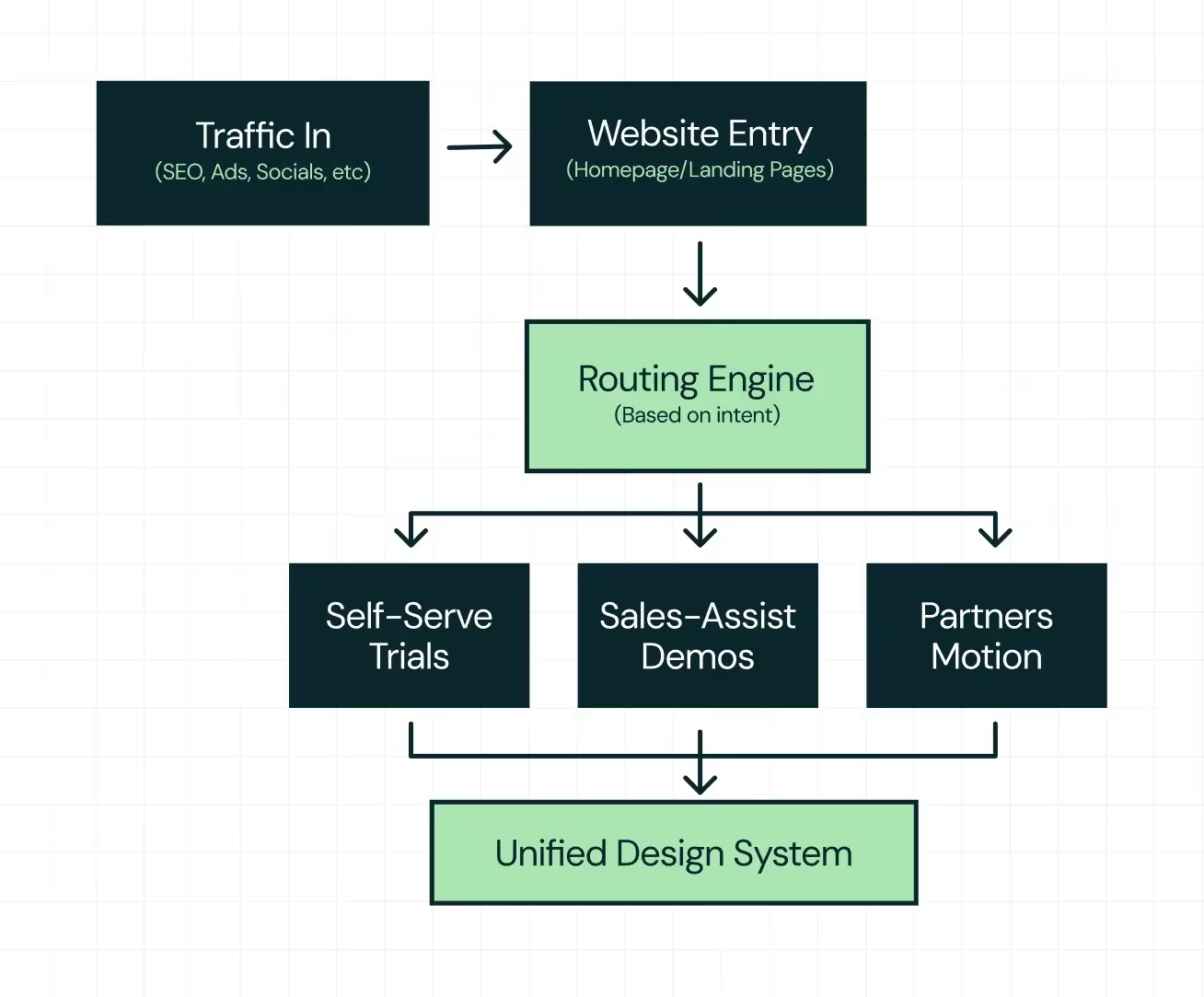
Marketing drives diverse traffic across products and personas → Website routes visitors to the right product and buying motion based on their needs → Self-serve trials, sales-assisted demos, and partner workflows run in parallel → Unified design system maintains brand coherence.
Steps you can take to achieve this:
- Design a multi-product architecture to map your product lineup and how individual products connect. Pair it with interactive comparison tools so prospects can choose the right solution on their own, without any sales intervention.
- Use a unified design system across all products and audiences to prevent it from looking like multiple sites duct-taped together. Add a platform page to visualize how all your products branch out from the same umbrella.
- Create a dedicated partner ecosystem without crowding the buyer journey. Keep partner access visible, ideally in the footer or utility nav, so it's discoverable, but never in the way of conversion paths.
- Create bundle pages and add complementary tool recommendations on product pages to enable cross-selling
Case in point
Atlassian is a perfect example of this. Starting with a single product, Jira, Atlassian has now evolved into an enterprise platform with seven or more product hubs serving diverse audiences.
Here's how they check all the boxes as a business with a website strategy that aligns with their sales and marketing goals:
- Even with 7+ products, its navigation is quite intuitive. It groups products by team type, company size, use case, and industry, so first-time visitors find what they need without any hassle.
- Product pages, targeted landing pages, and even partner resources look like they are cut from the same cloth. You never question if you've accidentally left Atlassian's site.
- Partner resources stay in the footer where they belong. Their partner page and directory, with over 5,700 apps, are easy to find for those who need them, but never compete with primary product CTAs for buyers ready to make a purchase.
- They offer the Teamwork Collection bundle, which includes Jira, Confluence, Loom, and Rovo, at a 40% discount to encourage both existing and new users to expand their toolkit.
Also Read: Top 5 B2B enterprise web design best practices
B2B Website Alignment Playbook: Turn Sales & Marketing Pain Points Into Website Goals
Now that you know how to approach a B2B website growth strategy so it works in tandem with sales and marketing goals, here’s something you need to know: Your website strategy is not a one-off project; it needs continuous refinement.
As a growth marketer, you'll be pulled in different directions. Sales complains about lead quality and long cycles. Marketing leadership pushes for more pipeline with the same budget.
The key is reading between the lines of their complaints and turning them into concrete website improvements. This playbook helps you do exactly that.
Our playbook breaks down 10 common sales and marketing pain points, and shows you how to translate each into an actionable website goal.
Turning Sales Pain Points into Website Goals
Turning Marketing Pain Points Into Website Goals
Also Read: CERTTN framework to find gaps in your current messaging
Your Next Move: Where to Start?
Most companies get the urge to fix everything at once. They write off the website as 'broken' and propose a complete revamp. New homepage. New messaging. New everything.
But if you make this decision based on guesswork instead of data, you'll just rebuild the same issues into a prettier package. Six months later, sales and marketing will be complaining about the same things.
Instead, start with one pain point at a time based on your current website performance. Aim for the lowest-hanging fruit to create maximum impact with minimal tweaks. For example, your answer to low-quality leads might be adding 2 or 3 extra fields in your forms.
Execute the fix. Measure results. Move to the next pain point. Repeat.
Conduct weekly and monthly website performance audits to track your metrics and measure progress. Run a full website audit every six months to identify larger alignment gaps. Use these insights to continually refine your website optimization strategy.
Still unsure about where to start? We can help you.
At ThunderClap, we think beyond creating premium-looking, stunning websites. We create websites that work as an SDR for your brand, walking buyers through the funnel and building credibility with each step.
{{ctaBlock}}
Here's how we work (or rather, how we think!):
- Your current website shortcomings are our north star. We delve deep into what’s actually killing conversions, whether that’s weak positioning, vague messaging, or confusing CTAs/UX, before our actual design process begins.
- A website that works in favour of sales and marketing is the norm for us. With a funnel-first approach, we think about qualified MQLs, demo sign-ups, and conversions rather than just traffic.
- We think of ourselves as the coach who wants to see you win! During our 3-day post-launch period, we monitor your website KPIs and make tweaks based on data, so you get the results we promised.
We’ve helped 88+ SaaS, Fintech, AI, and B2B brands, including Amazon, Razorpay, Shopline, and roommaster turn their websites into high-converting growth engines.
Want to be next? Book a free website strategy audit call, and we’ll walk you through your site, showing exactly what’s working and what needs improvement.
FAQs
1. What are common signs of website misalignment with sales goals?
Some telltale signs of website misalignment with sales goals include:
- Sales teams create custom resources instead of sharing the homepage because they know there’s a gap between what the website promises and what the ICP actually wants.
- Low demo-to-close rates are driven by cold leads scheduling demos with little to no understanding of what your company does.
- High MQL volume but low SQL conversion, as sales and marketing define “qualified” differently.
2. How do early-stage and growth-stage B2B website strategies differ?
For early-stage companies, the primary goal of the website is to capture as many leads as possible, enabling sales teams to directly interact with them and gather insights to refine their positioning.
For growth-stage companies, qualification becomes the priority. They already know their ideal buyer and want the website to filter out low-intent visitors, allowing sales to focus on high-value opportunities.
3. How is a B2B website different from a B2C website?
B2B websites focus on lead qualification and nurturing buyers through long sales cycles, not immediate conversions. B2C websites prioritize instant purchases with frictionless checkout. In other words, a B2B website serves as a crucial touchpoint for selling to a B2B buying committee with multiple stakeholders, whereas B2C websites are designed to sell directly to individual buyers without delay.
4. What B2B website design strategies work best for enterprise companies?
Some of the best B2B website design strategies for enterprise companies include:
- Maintain visual coherence across pages and products so buyers don't feel they're viewing different websites when they move between pages.
- Use unified design systems to scale easily without designing everything from scratch.
- Clarify product architecture to ensure seamless navigation.
5. How do I create a B2B website content strategy that aligns with sales and marketing goals?
Here are the steps you can take to build a B2B website content strategy that aligns with sales and marketing goals:
- To qualify leads, create high-value gated resources, such as guides, playbooks, and ROI calculators.
- To convert leads, build BOFU content like comparison pages ("You vs Competitor X"), case studies, and pricing breakdowns that address buying objections.
- To retain interest after the demo, create post-demo enablement content, such as implementation guides and success roadmaps.
6. How often should a B2B website be updated or redesigned?
Conduct weekly and monthly performance audits to identify issues that affect conversions. Tweak messaging, design, or UX based on findings. Run detailed audits, covering your B2B website content strategy, web design, and performance, every 6 months to catch critical issues. Only pursue a complete redesign if you've shifted positioning, added new product lines, or evolved as a brand.
7. How can a B2B website generate more leads?
Focus on qualified leads, not just volume. The most effective B2B lead generation strategies begin with strategic design and intent-based routing. Build an intuitive UI to route visitors to the right path: sales demos or self-serve options. Build targeted landing pages for different personas. Add more qualification fields, such as company size, to weed out low-tier buyers.



.webp)
Browse Similar Articles





Leading 5 SaaS Branding Agencies in Florida (That Actually Understand SaaS Growth)

.svg)

How to Turn Your B2B Website into a Self-Serve Growth Engine? (PLG Ready in 2026)


9-Step Website Copy Audit Checklist to Improve Conversions (Examples from Top B2B Brands)

.webp)

How to Choose the Right Fintech Web Development Company for Your Business

Top B2B Website Design Principles That Turn Visitors into Qualified Leads
%20Audit%20That%20Actually%20Improves%20Revenue.webp)
How to Do a Conversion Rate Optimization (CRO) Audit That Actually Improves Revenue
Web Design Agency vs. Freelancer vs. In-House: What Actually Works in 2026
5 CRO Agencies in London and How to Choose the Best CRO Agency for Your Business
The Ultimate Fintech B2B Positioning Guide for 2026 (That Actually Drives Conversions)
Mapping the B2B Buyer Journey to Improve Conversions Across Every Touchpoint
.webp)
7 Best Website Maintenance Companies in India for Growth-Led B2B Teams (2026)

.webp)
8 Best Healthcare Website Design Agencies for HIPAA-Compliant Sites in 2026


How to Find the Best Web Design Company in Houston, Texas for B2B Brands (6 Best Picks)
Positioning That Wins: How to Make Complex B2B Products Clear and Compelling
The Step-by-Step Website Redesign Process B2B Teams Use to Increase Conversions (Without Killing SEO and Pipeline)
7 Best Video Production Agencies for SaaS Product Walkthroughs and Feature Videos
How to Choose the Best B2B Website Maintenance Company: 9 Questions to Ask Before You Hire One



How to Choose a Web Design Company in San Francisco in 2026 (with Examples)

10 Best Web Design Companies in Florida in 2026 and How to Choose the Right One

How to Use Brand Storytelling on Your Website to Close More B2B Deals and Build Buyer Trust
SaaS CRO Best Practices: What High-Growth Brands Do Differently to Win Conversions


How a Rebranding Agency Can Redefine Your B2B SaaS Identity and Boost Pipeline
B2B Marketing Trends in 2026 That Directly Influence Pipeline and Revenue

Top 7 Video Marketing Agencies Driving B2B SaaS Brand Awareness in 2026

Why Partnering with a B2B Brand Positioning Agency Accelerates Market Differentiation

The Complete Website Redesign Checklist for B2B SaaS Teams Ready to Scale
.avif)
9 Best Webflow Development Agencies in India for 2026 (In-Depth Review)
10 Product Marketing Companies Powering the Fastest-Growing SaaS Brands in 2026
Website Copywriting Services vs In-House: What's Right for Your Business?

How to Choose a Marketing Agency That Understands B2B SaaS Growth Metrics


How to Choose a Video Marketing Agency That Understands B2B Storytelling

Outsourcing Web Design: Cost-Benefit Analysis for Mid-Market & Enterprise Brands

From Leads to Lifetime Value: How Growth Marketing Agencies Scale SaaS Revenue

Webflow vs WordPress: Which Platform Is Better for Your Business Website in 2026?
Fintech Web Design That Builds Trust: 8 UX Principles Every Fintech Site Needs
Optimizing for Intent: How B2B Website Messaging and UX Changes Help Capture Top-Funnel Buyers


12 Best B2B Web Development Agencies in the US to Build Scalable Websites

From Audit to Action: 8-Step Process to Optimize Your B2B Website Strategy for 2026 Buyers
How to Design a High-Converting Landing Page from Scratch (2026 Edition)
From Click to Customer: Proven Landing Page Conversion Optimization Techniques

How to Write Website Copy That Converts: A Step-by-Step Guide for 2026

How to Optimize a Landing Page for Maximum ROI: A Step-by-Step Breakdown


AI Landing Pages That Convert: 7 Design Principles Every AI Platform Should Follow
From Traffic to Pipeline: B2B Website Growth Strategy for Scaling Teams
B2B Website Optimization Strategy: Speed, UX, SEO, and CRO in One Playbook




Interested in seeing what we can do for your website?



.webp)
