















How a Rebranding Agency Can Redefine Your B2B SaaS Identity and Boost Pipeline


You’re scrolling through LinkedIn, half-reading a post about PLG metrics, half-wondering why everyone suddenly calls everything “AI-powered”… and then you see it:
A SaaS brand you vaguely remember, the one you thought looked outdated, confusing, and a bit like an early-2010 analytics dashboard, has reinvented itself.
New logo.
New colors.
New tone.
New website that actually looks alive.
New positioning that makes you think, “Oh damn, they finally figured out how to explain what they do.”
You pause for a moment as the transformation sinks in, and you scroll back up because you want to make sure you actually saw what you think you saw. You click the link with growing curiosity and realize it feels like a completely different company.
That, right there, is what a smart B2B rebrand does. It reshapes perception with deliberate clarity, strengthens the story behind the product, and creates a level of relevance that directly fuels pipeline growth. Because in SaaS, brand clarity is revenue clarity. And when your website, messaging, visuals, and narrative feel outdated, misaligned, or too vague, prospects disappear before your product even gets a chance.
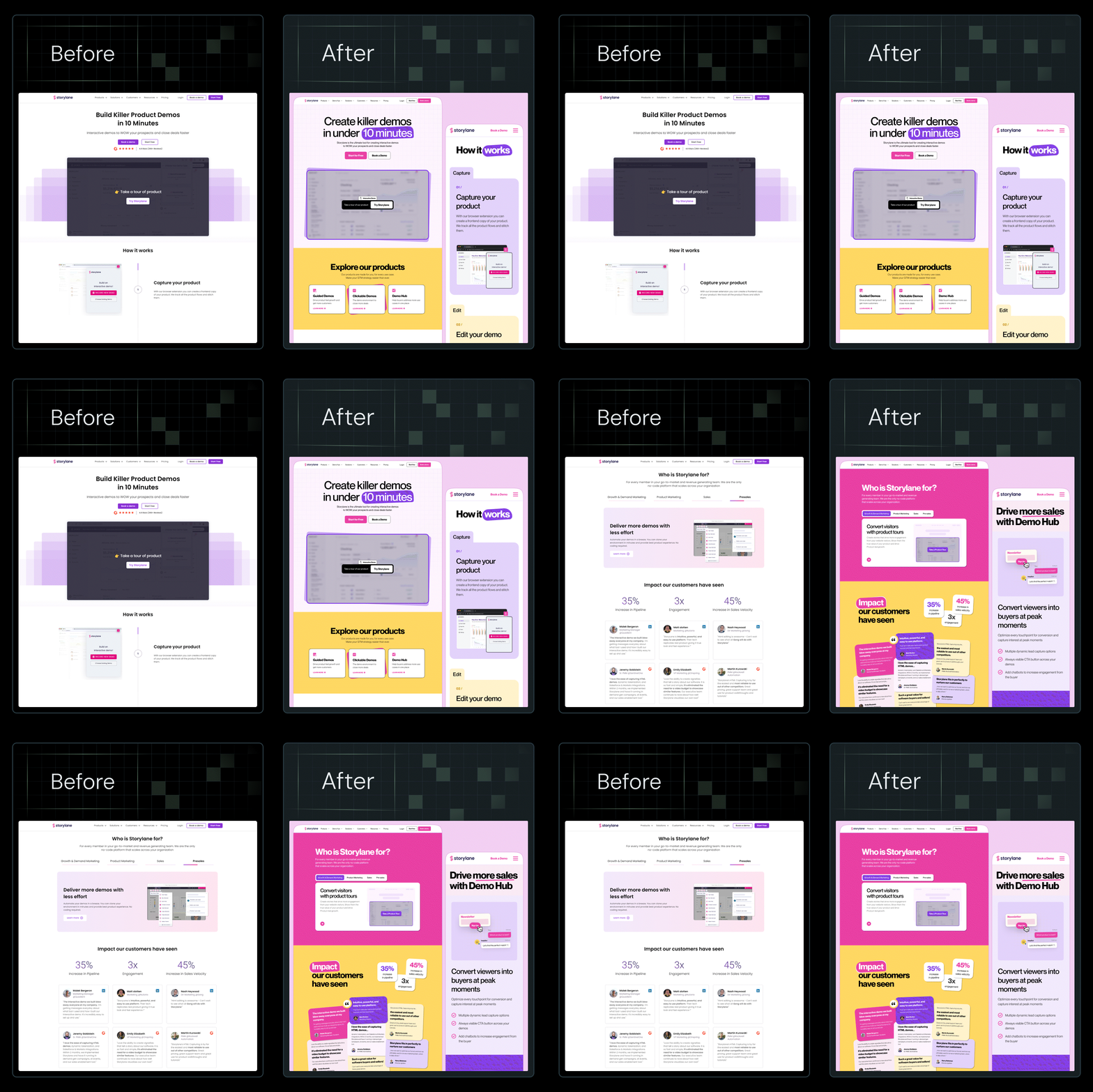
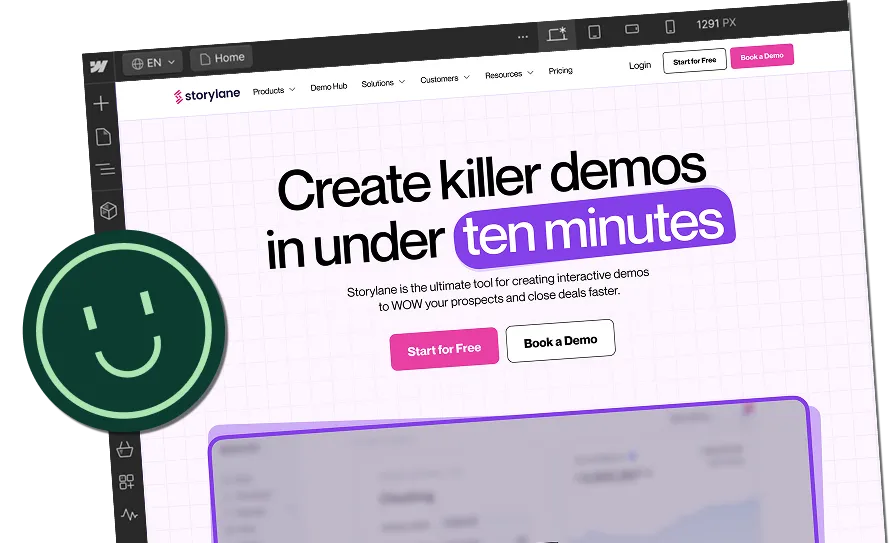
That’s why more SaaS leaders are turning to rebranding agencies, especially those who specialize in B2B tech, SaaS positioning, and website rebrands, to rebuild their identity from scratch. At ThunderClap, we have rebuilt more than 129 B2B websites for SaaS, fintech, AI, and enterprise tech companies, including Amazon, Storylane, Factors, Deductive AI, and Zenda, and we have created high-converting landing pages that deliver measurable results.
So if you’re wondering how a rebranding agency can redefine who you are in the market and unlock new revenue momentum… let’s dive in.
TL;DR
Most B2B SaaS brands have a clarity problem, rather than a visual one. A rebranding agency with SaaS expertise fixes this by rebuilding your identity from strategy → messaging → visuals → website, → GTM consistency.
Here’s what the right agency, such as ThunderClap, does:
- Creates a positioning and narrative system that aligns with your current ICP and product evolution.
- Designs a visual identity that reflects maturity, trust, and category differentiation.
- Rebuilds your website to convert, not just “look pretty.”
- Establishes messaging frameworks that unify marketing, sales, and product.
- Helps you stand out among competitors who look, sound, and say the same things.
- Gives your GTM team a consistent story that accelerates the pipeline.
If you’re scaling, shifting markets, repositioning, or expanding your ICP, a rebrand is a lever.
What Makes B2B SaaS Rebranding Different than B2B/DTC
Most agencies know how to swap colors, pick modern fonts, and design a logo that looks great on a billboard. Very few understand how to rebuild a brand that can actually move a SaaS buyer through a complex, multi-stage revenue journey.
A true B2B rebranding agency must deeply understand the realities of SaaS growth, including:
- Long and unpredictable sales cycles
- Multi-stakeholder buying committees
- Complex products that need a clear explanation
- Category creation and competitive differentiation
- Technical accuracy that survives scrutiny
- Websites built for conversion, not decoration
- PLG motions coexisting with enterprise sales
- Positioning that shifts as the product evolves
- ICP clarity across segments
- Competitive parity and market movement
If an agency doesn’t get these fundamentals, it cannot build a brand that works as a growth engine.
The proof is everywhere in the companies that reinvented themselves at the right time.
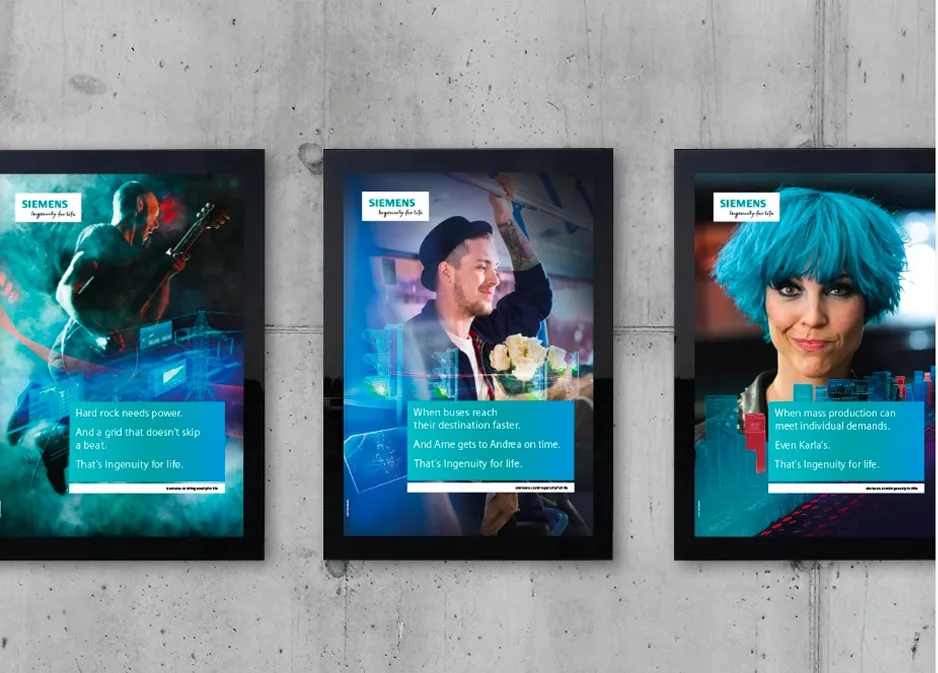
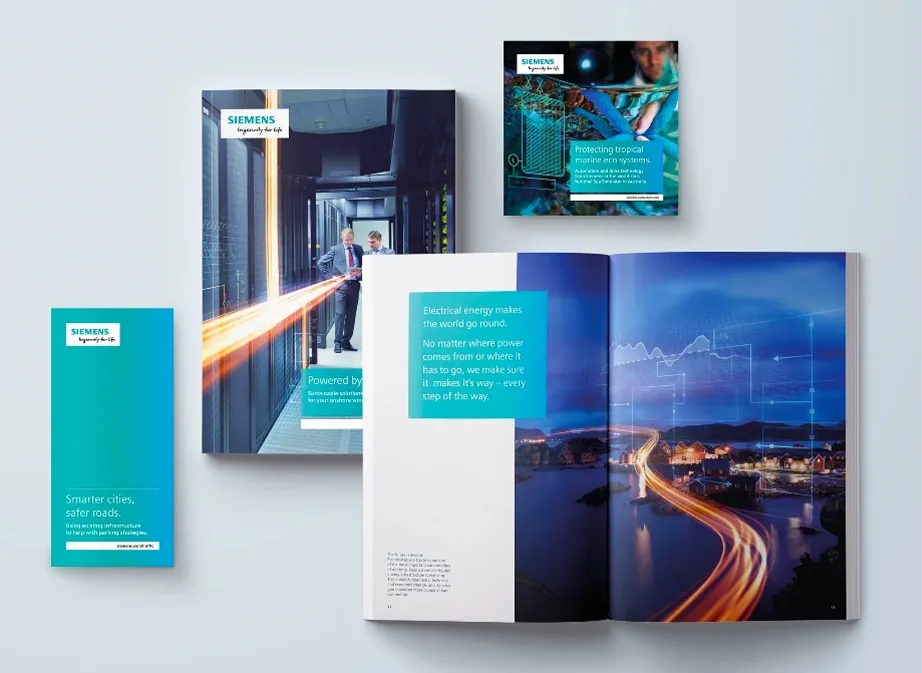
Take Siemens, for example. After more than 170 years in operation, most brands would struggle to stay relevant. Siemens understood they needed a brand as innovative and dynamic as their technology, yet their visual identity was stuck in the 1990s.
So in 2018, they rebuilt their brand around a sharper promise of “ingenuity for life,” pairing technology with purpose.
This is what the Siemens website looked like before the rebrand:
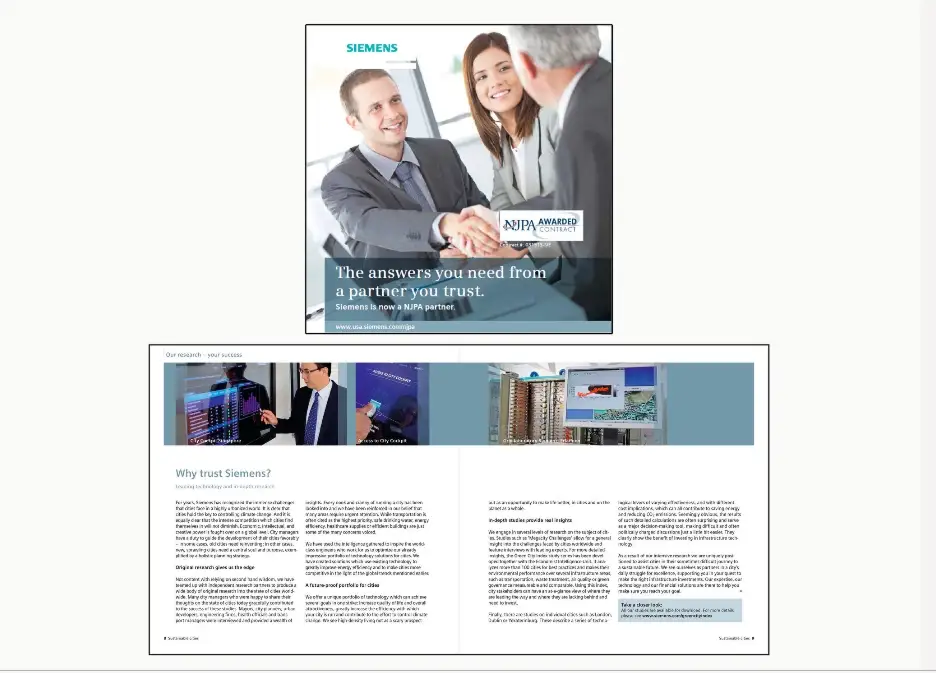
The rebrand unified global departments under one cohesive system, replacing dull gray palettes and stiff corporate stock photos with vibrant electric blue tones and bold, human-centered portraits. The shift didn’t just modernize Siemens. It repositioned them as a forward-thinking powerhouse with a renewed entrepreneurial edge.
Slack offers another clear example of conviction in brand evolution. By 2019, the company was on the brink of massive growth, but its visual identity was no longer supporting its story. Their old logo lacked cohesion and scalability, and the brand struggled to maintain consistency as it expanded across platforms and use cases.
Slack’s team put it perfectly in their announcement that when a logo can no longer do the job you need it to do, it’s time for a smarter evolution. The refresh wasn’t universally loved at launch, but perception shifted as the company grew. Months later, Slack went public with a valuation of nearly $20 billion and was ultimately acquired by Salesforce for $27.7 billion. This is another reminder that brand clarity drives real business outcomes.
In B2B SaaS, rebrands succeed when they communicate value instantly, support rapid product evolution, and remove friction from the buyer journey.
{{specficBlog}}
The B2B SaaS Identity Stack: The 5 Layers of a High-Impact Rebrand
Every successful rebrand rests on multiple interconnected layers, each reinforcing the next. We call it the Identity Stack because each layer builds on what came before, and any missing layer can undermine the whole brand.
Here’s what it looks like:
Here’s why each layer matters in practice:
1. Market & Narrative Foundation
This is where the brand story starts. It defines your category, shows how you’re different, and establishes language your market understands.
When Factors partnered with us, they wanted a landing page that could show the power of unifying scattered buyer data. We built the page to deliver clarity from the start with the headline: “Know how your buyers move. Run campaigns that win.”
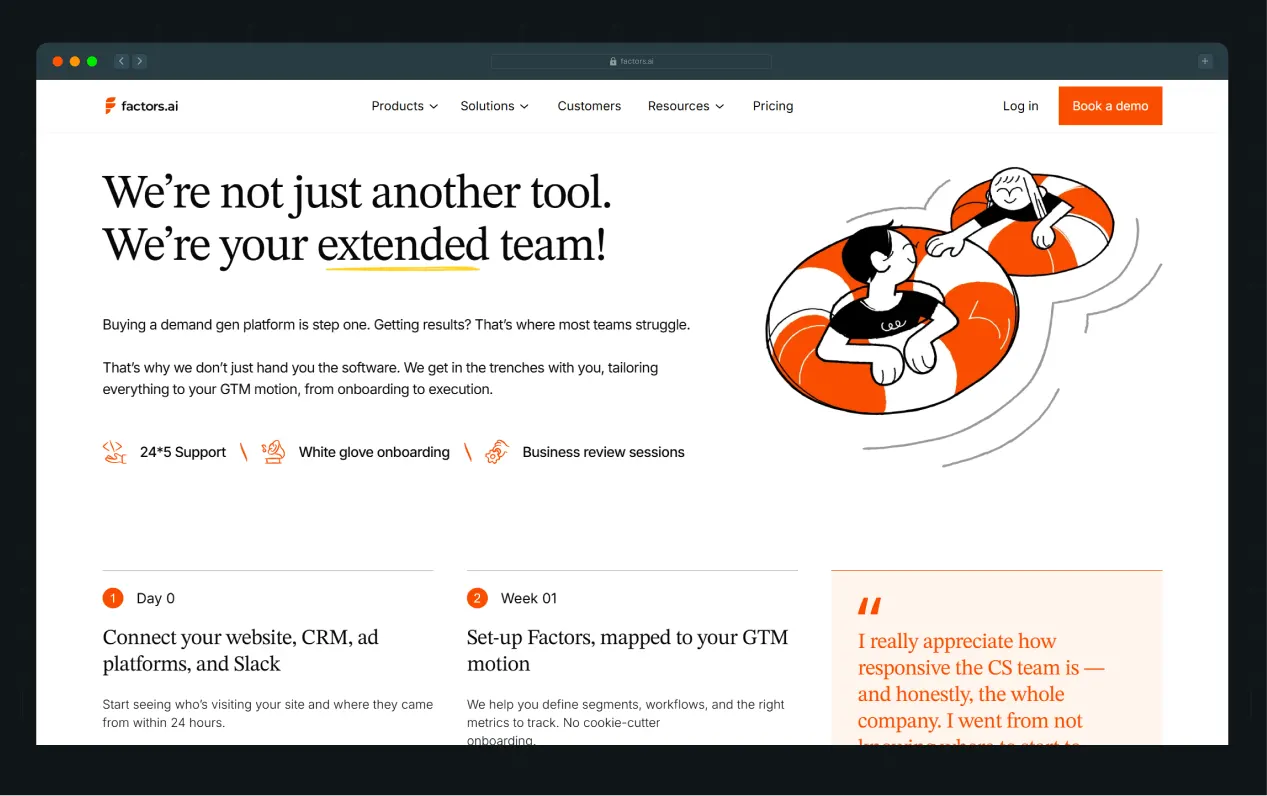
The layout tells a story step by step. It highlights why fragmented signals create problems, demonstrates how Factors solves them, and provides proof of success through client logos and testimonials. One standout section is the execution timeline, which walks visitors through the journey of using Factors. This narrative flow shows how insights move from messy signals to actionable campaigns in just three weeks, a detail most B2B pages overlook.
We created emotion through bold patterns, vibrant colors, and human elements such as customer quotes. Action remains simple and repeated, with “Get a demo” and “Learn more” CTAs guiding visitors through the page. Enterprise-grade security badges and recognizable brands reinforce trust and relevance.
2. Messaging Architecture
Once the story is clear, the message must translate into conversions. The brand must answer key questions clearly:
- What do we do?
- Who is this for?
- Why are we better than our competitors?
- Why now?
- What results can buyers expect?
In fact, a SaaS brand must speak to multiple personas simultaneously. To do this successfully, a good rebranding agency knows how to map:
- Pain → Value → Outcome
- Users → Managers → Leaders → Execs
Strong messaging turns product features into meaningful benefits, making demos more compelling, campaigns more persuasive, and sales pipelines more productive.
To build a messaging architecture that works:
- Map your audience’s needs and pain points. Understand what motivates each stakeholder and what challenges they face.
- Align every message with your brand story and market positioning. Check whether every communication strengthens your core value proposition.
- Reinforce the message across all touchpoints. From website copy to sales emails and campaigns, maintain a consistent narrative.
- Maintain consistency for buyers. Whether they see an ad, attend a demo, or read a case study, the offer should feel clear and cohesive.
- Provide clarity and confidence. Messaging should not only inform but also motivate action at every stage of the buyer journey.
- Turn every communication into a conversion opportunity. Strong messaging drives better demos, more effective campaigns, and improved pipeline outcomes.
3. Visual Identity
When roommaster, a property management platform, migrated its entire website from WordPress to Webflow within six weeks, its challenge was clear. Their original WordPress setup included numerous CMS collections for blogs, news, ebooks, guides, templates, and case studies.
While the volume of content was high, the experience layer was breaking down. Content updates were complex, slow, and often required developer involvement, making it difficult for the marketing team to move quickly without risking brand inconsistency.
Here’s what we did:
- Migrated 40+ pages and multiple CMS collections for blogs, news, ebooks, guides, templates, case studies, and testimonials.
- Created reusable form components integrated with Salesforce, UTM tracking, Chili Piper scheduling, and analytics to capture leads and campaign data.
- Implemented a structured content hierarchy with consistent heading (H1/H2) usage, category and tag cleanup, and SEO-conscious redirects.
- Set up 97 page-level and domain-level redirects to maintain SEO integrity while changing URLs.
Each of these decisions mapped directly back to the audit framework. Messaging consistency improved through structured content. Visual identity stayed intact through reusable components. Experience friction dropped because marketers no longer needed developers to publish or update pages.
As a result, roommaster’s team can now update content and manage resources far more efficiently. The site has a scalable structure that reduces reliance on developers while maintaining brand and design consistency across the entire website.
As Qamar Aziz, Webflow Lead and GSAP Developer at ThunderClap, noted:
“roommaster’s marketing team struggled with updating content quickly because every new page required developer intervention. By moving to Webflow, we were able to implement global classes and reusable components, so the team could launch new property and campaign pages without risking brand inconsistency.”
4. Website Experience
Your website is not a brochure. It’s your first live sales conversation.
A strong B2B rebrand ensures:
- Buyer-specific page flows
- Strategic sitemap and content architecture
- Clear messaging hierarchy
- Intuitive UX and navigation
- CTAs designed to drive conversions
If the website doesn’t reflect your brand evolution, your pipeline won’t either.
Figma’s landing page demonstrates a design-first experience that mirrors the product itself. The headline, “Prompt, code, and design from first idea to final product,” delivers clarity immediately.
The page opens with colorful project previews that set the tone. The layout is simple and visual. Screenshots, templates, and community examples show how teams use Figma.
.webp)
They created emotion through bold colors and playful shapes. The page provides evidence through recognizable names such as GitHub. Action is direct. One clear “Get started for free” CTA anchors the page and guides visitors through the experience. Every block speaks directly to designers and developers working together, maintaining strong relevance.
5. Execution System
A rebrand is not complete without scalable systems. Agencies must provide:
- Component libraries and design tokens
- Messaging templates and social assets
- Motion guidelines and ad variations
- Sales enablement and internal tools
These tools are essential, but a strong execution system also requires understanding how your brand applies across every touchpoint. Not every agency knows how SaaS design scales across multiple channels:
- Product UI
- Website UI
- Sales decks
- Ads
- Docs
- Pitch decks
- Knowledge base
- Social campaigns
Highlighting the need for scalable, reusable components ensures that every element of your brand works together efficiently. With a well-designed, integrated web platform in place, teams can execute campaigns and design consistently across all channels.
Ultimately, a scalable execution system drives revenue by ensuring that every touchpoint supports the brand story, converts leads, and strengthens customer relationships. A rebrand that stops at visuals or messaging alone leaves teams scrambling, but one with robust execution systems allows your brand to operate efficiently, consistently, and effectively at scale.
Interesting read: From Audit to Action: 8-Step Process to Optimize Your B2B Website Strategy for 2026 Buyers
The B.R.A.N.D. Scorecard: Evaluate Any Rebranding Agency in Minutes
Evaluating a rebranding agency can feel overwhelming for founders and marketing leaders. Many agencies look great on the surface. But when you dig deeper, the difference between a vendor who delivers assets and a partner who drives strategy is clear.
The B.R.A.N.D. Scorecard gives you a simple, founder-friendly system to evaluate any rebranding agency. Just like the A.S.K.E. framework helps you assess SaaS video agencies, this scorecard helps you see which partners understand your market, product, and buyers, and which only look good on paper.
Score each pillar from 1–5 as you review B2B rebranding agencies. Take notes and add up the total to find your best partner.
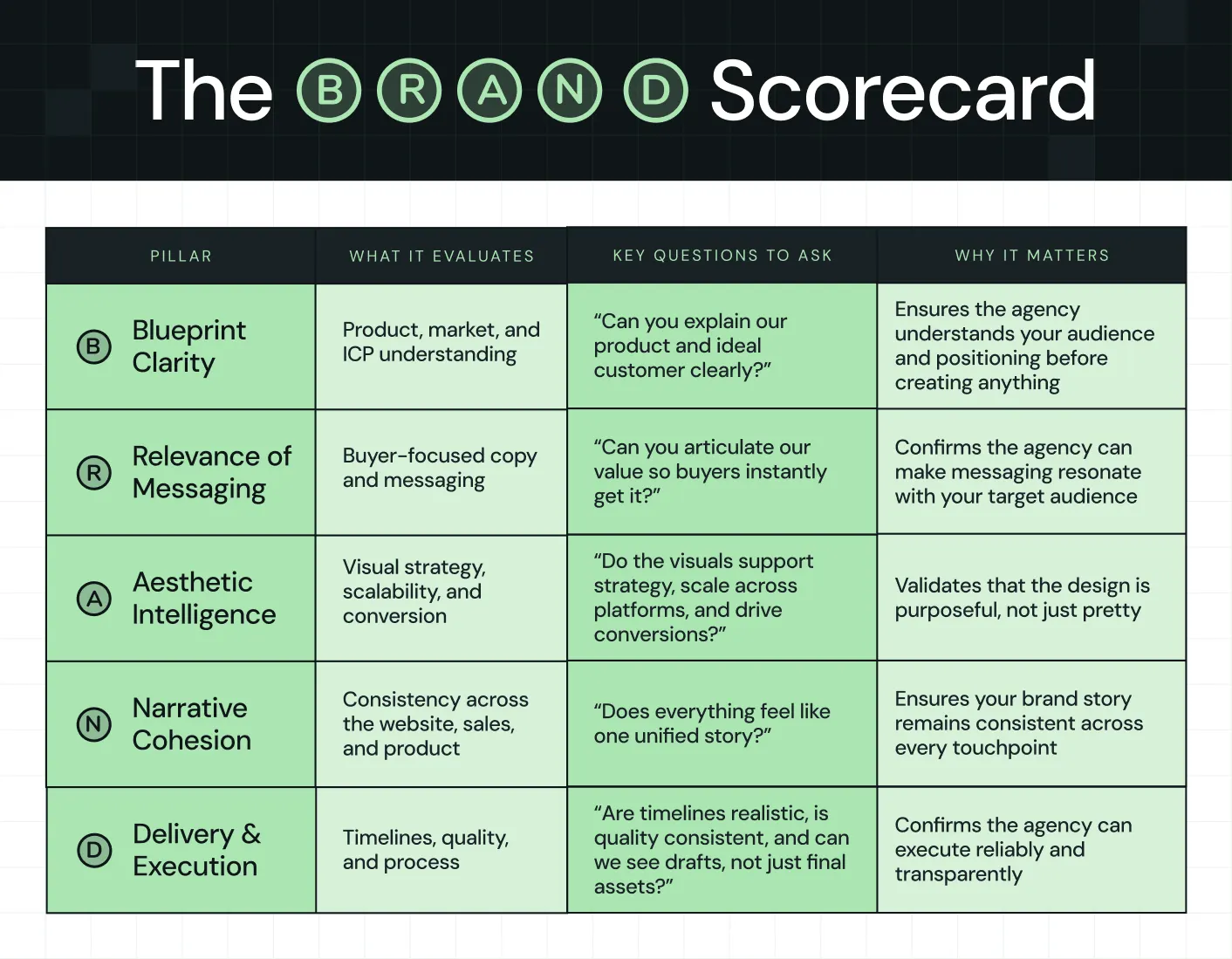
To simplify comparing agencies, we created a ready-to-use B.R.A.N.D. scorecard you can fill in while reviewing partners. It includes all five pillars, space for scores and notes, and an overall rating, so you can quickly see which agency is a true strategic partner versus one that only looks good on paper.
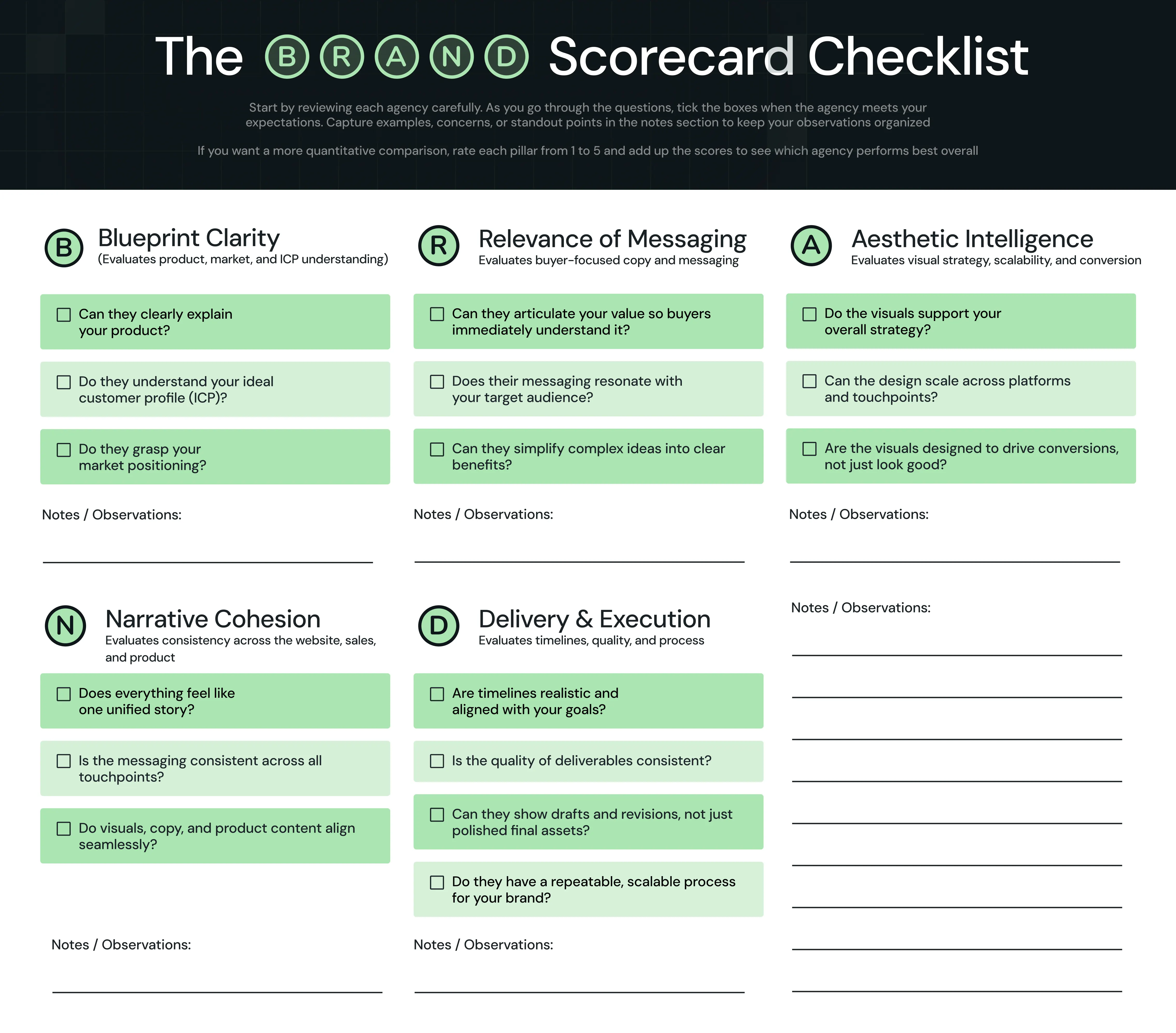
How to Use This Scorecard:
- Review agency portfolios, proposals, and drafts.
- Ask the key questions listed in each pillar.
- Rate 1–5 based on how well they meet expectations.
- Take notes on examples, concerns, or standout points.
- Add the scores to compare agencies objectively.
Choose a Rebranding Agency That Builds Identity and Pipeline
A strong rebrand does more than refresh visuals. It turns your website and messaging into a conversion engine.
When your narrative, visuals, messaging frameworks, and digital presence align, sales conversations feel natural and persuasive, prospects understand and trust your value faster, and your pipeline grows with higher-quality leads. In short, your product perception becomes premium.
Working with one of the top agencies for B2B tech rebranding and messaging frameworks ensures that strategy and execution are fully connected. At ThunderClap, we help SaaS teams rethink their brand from the inside out, integrating website design, messaging frameworks, and visual identity to support scalable growth.
Here’s what happens when strategy meets execution:
- Clearly communicate your product’s value to every stakeholder
- Strengthen credibility with a professional, high-converting brand presence
- Build scalable systems for campaigns, assets, and messaging
- Launch a brand that drives demos, trials, and sign-ups
Over time, this approach produces measurable results, increasing engagement, pipeline, and adoption while establishing your brand as a market leader.
We’ve seen this approach succeed across 129+ B2B tech rebrands, including Storylane, Deductive.ai, ClearlyRated, Zenda, and Factors. The brands we’ve partnered with tell their story clearly, engage every stakeholder, and turn their websites into measurable growth engines.
Ready to see how your website and brand can drive results? Book a B2B SaaS identity audit to uncover the opportunities a top website rebranding agency can unlock for your business.
{{ctaBlock}}
FAQs
Why do companies choose to rebrand?
Companies rebrand to better reflect their evolving vision, product offerings, or market positioning. It can help clarify messaging, modernize visuals, differentiate from competitors, and connect with new audiences. Rebranding also supports growth initiatives, strengthens credibility, and ensures the brand aligns with the company’s current strategy, culture, and long-term goals.
What does the rebranding process involve?
Rebranding typically involves research, strategy, and design. Teams assess market positioning, competitor landscape, and customer perceptions. Messaging frameworks, visual identity, and digital presence are developed and aligned. The process includes rollout planning, internal alignment, and asset creation. The goal is a cohesive brand experience that communicates value, resonates with target audiences, and supports business objectives.
How do I know if my business needs a rebrand?
You may need a rebrand if your brand feels outdated, inconsistent, or disconnected from your target audience. Some of the obvious signs include stagnant growth, low engagement, unclear messaging, or frequent re-explaining of your value proposition. A rebrand can also be necessary after mergers, product expansions, or when entering new markets to communicate who you are and what you offer clearly.
What are the benefits of working with a specialized B2B rebranding agency?
A specialized B2B rebranding agency understands SaaS and tech markets, buyer behavior, and complex sales cycles. They provide strategic frameworks, design systems, and messaging that scale across channels. Partnering with website rebranding agencies such as ThunderClap ensures faster execution, cohesive storytelling, and measurable results, transforming your brand into a growth driver rather than just a visual update.



.webp)
Browse Similar Articles




Leading 5 SaaS Branding Agencies in Florida (That Actually Understand SaaS Growth)

.svg)


How to Turn Your B2B Website into a Self-Serve Growth Engine? (PLG Ready in 2026)

9-Step Website Copy Audit Checklist to Improve Conversions (Examples from Top B2B Brands)

.webp)

How to Choose the Right Fintech Web Development Company for Your Business

Top B2B Website Design Principles That Turn Visitors into Qualified Leads
%20Audit%20That%20Actually%20Improves%20Revenue.webp)
How to Do a Conversion Rate Optimization (CRO) Audit That Actually Improves Revenue
Web Design Agency vs. Freelancer vs. In-House: What Actually Works in 2026
5 CRO Agencies in London and How to Choose the Best CRO Agency for Your Business

The Ultimate Fintech B2B Positioning Guide for 2026 (That Actually Drives Conversions)
Mapping the B2B Buyer Journey to Improve Conversions Across Every Touchpoint
.webp)
7 Best Website Maintenance Companies in India for Growth-Led B2B Teams (2026)

.webp)

8 Best Healthcare Website Design Agencies for HIPAA-Compliant Sites in 2026


How to Find the Best Web Design Company in Houston, Texas for B2B Brands (6 Best Picks)

Positioning That Wins: How to Make Complex B2B Products Clear and Compelling
The Step-by-Step Website Redesign Process B2B Teams Use to Increase Conversions (Without Killing SEO and Pipeline)
7 Best Video Production Agencies for SaaS Product Walkthroughs and Feature Videos

How to Choose the Best B2B Website Maintenance Company: 9 Questions to Ask Before You Hire One


How to Choose a Web Design Company in San Francisco in 2026 (with Examples)

10 Best Web Design Companies in Florida in 2026 and How to Choose the Right One

How to Use Brand Storytelling on Your Website to Close More B2B Deals and Build Buyer Trust

SaaS CRO Best Practices: What High-Growth Brands Do Differently to Win Conversions

B2B Marketing Trends in 2026 That Directly Influence Pipeline and Revenue

Top 7 Video Marketing Agencies Driving B2B SaaS Brand Awareness in 2026

Why Partnering with a B2B Brand Positioning Agency Accelerates Market Differentiation

The Complete Website Redesign Checklist for B2B SaaS Teams Ready to Scale
.avif)
9 Best Webflow Development Agencies in India for 2026 (In-Depth Review)

10 Product Marketing Companies Powering the Fastest-Growing SaaS Brands in 2026
Website Copywriting Services vs In-House: What's Right for Your Business?


How to Choose a Marketing Agency That Understands B2B SaaS Growth Metrics


How to Choose a Video Marketing Agency That Understands B2B Storytelling

Outsourcing Web Design: Cost-Benefit Analysis for Mid-Market & Enterprise Brands

From Leads to Lifetime Value: How Growth Marketing Agencies Scale SaaS Revenue
Build a B2B Website Strategy That Aligns with Sales and Marketing Goals

Webflow vs WordPress: Which Platform Is Better for Your Business Website in 2026?
Fintech Web Design That Builds Trust: 8 UX Principles Every Fintech Site Needs
Optimizing for Intent: How B2B Website Messaging and UX Changes Help Capture Top-Funnel Buyers



12 Best B2B Web Development Agencies in the US to Build Scalable Websites

From Audit to Action: 8-Step Process to Optimize Your B2B Website Strategy for 2026 Buyers
How to Design a High-Converting Landing Page from Scratch (2026 Edition)

From Click to Customer: Proven Landing Page Conversion Optimization Techniques

How to Write Website Copy That Converts: A Step-by-Step Guide for 2026


How to Optimize a Landing Page for Maximum ROI: A Step-by-Step Breakdown


AI Landing Pages That Convert: 7 Design Principles Every AI Platform Should Follow
From Traffic to Pipeline: B2B Website Growth Strategy for Scaling Teams


B2B Website Optimization Strategy: Speed, UX, SEO, and CRO in One Playbook




Interested in seeing what we can do for your website?



.webp)
