















Winning B2B SaaS Marketing Strategies for 2026: From Awareness to ARR


Every B2B company now follows the same playbook. Content marketing, SEO, paid ads, and visually stunning websites. Best practices everywhere. And it works, until it doesn't.
You hit a threshold, traffic plateaus, and conversions stall. Not because your B2B SaaS marketing strategies are broken, but because you're doing exactly what your competitors do.
According to Madhav Bhandari, Head of Marketing at Storylane, the only solution is to break the existing mould to command attention, which he calls pattern interrupt marketing:
"The idea is to identify category patterns and deliberately break them, repeatedly. Not one viral campaign. Not one channel. A portfolio of pattern interrupts running in parallel, so you're constantly giving the market new reasons to notice and remember you."
At Thunderclap, we've seen this across 140+ website design projects, including ones for Factors, Storylane, Z47, Amazon, and others. When everyone follows best practices, best practices become table stakes.
And in this article, we break down 7 pattern-interrupting B2B SaaS marketing strategies used by brands like ClickUp, Storylane, Apollo, Factors, roommaster, and PostHog, and show how they map across the buyer journey from awareness to ARR.
Your Hack: Map the 5 B2B SaaS marketing strategies across the Buyer Journey
The B2B buying journey isn't linear anymore. Buyers don't follow a neat funnel where marketing generates leads and sales close them. According to Wynter's research, 91% of B2B marketing leaders arrive at sales calls already familiar with the vendor.
They've researched your website, checked reviews, asked peers, and narrowed you down to one of three finalists, all before talking to your sales team.
This is why pattern interrupts matter at every stage. If your acquisition looks like everyone else's, you're invisible. If your pricing page reads like your competitors', you lose the deal. If your upsell feels generic, you lose the customer. The brands growing right now interrupt patterns across the entire journey, not just at the top.
They don't rely on one tactic; they stack strategies across three key stages: awareness, consideration, and conversion. Here's how those 5 pattern-interrupting B2B SaaS marketing strategies from ClickUp, Storylane, Apollo, Factors, roommaster, and PostHog line up across the buyer journey.
5 Winning B2B SaaS Marketing Strategies for 2026: From Awareness to ARR
B2B SaaS Marketing Strategies For Awareness Stage
In the awareness stage, first impressions matter most. Here are 2 best content marketing strategies for B2B SaaS companies in 2026 that help you dominate search and build brand recall even before buyers know they need your product.
1. Volume-Led SEO: Outpublish Competitors to Dominate Search
A recent Semrush study confirms that posting 16+ blogs per month generates over 4 times as many leads as publishing fewer posts. Yet most SaaS teams stay stuck in low-volume mode; they publish two or three blog posts a month and then wonder why SEO feels dead.
The volume strategy flips that. You publish often, cover every real question in your category, and let that content stack up over time. Each article becomes a long-term traffic asset. Eventually, your blog stops being a campaign and starts behaving like infrastructure that brings in traffic even years after publishing it.
Case In Point: ClickUp
When ClickUp entered project management in 2017, Asana, Trello, and Monday.com owned the space with bigger paid search budgets. ClickUp couldn't outspend them, so they went aggressive on publishing.
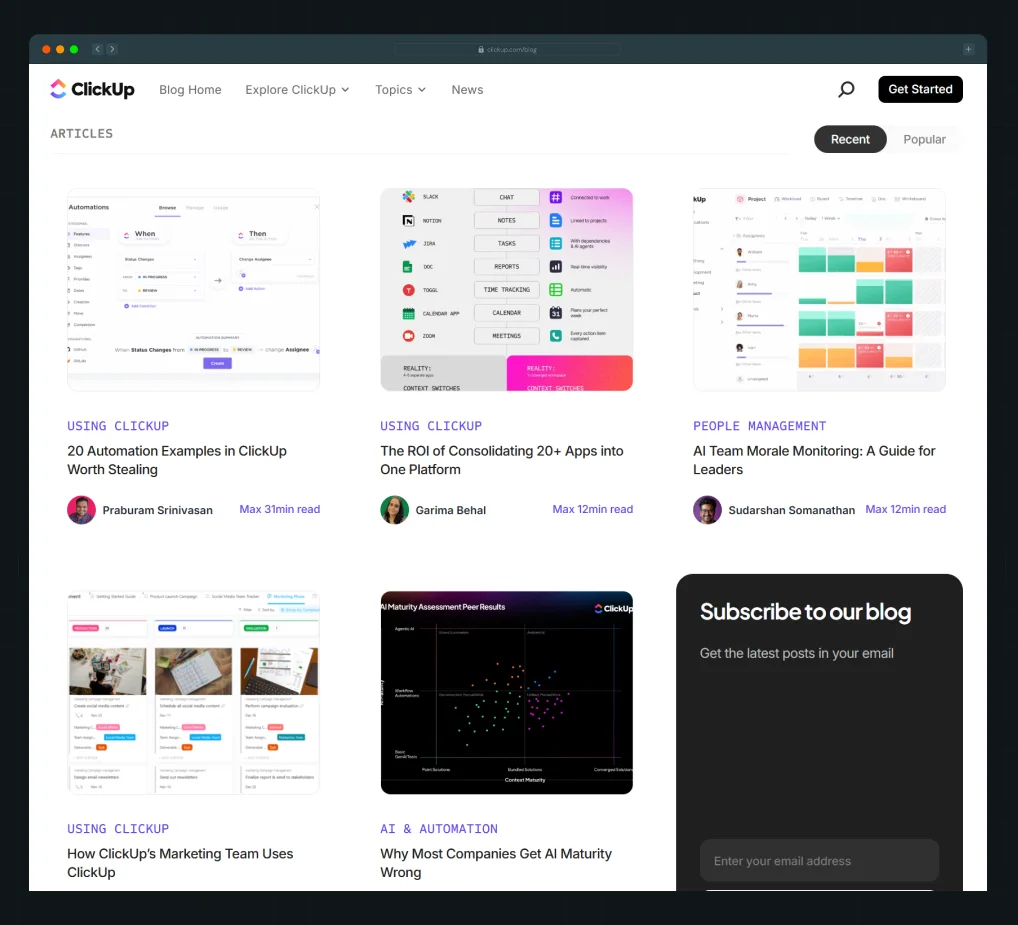
ClickUp’s content strategy had one goal: own every search query in the productivity space. This meant optimizing for search intent at every stage of the buyer journey, not just ranking for keywords. So they published daily: guides, tutorials, comparison pages, and videos.
By 2022, they ranked for 500,000+ keywords and drove 1 million monthly visitors. Today, they publish 200-250 posts monthly with 10 agencies and 50-100 writers. In a way, they're also dogfooding their own product, using ClickUp to coordinate this massive operation. It proves their platform works at scale.
But publishing volume was just one play. ClickUp went aggressive everywhere, product, content, and even entertainment.
While competitors shipped features quarterly, ClickUp shipped weekly. While competitors made boring demo videos, ClickUp launched ClickUpComedy, turning workplace policies into viral music parodies. Their "HR Goes Hard" video, an HR training session turned rap anthem, hit 26 million views.
This wasn't a side project. It was proof that B2B brands can own attention in spaces competitors ignore. ClickUp showed up on Instagram, YouTube, LinkedIn, SEO, product updates, and customer feedback simultaneously.
ClickUp's B2B SaaS content marketing strategy proves volume works, but only when paired with aggressive execution across every channel.
Key Takeaways
- Start with 4-8 posts monthly, covering your core use cases deeply. You don't need ClickUp's volume on day one.
- Build content systems first: templates, workflows, quality checks. The best B2B SaaS content marketing strategies in 2026 prioritize repeatable processes over throwing bodies at the problem.
- Map content to search intent, not vanity keywords. Target the questions your buyers ask when evaluating tools like "[Your tool] vs [Competitor]" or "how to [solve problem] with [tool]."
- Track pages that drive traffic 6+ months after publishing. That's your signal content is compounding, not just getting short-term spikes.
2. Demo-Led SEO: Cast a Wide Net for Long-Term Brand Recall
Ever since Inc. declared SEO “dead,” marketers have argued about whether TOFU still works. The reality is simpler. Generic how-to content is dying because AI gives the same answers faster. What still wins is time-to-value.
If you can show someone how to solve a problem in 15 seconds while everyone else takes five minutes, you win both rankings and memory.
Case In Point: Storylane
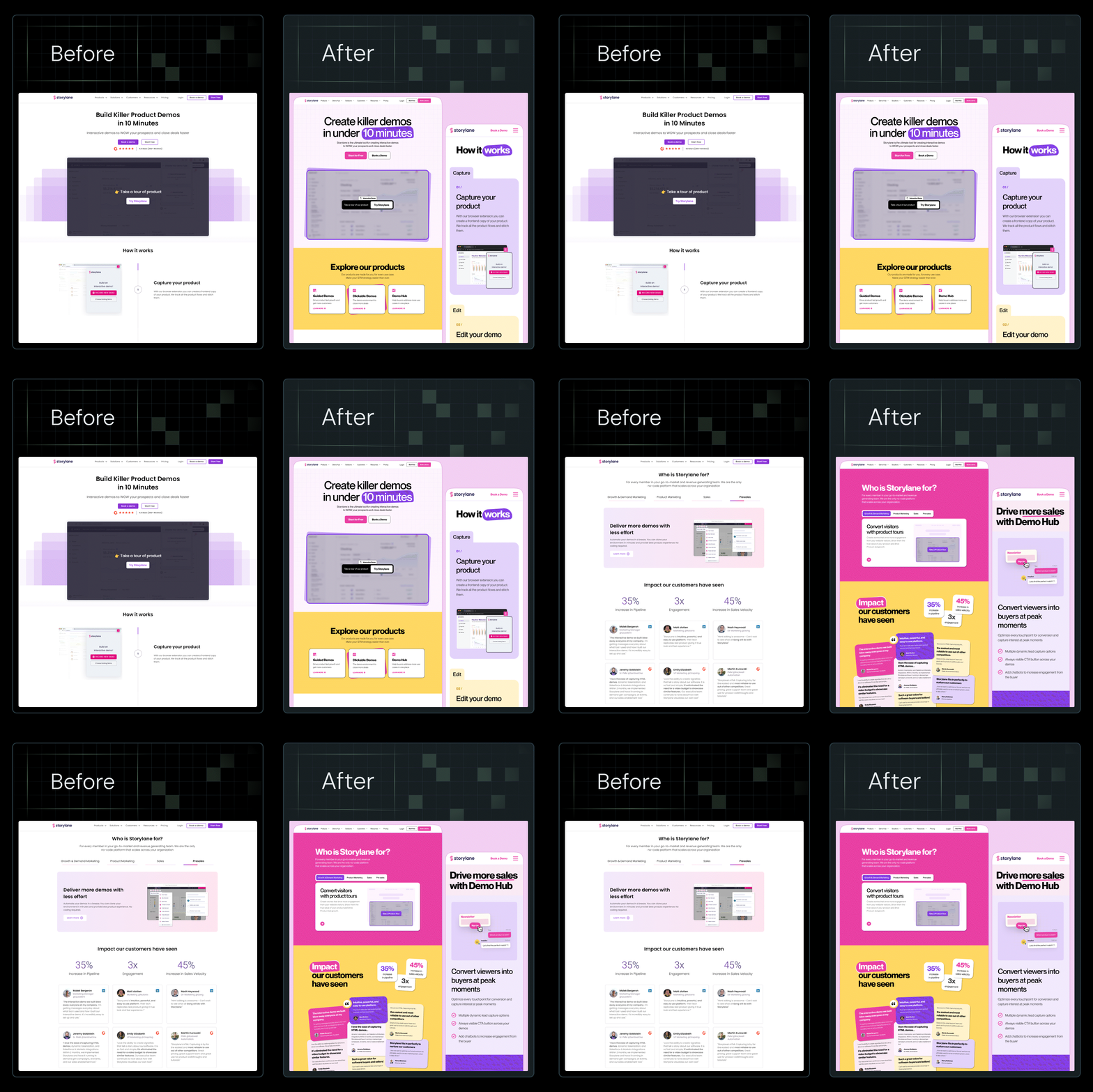
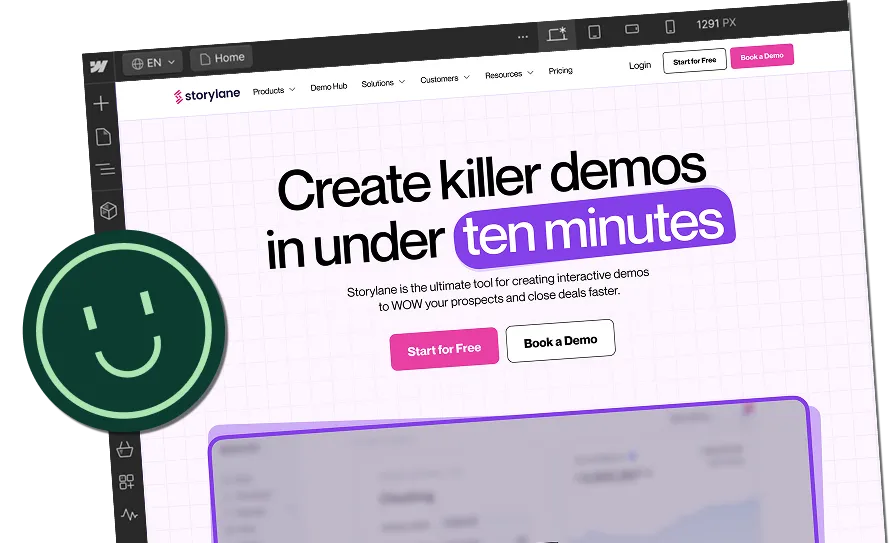
Storylane has a tutorial hub with more than 1,500 interactive demos. At that scale, the real challenge is not creating content. It is keeping everything fast, searchable, and easy to use. Those were exactly the constraints we had to solve during Storylane’s website redesign, including making sure every page loads in under two seconds.
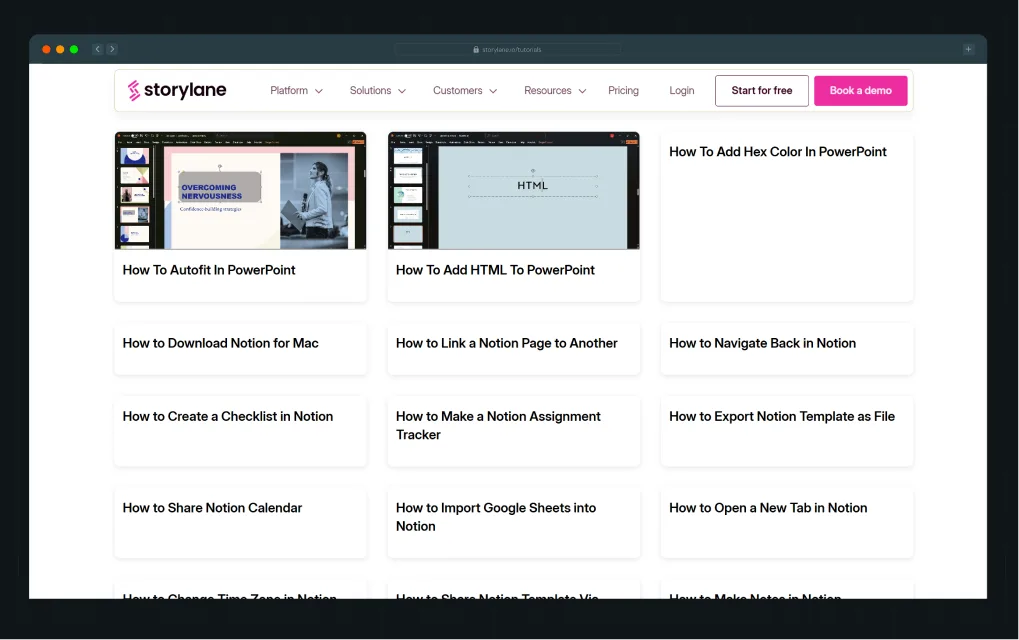
But the interesting part is, none of these tutorials are about Storylane itself.
They're for Canva, HubSpot, Salesforce, and Confluence, tools their audience already uses daily. Every tutorial is built with Storylane, embedding brand recall into workflows where buyers aren't even thinking about demo software yet.
A marketer searching "How to create watermarks in Canva" gets value in 15 seconds. Months later, when they need demo software, they remember Storylane.
- 6x traffic growth in 3 months (25K → 150K monthly visitors)
- 91% of pages ranking in the top 20
- 53% in top 10
Key Takeaways
- The product creates the content. Works best for shareable outputs: demos, videos, templates.
- Target adjacent search volume. Find opportunities where your product naturally bridges two tools your audience already uses, and become the connector, not the competitor.
- Technical execution matters. Load speed and architecture make or break scaled content strategies.
- Play the long game. Brand recall compounds over time, making demo-led content a foundational part of your B2B SaaS go-to-market strategy, optimizing for future buyers, not just immediate conversions.
B2B SaaS Marketing Strategies For Consideration Stage
{{specficBlog}}
You've caught their attention, but you haven't gained their trust yet. Credibility and clarity are the biggest currencies here. Here are 2 strategies to help you position yourself for market differentiation and make proof impossible to ignore.
3. Interactive, Role-Specific Testimonials: Make Social Proof Impossible to Ignore
Most B2B SaaS websites use the same social proof playbook: a few badges, a couple of testimonials, and a line like “Trusted by 5,000+ marketers.” While this follows standard CRO best practices, most buyers scroll right past it.
Interactive, role-based testimonials solve this by making proof hard to ignore. Buyers see people in their exact role, facing the same challenges, and have to engage to get the full story.
As part of a modern go-to-market strategy for B2B SaaS companies, this helps buyers self-qualify and build confidence from the very first touch.
Case In Point: Apollo.io
.webp)
Apollo’s social proof section works because it is both specific and interactive. They use six role-based flip cards for Account Execs, SDRs, Rev Ops, Marketers, Sales Leaders, and Founders. Each card shows a real photo, name, title, and company, so buyers are seeing peers, not generic quotes.
Hover over a card, and it flips to reveal the full testimonial plus concrete outcomes like “75 percent more meetings booked.”
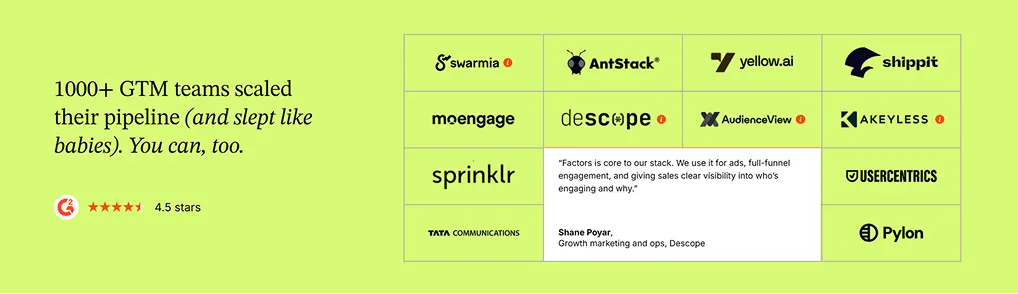
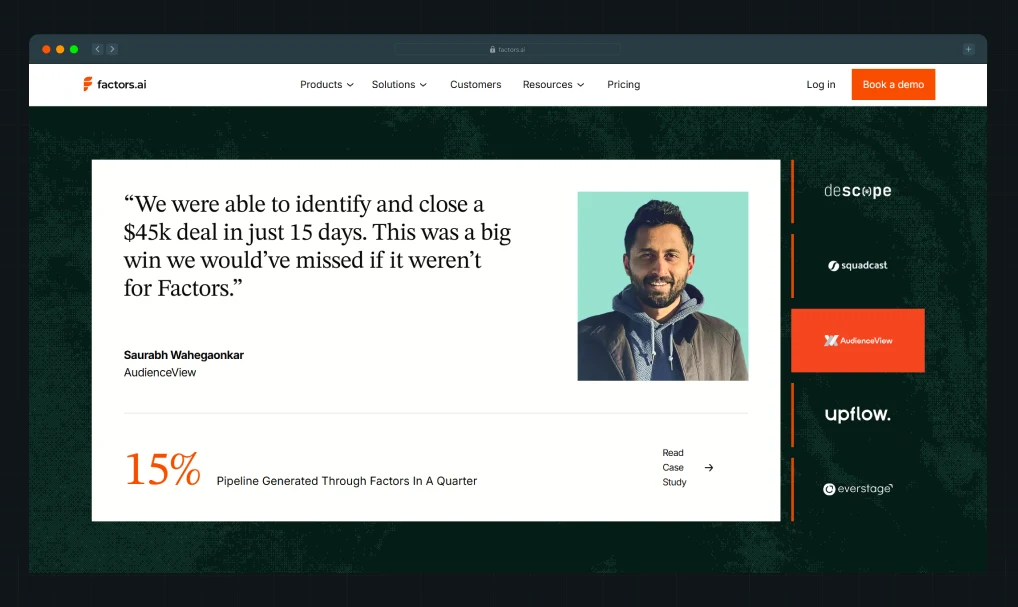
We used a similar approach for Factors.ai, turning their static logo strip into an interactive proof layer as a part of their website revamp. Hover over a logo and the testimonial drops down, stopping the scroll.
Key Takeaways
- Mix social proof elements. Combine badges, conversion cues, and testimonials strategically to surprise buyers and break patterns.
- Segment by role. Help buyers find validation from peers facing similar challenges, not random customers.
- Add interactivity. Use flips, hovers, expandable sections, or animations aligned with current website design trends to grab attention.
{{specficService}}
4. Clarity-Led Positioning: Make Buyers Understand You in 3 Seconds
While this looks like the basics, this stat might surprise you: 94% of B2B SaaS companies admit they sound like their competitors. The issue isn't design or features. It's confusion.
This means you're leaving money on the table every time a buyer fails to understand what you do.
Try out ThunderClap’s Brand Identity TestTo Know If You Are Just Blending In Or Standing Out.
Case In Point: roommaster
When roommaster approached us, they had one goal: make buyers understand their product. But the challenge went deeper. After 30 years as "InnQuest" with "roommaster" as the flagship product, they were consolidating everything under one brand.
The reason? roommaster wasn't a guest experience tool. It handled the infrastructure beneath hospitality operations, reservations, channels, payments, pricing, and AI in one platform. But the brand didn't reflect that maturity. Multiple product names created confusion.
We positioned them as Hospitality Architects. The site stopped listing modules and anchored one mental model: "You run the hotel. This system handles complications underneath." Post revamp, the website brought in better quality leads and boosted its demo request and organic traffic by 80%.
Key Takeaways
- Test if buyers "get it" in 3 seconds. Show your homepage to someone unfamiliar. If they can't explain what you do, positioning needs work.
- Position around roles, not product categories. roommaster is positioned for "hotel operators who need infrastructure," not just "property management system users."
- Clear positioning improves every channel. When buyers understand what you do, demos convert faster, sales calls close quicker, and organic traffic quality improves.
B2B SaaS Marketing Strategies For Conversion Stage
This is where buyers decide whether to put pen to paper, and small details like pricing transparency can make or break the deal. Here’s a truly unique pricing strategy from PostHog you can use to turn high-intent prospects into paying customers.
5. Transparent Pricing: Give Assurance Where Buyers Expect Tricks
Here's what the typical B2B pricing page experience often feels like as a buyer: asterisks hiding the real price, "contact sales" buttons disguised as CTAs, and "starting at" disclaimers that mean nothing. The whole thing feels designed to trick you into a meeting.
Many sales teams defend this by saying they need to qualify buyers, understand their needs, and build trust through demos. But the best teams flip this. They build pricing pages that give assurance exactly where buyers expect manipulation.
Case In Point: PostHog
PostHog's copy removes hesitation at every friction point. Right next to their free tier, they tell you to just pick this one and upgrade later. Most companies use decoy pricing to push you toward the middle option. PostHog does the opposite.
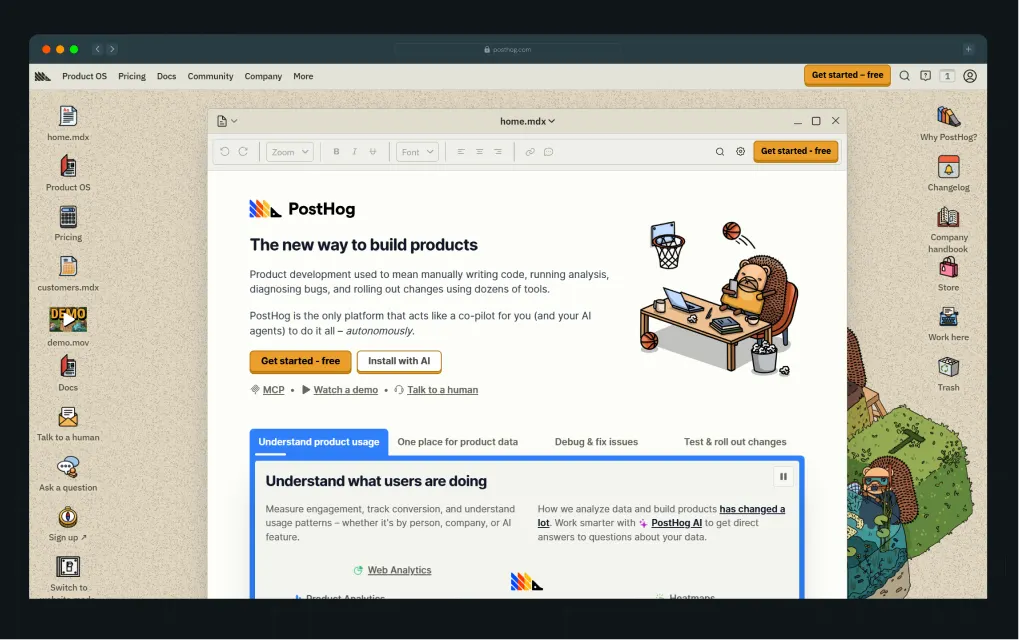
Instead of tier names like Professional or Enterprise, PostHog shows you the actual math. Costs per event, per session replay, per request. When you adjust the volume slider, your per-unit cost drops as discounts kick in. When most companies negotiate these privately, PostHog displays them on the page.
Their CEO's pricing philosophy section reinforces this. After describing how he thinks about cutting prices, his message to buyers says their pricing is designed to make you happy. They aim to be the cheapest at every scale and tell you to contact them if they're not.
Key Takeaways
- Use copy that removes hesitation at decision points instead of adding qualification friction.
- Show actual per-unit costs so buyers can calculate totals without talking to sales.
- Display volume discounts upfront so buyers can model growth before committing.
Pattern Interrupt Marketing Strategies Only Work When Executed Right
B2B buyers have trained themselves to ignore what looks normal. But here's the risk: there's a thin line between pattern-interrupting and getting completely lost. Go too unfamiliar, and buyers can't relate. Play it too safe, and you're invisible.
When we designed Skyroot Aerospace's contact page, you literally book a launch to space by selecting orbital paths. Bold? Yes. Pattern-interrupting? Absolutely. But it worked because it matched their category. Launching rockets isn't a commodity purchase.
The key is knowing which patterns to break and which to keep. At Thunderclap, we've worked with 88+ B2B companies across SaaS, fintech, AI, and VC. We know what's worn out in each space, what still grabs attention, and how to create the right balance between familiar and fresh.
As a growth marketing agency, we don't just design websites. We position brands for category leadership, working as an extension of your team with in-house product marketers, international designers, and a process built to deliver measurable results.
Pattern interrupts only work when you understand your category well enough to break it intelligently.
{{ctaBlock}}
FAQs
1. What is B2B SaaS marketing?
B2B SaaS marketing is the process of promoting software products to business customers. With complex sales cycles, multiple stakeholders, and buyers tired of overused B2B SaaS marketing strategies, companies need pattern-interrupting approaches to move prospects from awareness to conversion. Effective strategies include content marketing, SEO, transparent pricing, and interactive demos that break category norms while still resonating with buyers' needs and expectations.
2. Why are marketing strategies important for B2B SaaS companies?
B2B buyers complete 70-90% of their research before contacting sales, making the go-to-market strategy for B2B SaaS companies critical. Marketing strategies help you get found, build trust, and convert prospects. In crowded markets, strategy determines whether you stand out or blend in. Following standard playbooks gets you past the gateway, but pattern-interrupting B2B SaaS marketing strategies, like ClickUp's volume-based SEO or PostHog's transparent pricing, help you break through the ceiling.
3. How important is SEO for SaaS companies?
SEO is critical because it's how buyers find you when searching for solutions. A strong B2B SaaS content marketing strategy helps you stay visible at different buyer journey stages, creating brand recall so they choose you when ready. ClickUp exemplifies this, ranking for 500,000+ keywords by answering every audience pain point. They don't blindly promote their product; their positioning makes them the obvious choice when buyers convert.



.webp)
Browse Similar Articles





Leading 5 SaaS Branding Agencies in Florida (That Actually Understand SaaS Growth)

.svg)

How to Turn Your B2B Website into a Self-Serve Growth Engine? (PLG Ready in 2026)


9-Step Website Copy Audit Checklist to Improve Conversions (Examples from Top B2B Brands)

.webp)

How to Choose the Right Fintech Web Development Company for Your Business

Top B2B Website Design Principles That Turn Visitors into Qualified Leads
%20Audit%20That%20Actually%20Improves%20Revenue.webp)
How to Do a Conversion Rate Optimization (CRO) Audit That Actually Improves Revenue
Web Design Agency vs. Freelancer vs. In-House: What Actually Works in 2026
5 CRO Agencies in London and How to Choose the Best CRO Agency for Your Business
The Ultimate Fintech B2B Positioning Guide for 2026 (That Actually Drives Conversions)
Mapping the B2B Buyer Journey to Improve Conversions Across Every Touchpoint
.webp)
7 Best Website Maintenance Companies in India for Growth-Led B2B Teams (2026)

.webp)

8 Best Healthcare Website Design Agencies for HIPAA-Compliant Sites in 2026


How to Find the Best Web Design Company in Houston, Texas for B2B Brands (6 Best Picks)

Positioning That Wins: How to Make Complex B2B Products Clear and Compelling
The Step-by-Step Website Redesign Process B2B Teams Use to Increase Conversions (Without Killing SEO and Pipeline)
7 Best Video Production Agencies for SaaS Product Walkthroughs and Feature Videos
How to Choose the Best B2B Website Maintenance Company: 9 Questions to Ask Before You Hire One



How to Choose a Web Design Company in San Francisco in 2026 (with Examples)

10 Best Web Design Companies in Florida in 2026 and How to Choose the Right One

How to Use Brand Storytelling on Your Website to Close More B2B Deals and Build Buyer Trust
SaaS CRO Best Practices: What High-Growth Brands Do Differently to Win Conversions

How a Rebranding Agency Can Redefine Your B2B SaaS Identity and Boost Pipeline

B2B Marketing Trends in 2026 That Directly Influence Pipeline and Revenue

Top 7 Video Marketing Agencies Driving B2B SaaS Brand Awareness in 2026

Why Partnering with a B2B Brand Positioning Agency Accelerates Market Differentiation

The Complete Website Redesign Checklist for B2B SaaS Teams Ready to Scale
.avif)
9 Best Webflow Development Agencies in India for 2026 (In-Depth Review)

10 Product Marketing Companies Powering the Fastest-Growing SaaS Brands in 2026
Website Copywriting Services vs In-House: What's Right for Your Business?


How to Choose a Marketing Agency That Understands B2B SaaS Growth Metrics


How to Choose a Video Marketing Agency That Understands B2B Storytelling

Outsourcing Web Design: Cost-Benefit Analysis for Mid-Market & Enterprise Brands

From Leads to Lifetime Value: How Growth Marketing Agencies Scale SaaS Revenue
Build a B2B Website Strategy That Aligns with Sales and Marketing Goals
Webflow vs WordPress: Which Platform Is Better for Your Business Website in 2026?
Fintech Web Design That Builds Trust: 8 UX Principles Every Fintech Site Needs

Optimizing for Intent: How B2B Website Messaging and UX Changes Help Capture Top-Funnel Buyers




12 Best B2B Web Development Agencies in the US to Build Scalable Websites

From Audit to Action: 8-Step Process to Optimize Your B2B Website Strategy for 2026 Buyers
How to Design a High-Converting Landing Page from Scratch (2026 Edition)
From Click to Customer: Proven Landing Page Conversion Optimization Techniques

How to Write Website Copy That Converts: A Step-by-Step Guide for 2026


How to Optimize a Landing Page for Maximum ROI: A Step-by-Step Breakdown


AI Landing Pages That Convert: 7 Design Principles Every AI Platform Should Follow
From Traffic to Pipeline: B2B Website Growth Strategy for Scaling Teams


B2B Website Optimization Strategy: Speed, UX, SEO, and CRO in One Playbook




Interested in seeing what we can do for your website?



.webp)
