















How to Choose the Best B2B Website Maintenance Company: 9 Questions to Ask Before You Hire One


We know you don't need another lecture on why website maintenance matters. But here's the thing: there are two kinds of B2B website maintenance. One keeps your B2B website alive. Patches, fixes, uptime. The other keeps it growing. Monitoring, optimizing, converting. The first is reactive. The second is proactive.
Most website maintenance companies sell you the first when you expect the second. And the gap between them is usually where leads quietly disappear. A broken demo form nobody caught. A pricing page loads in 6 seconds. A blog tanking in rankings because nobody compressed the images.
This guide breaks down what real website maintenance actually looks like, and exactly what to look for when choosing a B2B website maintenance company that helps you scale, not just survive.
Basic Website Maintenance Vs Comprehensive Website Maintenance
There’s a wide gap between what most website maintenance companies promise and what they actually deliver. Here’s how to know if you’re getting basic upkeep or growth-led website maintenance.
9 Questions to Identify a Growth-led Website Maintenance Partner
Most maintenance agency websites say the same thing. To find the right one, you need to ask the right questions. Once you've shortlisted agencies based on their portfolio, B2B expertise, and fit, these questions will tell you whether you're signing up for basic upkeep or a comprehensive maintenance partner that keeps your site primed for performance and conversions.
1. Can you walk me through your maintenance process from start to finish?
You're not looking for a deliverables list, but actual predefined workflows. Here's what that process should look like:
- Discovery: They check your current SEO setup, GA configuration, how scalable your build is, whether your team is dev-dependent for basic updates, and where your site needs to be over the next few years.
- Setup: A dedicated POC is assigned, a shared task tracker is created, and regular sync calls are scheduled to keep both sides updated.
- Execution: Before anything goes live, it goes through an internal QA. Once the project wraps, they walk your team through managing the site on their own.
If their answer jumps straight to "we fix bugs and update plugins," that's a red flag. Maintenance should have a process as structured as any project.
Here's an example of a task tracker prepared by Ankita Deb, Senior Account Manager at ThunderClap, for Paytient, one of our clients.

2. What happens when there's no active project?
If you hear crickets from your website maintenance company when there's no active work, you've likely chosen the wrong one. A good maintenance partner catches a demo form failing on mobile before two weeks of leads disappear, flags a crawlability issue before your rankings slip, and plans the next improvement before you even notice the problem.

At ThunderClap, we run weekly or bi-weekly sync calls regardless of active work. One thing we always discuss is findings from our website performance audit, which covers:
- Weekly pulse checks: tracking traffic, engagement, and conversions using Google Analytics and Search Console
- Monthly behavior checks: analyzing heatmaps, friction points, and drop-offs using CRO tools like Microsoft Clarity
The goal is to stay agile and ensure nothing surprises either side. If a website maintenance company can't tell you what they do between projects, they're likely reactive, waiting for you to raise tickets rather than staying ahead of issues.
{{specficBlog}}
3. Do you ever push back on a client request?
The answer to this determines whether you're hiring an order taker or a strategic partner who works as an extension of your team. A good website maintenance company always works in your business's best interest and isn't afraid to say so.
Ask them to walk you through a specific time they pushed back. What was the request? Why did they disagree? What alternative did they suggest? That answer tells you more than any portfolio.
A good agency doesn't just execute, they nail the why before they begin, which includes understanding your broader B2B website strategy and where your site needs to be in the next three to five years. Every decision gets tied back to that, and they push back on anything that throws that goal off track.
For example, when Unbound Summits, a climate summit organizer that brings together C-suite leaders and investors to accelerate carbon removal solutions, came to us for maintenance, they had one main website and four separate event sites, one for each summit they run across the globe.

Managing updates meant constantly switching between five different websites. Instead of maintaining what they had, we suggested consolidating everything into one site, with individual summit pages living under the main domain.
Now each summit has its own dedicated page, and its team manages everything from one place, cutting both hosting costs and the back-and-forth that came with five separate sites.
This level of thinking only happens when a website maintenance company thinks beyond tasks and focuses on your growth.
4. How do you hand off a project?
A good maintenance partner ensures your marketing team can handle basic updates, content changes, image uploads, and blog additions without raising a ticket each time. They're there for complex work, not to gatekeep the simple stuff.
This matters more than most teams realize. According to Webflow's 2026 State of the Website report, 93% of marketing leaders say they depend on developers or external expertise outside their team for website changes, while 96% of technical leaders say they are often pulled into work that should be handled by non-technical teams. A good handoff process fixes both problems.
As a Webflow design and maintenance agency, we make you self-reliant as part of our process. We share Loom video walkthroughs covering CMS management, content updates, static page edits, and version control. So if something simple needs to go live at 10 pm, your team doesn't have to wait on us.
5. Can you walk us through a maintenance project for a B2B company similar to ours?
The answer to this question is key to deciding whether they are competent enough to maintain your website in a growth-oriented way. An agency with relevant B2B experience won't be doing trial-and-error with your website. They have the pattern recognition to know exactly what's wrong and the best way to fix it, which reflects in faster diagnoses, faster fixes, and less downtime.
An agency without that experience can't always assure you of this. They learn on the go and default to a reactive approach.
roommaster came to us for website design and stayed on for maintenance after seeing an 80% increase in demo requests post-revamp. But they had forms across 30+ pages, but no way to tell which page a submission was coming from. So we repositioned the forms from separate pages to in-page pop-ups and set up page-level tracking in their CRM.
{{specficService}}
6. How do you handle out-of-the-box requests like custom integrations?
B2B websites don't stay static. As your product evolves, so do your requirements, new CRMs, new tools, and new integrations that didn't exist when the site was built. An agency that only handles standard requests will become a bottleneck the moment things get complex. But one with deep B2B experience and the right team depth can handle these without breaking stride.
When roommaster migrated from Salesforce to HubSpot CRM, they needed integrations that weren't natively supported, including auto-selecting country fields based on IP address and custom form logic to improve data accuracy. Because we already had design, CRO, and CRM migration experience in the team, we could scope and solve it with fewer iterations.
.webp)
7. Who will be working on our site?
Without a dedicated point of contact, maintenance projects run into unnecessary back-and-forth, delays, and context loss. That's exactly why you should look for a website maintenance company that assigns a dedicated project manager, not whoever is available that week.
The agency should also account for when that person is unavailable. Most website maintenance agencies drop the ball here and work stalls because context lives with one person. A good agency documents everything: your design system, ongoing work, decisions made, so anyone on the team can pick up without ramp-up time.
At ThunderClap, our dedicated POCs work almost like an internal resource over time. The more they work with you, the less clarification and ramp-up is needed because they already know your site, your preferences, and your goals.
.webp)
8. What's your turnaround time, and how do you handle urgent requests?
This question sheds light on how an agency manages and prioritizes both standard and urgent requests. Standard requests should have predictable timelines. At ThunderClap, content updates, optimizations, and minor tweaks get turned around in 24 to 48 hours. For design-led maintenance requests, timelines usually range from 1 to 2 weeks for smaller requests to 4 weeks or more for larger ones.
For urgent requests, reachability and speed matter most. At ThunderClap, clients reach us via Slack, email, or Teams, and we finish at least 90% of urgent tasks within 24 hours of the ticket being raised. If an agency is vague about turnaround times, that vagueness will show up in your day-to-day.
9. How much does a B2B website maintenance retainer cost?
The goal isn't to find the cheapest retainer, but to understand what's driving the cost. When you know the factors affecting pricing and compare them with the scope of your work, you'll know whether it's worth it or if you're being overpromised comprehensive maintenance at a lower price.
At ThunderClap, we offer a subscription model tailored to your specific needs, starting at $2,000 per month and ranging up to $4,500 depending on what's involved. Our pricing mainly depends on:
- Site complexity: the more pages, integrations, and custom builds, the more expertise it demands.
- Volume of requests: content updates, new pages, and technical changes all scope differently.
- Design involvement: pure dev maintenance costs less than a retainer that includes ongoing design support.
- Level of strategic involvement: comprehensive maintenance pulls in CRO analysts, designers, SEO professionals, and developers.
- Team structure: a dedicated POC costs more than a shared pool but delivers more consistency over time.
Should You Choose One Partner or Two for Website Design and Maintenance?
The best maintenance partner isn't necessarily the one who built your site. It's the one who invests time understanding your product, audience, site structure, and goals before jumping into requests.
When you outsource website maintenance to a team with context, they understand why things were built a certain way, the conversion logic behind each CTA, and how small changes impact the entire design system.
For instance, after Z47's revamp, we continued handling their design and development requests. One of the main reasons we could deliver what they wanted in the shortest time was that we already knew the product, website, and design system inside out. That level of involvement isn't accidental; it's the result of efficient workflows and documentation built from day one.
This is harder to achieve when two separate agencies are involved. According to Webflow's 2026 State of the Website report, 92% of leaders believe the relationship between marketing and engineering teams is already strained and ought to improve. Adding a second agency to that equation rarely helps.
Two partners can work if your website is stable and requires minimal changes. But that's rarely the case with B2B websites. And in that case, a partner who knows your site end to end will always outperform one who's learning it request by request.
The Right B2B Website Maintenance Partner Matters
The website maintenance company you choose determines how your website performs over the next two years. You'll be trusting them with your most important sales asset, often with minimal oversight. The questions above help you find a partner who delivers comprehensive maintenance, not just basic upkeep.
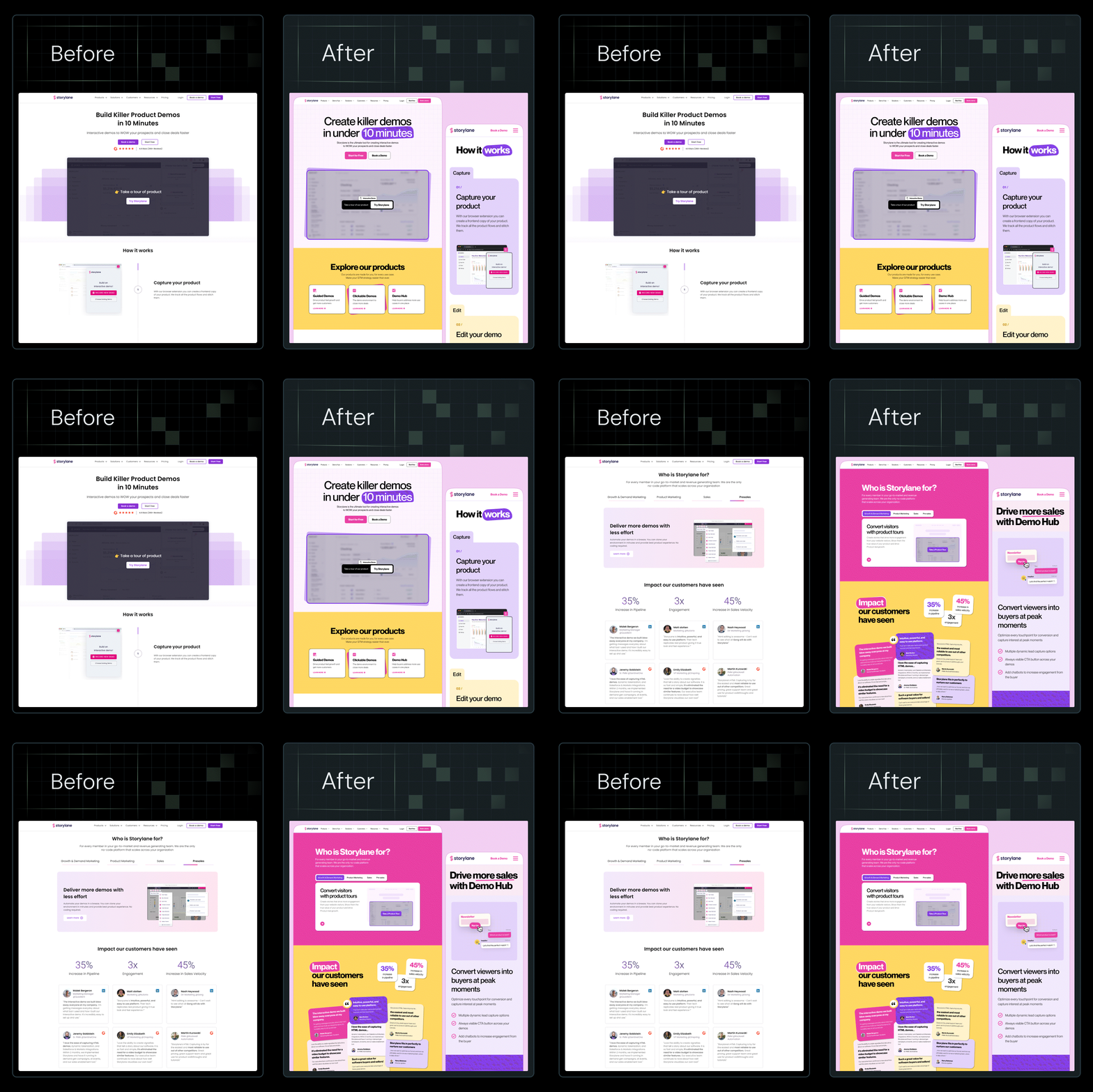
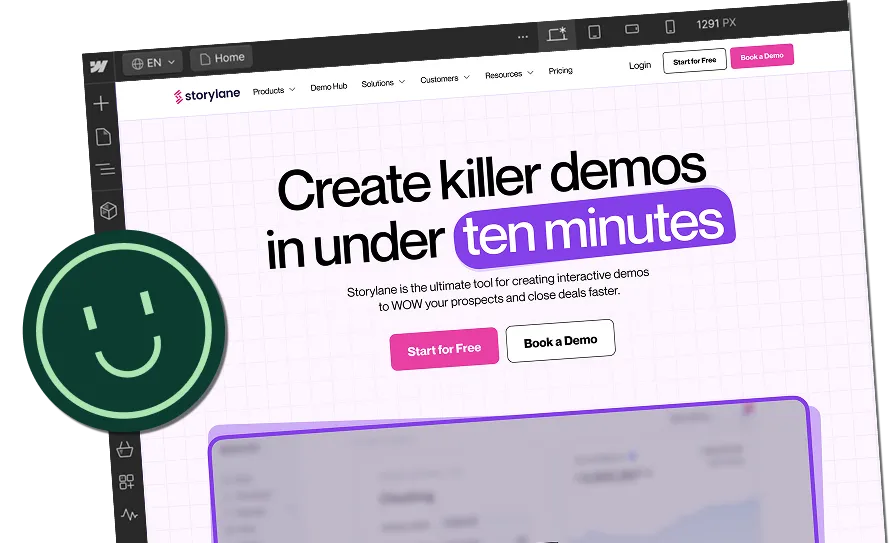
If you're looking for a B2B website maintenance company in India, ThunderClap might be a good option. Here's why 88+ brands, including Factors, RoomMaster, Storylane, and Razorpay, have chosen us for website revamps, maintenance, and migrations.
- Deep B2B expertise: With 129+ website projects across fintech, VC, SaaS, AI, and HR tech, we've likely seen your problem before and know the fastest way to solve it.
- Results, not just deliverables: Every decision we make is tied to your conversions, not just aesthetics. For example, roommaster saw 80% more demo requests post-revamp. Storylane saw 30% more traffic.
- A partner, not a vendor: With dedicated POCs and a team that's not afraid to push back, we work as an extension of yours, not as another agency you have to manage.
Fast delivery, unlimited revisions: We deliver high-impact designs in 24-48 hours with unlimited revisions, so you always get exactly what you want: conversion-driven designs your buyers can't ignore.
{{ctaBlock}}
FAQs
1. How to choose a website maintenance company?
To choose the best website maintenance company, start by shortlisting based on their B2B portfolio and experience. Then get on discovery calls and ask about their maintenance process, how they handle pushback, what they do between active projects, who will be working on your site, and what the retainer costs. The answers will tell you whether you're hiring a vendor or a growth partner.
2. How much do website maintenance companies charge?
Website maintenance companies typically use a subscription pricing model with retainers ranging from $2,000 to $4,500 per month. The structure varies by need, some clients send one request at a time with no cap on total requests, others buy a fixed block of hours per month, and some run design and development simultaneously.
3. Do I actually need a website maintenance agency?
Yes, if you want your website to actively drive conversions and pipeline, not just stay alive. A website maintenance agency monitors performance, ensures your site is always primed for conversions and takes the load off your internal team on complex technical and design work, so they can focus on what matters most.
4. Is SEO a part of website maintenance?
Yes, SEO is very much a part of comprehensive website maintenance, specifically on-page and technical SEO. This includes schema implementation, fixing broken links, monitoring crawlability, compressing images for faster load times, and keeping pages optimized for search.





.webp)
Browse Similar Articles






Leading 5 SaaS Branding Agencies in Florida (That Actually Understand SaaS Growth)

.svg)


How to Turn Your B2B Website into a Self-Serve Growth Engine? (PLG Ready in 2026)


9-Step Website Copy Audit Checklist to Improve Conversions (Examples from Top B2B Brands)

.webp)

How to Choose the Right Fintech Web Development Company for Your Business



Top B2B Website Design Principles That Turn Visitors into Qualified Leads

%20Audit%20That%20Actually%20Improves%20Revenue.webp)
How to Do a Conversion Rate Optimization (CRO) Audit That Actually Improves Revenue
Web Design Agency vs. Freelancer vs. In-House: What Actually Works in 2026
5 CRO Agencies in London and How to Choose the Best CRO Agency for Your Business


The Ultimate Fintech B2B Positioning Guide for 2026 (That Actually Drives Conversions)

Mapping the B2B Buyer Journey to Improve Conversions Across Every Touchpoint
.webp)
7 Best Website Maintenance Companies in India for Growth-Led B2B Teams (2026)


.webp)


8 Best Healthcare Website Design Agencies for HIPAA-Compliant Sites in 2026



How to Find the Best Web Design Company in Houston, Texas for B2B Brands (6 Best Picks)


Positioning That Wins: How to Make Complex B2B Products Clear and Compelling
The Step-by-Step Website Redesign Process B2B Teams Use to Increase Conversions (Without Killing SEO and Pipeline)

7 Best Video Production Agencies for SaaS Product Walkthroughs and Feature Videos









How to Choose a Web Design Company in San Francisco in 2026 (with Examples)


10 Best Web Design Companies in Florida in 2026 and How to Choose the Right One

How to Use Brand Storytelling on Your Website to Close More B2B Deals and Build Buyer Trust

SaaS CRO Best Practices: What High-Growth Brands Do Differently to Win Conversions


How a Rebranding Agency Can Redefine Your B2B SaaS Identity and Boost Pipeline


B2B Marketing Trends in 2026 That Directly Influence Pipeline and Revenue

Top 7 Video Marketing Agencies Driving B2B SaaS Brand Awareness in 2026

Why Partnering with a B2B Brand Positioning Agency Accelerates Market Differentiation

The Complete Website Redesign Checklist for B2B SaaS Teams Ready to Scale
.avif)
9 Best Webflow Development Agencies in India for 2026 (In-Depth Review)

10 Product Marketing Companies Powering the Fastest-Growing SaaS Brands in 2026
Website Copywriting Services vs In-House: What's Right for Your Business?


How to Choose a Marketing Agency That Understands B2B SaaS Growth Metrics


How to Choose a Video Marketing Agency That Understands B2B Storytelling

Outsourcing Web Design: Cost-Benefit Analysis for Mid-Market & Enterprise Brands

From Leads to Lifetime Value: How Growth Marketing Agencies Scale SaaS Revenue

Build a B2B Website Strategy That Aligns with Sales and Marketing Goals

Webflow vs WordPress: Which Platform Is Better for Your Business Website in 2026?

Fintech Web Design That Builds Trust: 8 UX Principles Every Fintech Site Needs

Optimizing for Intent: How B2B Website Messaging and UX Changes Help Capture Top-Funnel Buyers




12 Best B2B Web Development Agencies in the US to Build Scalable Websites


From Audit to Action: 8-Step Process to Optimize Your B2B Website Strategy for 2026 Buyers

How to Design a High-Converting Landing Page from Scratch (2026 Edition)

From Click to Customer: Proven Landing Page Conversion Optimization Techniques

How to Write Website Copy That Converts: A Step-by-Step Guide for 2026




How to Optimize a Landing Page for Maximum ROI: A Step-by-Step Breakdown


AI Landing Pages That Convert: 7 Design Principles Every AI Platform Should Follow


From Traffic to Pipeline: B2B Website Growth Strategy for Scaling Teams


B2B Website Optimization Strategy: Speed, UX, SEO, and CRO in One Playbook




Interested in seeing what we can do for your website?



.webp)
