















Top 10 Web Design Companies in Canada for SaaS Websites



TL;DR
- Most SaaS websites lose buyers not because of bad design, but because of unclear messaging and poor structure.
- High-performing SaaS websites reduce time-to-clarity, build momentum across pages, and deliver proof at the exact points where buyers make decisions.
- The best agency for your SaaS isn't the most decorated; it's the one that understands how your buyers evaluate software.
- This list is curated based on SaaS-specific expertise, conversion-focused UX, technical execution, client portfolio, and the ability to build websites that support real buyer decision-making.
Canada is home to approximately 2,000 SaaS companies, reflecting a fast-growing industry and intensifying competition. With thousands of SaaS companies competing for attention, standing out is no longer just about having a great product. Your website often becomes the deciding factor in whether a buyer stays, explores, and eventually converts.
Despite this growth, most SaaS websites don't have a traffic problem. They have a comprehension problem.
Buyers land on the homepage, and within seconds, they're already asking themselves: "Is this actually for me?" and "Is this better than what I'm already using?"
Most SaaS sites make them work hard to find those answers. In a market where B2B buyers spend only 17% of their total buying time in direct contact with vendors, with about 80% of the journey happening without any salesperson involved, a confusing website is more of a revenue problem, rather than a branding problem.
That gap is rarely solved by design alone. It's a messaging, structure, and UX problem wrapped together, and it plays out on your website, the one channel buyers use before they're willing to reach out to anyone. This is why SaaS teams partner with those who understand how SaaS products are actually evaluated.
This article provides a curated list of the top web design companies in Canada to help you achieve exactly that!
The Truth About SaaS Web Design Agencies in Canada
Canada’s SaaS design landscape is going through a reset. As AI adoption accelerates and products shift from feature-heavy tools to workflow-driven solutions, buyers now expect websites to deliver clarity and outcomes, not just polished UI.
Simultaneously, many Canadian website design agencies are moving toward performance-first, modular design systems, yet still prioritize visual storytelling over conversion. SaaS now accounts for over 46% of Canada’s cloud spend, which means companies are no longer competing only on product. They are competing on how effectively their websites turn traffic into a pipeline.
That is where the gap begins.
1. There are very few SaaS-specialist agencies
Canada has a strong design ecosystem. The top web design companies span cities from Toronto's tech corridor to Vancouver's creative studios. But most of them serve a wide range of industries, such as retail, healthcare, real estate and nonprofits.
For SaaS teams, it often means the agency hasn't internalized how SaaS buyers think, how demo-driven funnels work, or how product-led growth changes the relationship between the homepage and the product.
2. "We work with startups" is not SaaS expertise
Many Canadian agencies have worked with a startup or two. That's not the same thing as understanding SaaS buyer psychology, product-led growth mechanics, or demo-driven conversion funnels.
According to Forrester's State of Business Buying 2024 report, 86% of B2B purchases stall during the buying process, and 81% of buyers are dissatisfied with their chosen providers. A lot of that starts at the website. Knowing how to make a startup look credible visually is one capability. Knowing how to structure a site so that a skeptical VP of Operations at a mid-market company can quickly answer their own evaluation questions is a different one.
3. Why this list is curated the way it is
This list uses two labels: Specialist for SaaS-native agencies, and Experienced for agencies that have worked with SaaS companies but don't exclusively serve the vertical.
Only one agency on this list is a true SaaS specialist. The rest bring relevant, proven capability without overstating their expertise.
Clear labeling matters because SaaS teams should not enter an engagement in which the agency is still learning the category at their own time and budget.
Top 10 Web Design Companies in Canada for SaaS Brands
Finding the right web design partner can make or break your SaaS product's conversion rate. Here are the 10 best web design companies in Canada that understand how to build sites that drive clarity, trust, and pipeline.
1. ThunderClap
.png)
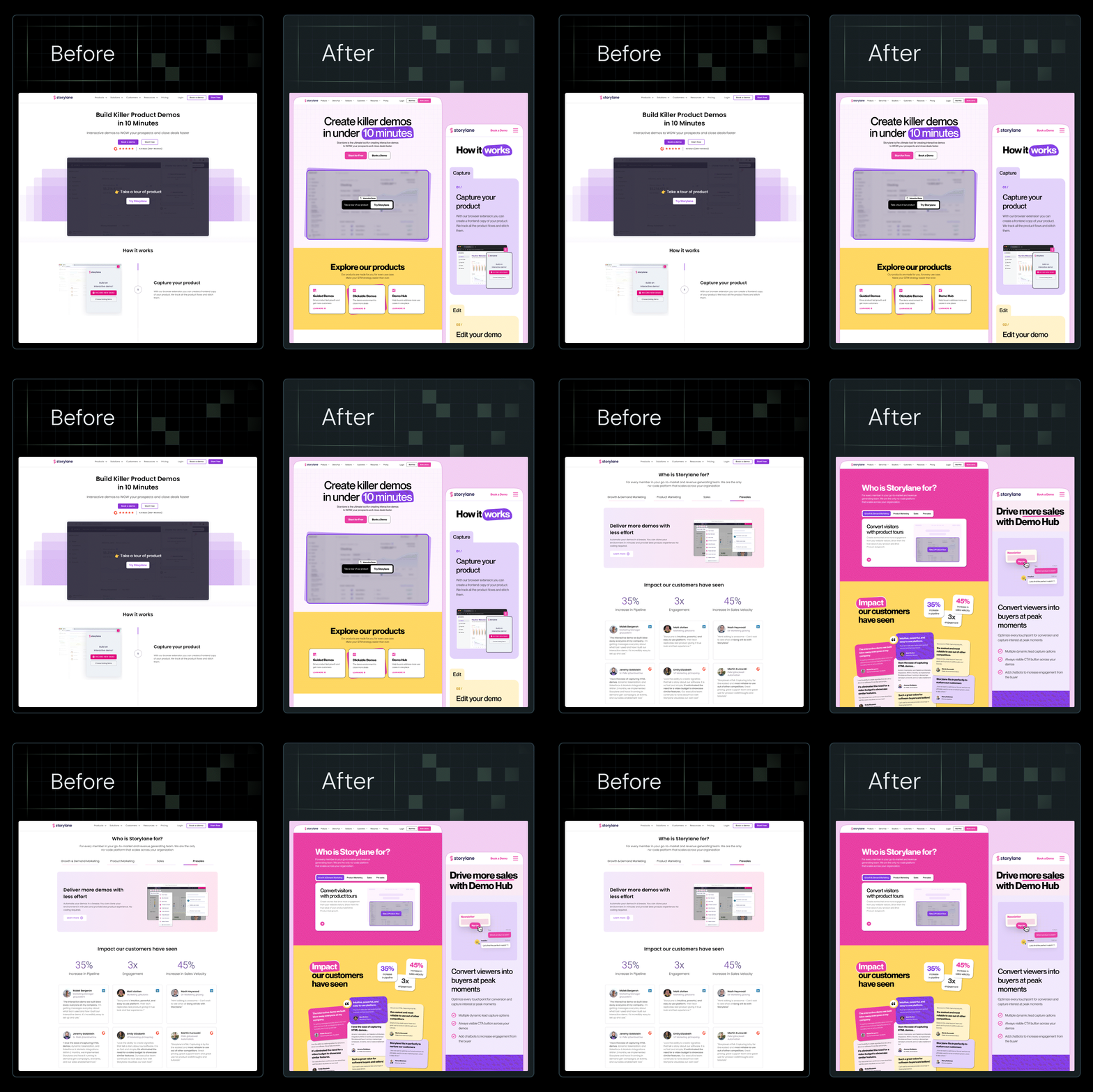
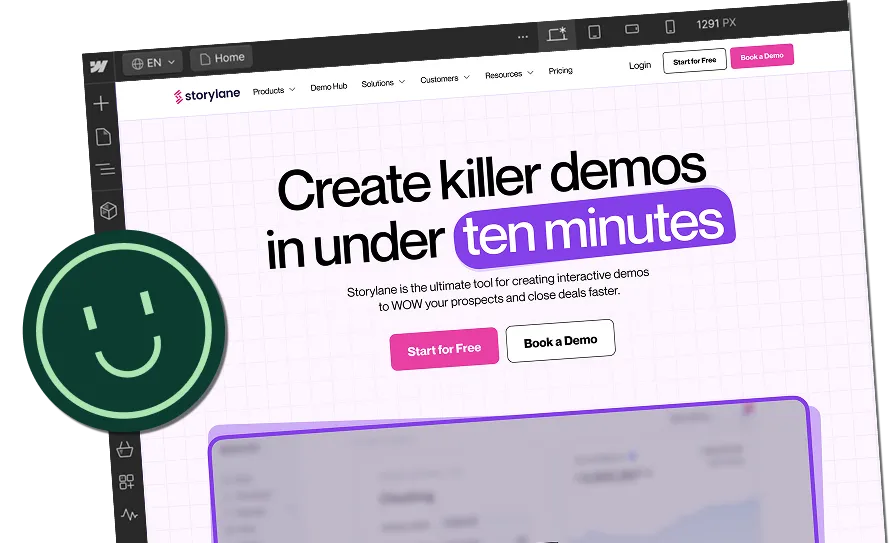
ThunderClap is purpose-built for B2B SaaS, alongside fintech and AI companies. Where most agencies start with layouts, ThunderClap starts with positioning and messaging clarity, because they know a site can't convert if buyers can't quickly understand what the product does and why it matters. Their work covers the full stack, including messaging strategy, copy, website design, and Webflow development.
At ThunderClap, this approach has been applied across SaaS and enterprise clients such as Amazon, Storylane, Factors, Roommaster, Zamp, Dropit, Wizcommerce, and DPDZero, solving complex design and conversion challenges. Post-redesign, demo requests and organic traffic have increased by up to 80%, highlighting the impact of combining strategy with execution.
For SaaS teams that care about pipeline, not just aesthetics, ThunderClap is the closest thing to a true category specialist in Canada. Their model is senior-led from strategy through launch, which means no bait-and-switch to junior staff mid-project. If your website isn't doing the sales work it should, this is where the conversation starts.
Factors.ai is a strong example of this approach in action. The team needed a full rebrand and website overhaul during an active go-to-market phase. Instead of hiring internally, they scaled with ThunderClap and delivered a more premium brand without changing the logo or color palette. One standout section visualizes the execution timeline, showing how users move from raw signals to actionable campaigns within three weeks.
.webp)
The experience was designed to drive clarity and action. Bold patterns, vibrant colors, and customer quotes create visual impact, while clear, repeated calls to action such as “Get a demo” and “Learn more” guide users through the journey. Enterprise-grade security badges and recognizable client logos reinforce trust at key decision points.
As Tanvi, Product Marketing Lead at Factors AI, said,
"Thunderclap delivered our website revamp on extremely tight deadlines without compromising on quality. The team was always responsive, quick to act, and highly collaborative. The final output exceeded our expectations - modern, clean, and exactly what we envisioned."
A recent project with FillHQ further illustrates this approach. FillHQ offers a HIPAA-compliant eSignature platform for healthcare, finance, and legal industries and needed a site that balanced compliance, clarity, and conversion. The website was structured around the buyer journey, guiding visitors from problem awareness to solution evaluation and decision-making.
Core features such as unlimited eSignatures, automated workflows, real-time audit trails, AI-powered document generation, and secure data intake forms were positioned within real use cases. Key differentiators such as HIPAA, SOC 2, and GDPR compliance, along with healthcare-specific workflows and cost advantages, were clearly highlighted. Educational resources, case studies, and feature breakdowns positioned FillHQ as a trusted authority while driving qualified traffic toward free trials and enterprise demos.
What is it best for?
- Positioning-first website strategy and messaging clarity for B2B SaaS
- Full-funnel Webflow design and development with conversion rate optimization (CRO) built in
- Website revamps for growth-stage companies that need to convert, not just look good
- Teams needing a fast, senior-led partner, not an agency with long handoff chains
Who is it best for?
Growth-stage B2B SaaS companies that care about demo quality and pipeline, not just design awards.
Proof in portfolio: ThunderClap brings deep expertise across SaaS, fintech, AI, consulting, commerce, and B2B services. Clients include Amazon, Storylane, Factors, FillHQ, Wizcommerce, Skyroot, Deductive AI, Razorpay, and other B2B companies focused on measurable outcomes, not just design. Half of the clients operate globally, and the work has been recognized with awards such as the Webby Awards and CSS Design Awards. Teams that partner with ThunderClap often see up to a 50% increase in conversions and a 60% lift in engagement.
2. Takt
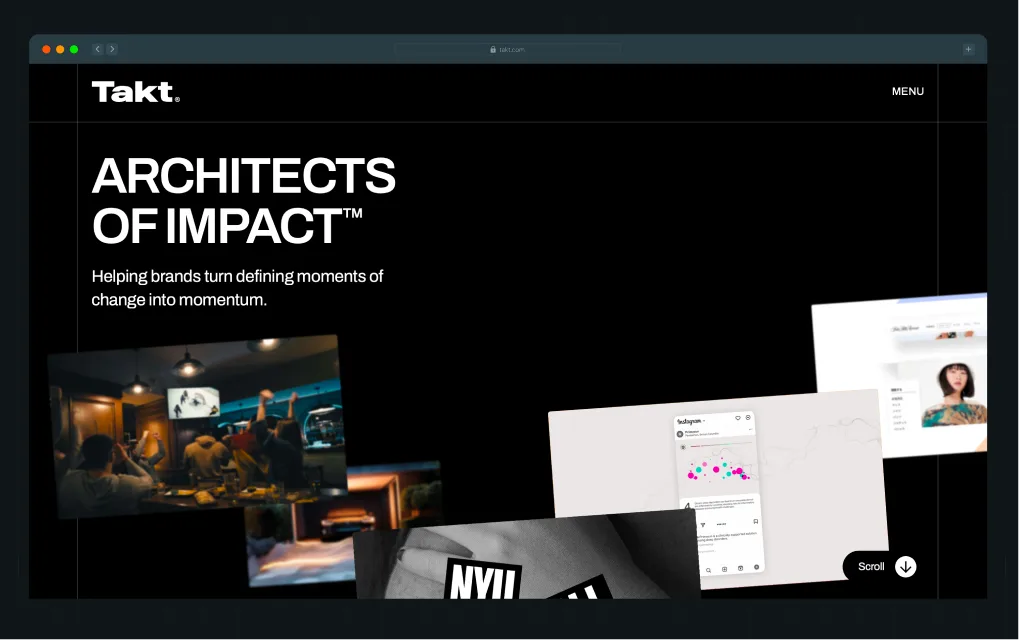
Takt is a Vancouver-based brand and digital agency with an impressive roster of enterprise clients and a strong track record in design-led brand execution. They've worked with tech companies including Alphabet, Microsoft, and a Google-backed startup, Primasun. Their strength is in brand clarity and visual systems, which makes them a good fit when a SaaS company needs to look the part as much as convert.
What is it best for?
- Brand strategy and visual identity paired with a website launch
- Enterprise-level design execution with strong stakeholder management
- Companies that need to project credibility quickly in a new market or category
- Award-quality design that reflects a maturing brand
Who is it best for?
Mid-to-enterprise SaaS teams, where brand positioning and visual identity are the primary priorities.
Notable clients: Amazon, Alphabet, Microsoft, CBC, CIBC, NHLPA, NYU, UBC
3. Major Tom
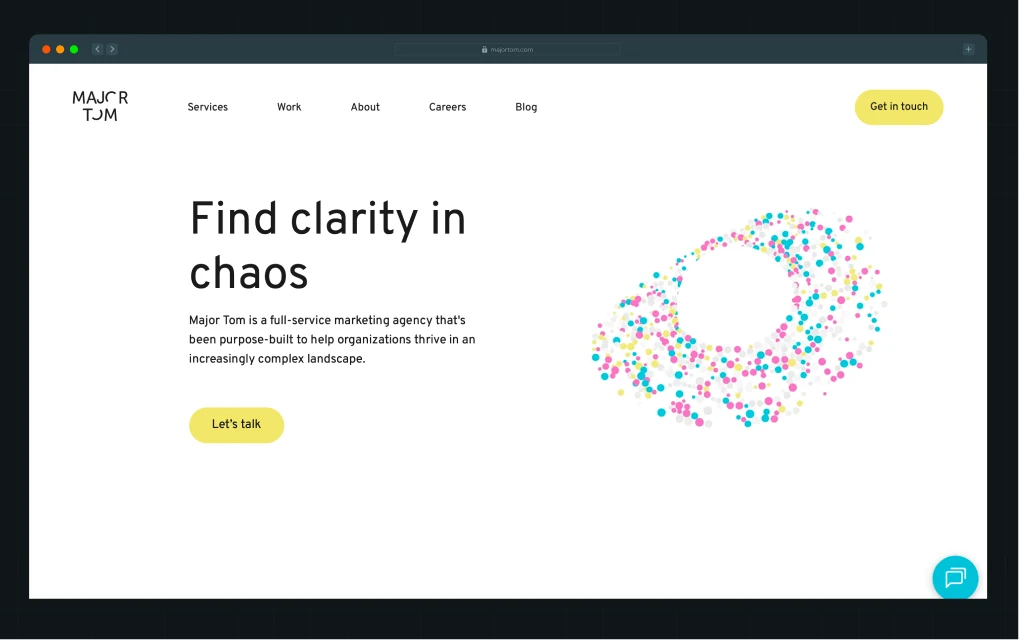
Major Tom is a full-service agency with offices in Vancouver, Toronto, and New York, built on a model that combines strategic consulting with the execution of marketing and development.
For SaaS companies investing in growth and needing a website that integrates with paid media, SEO, and broader campaigns, Major Tom can be a capable partner. They're not SaaS-native, but their growth-marketing orientation means they approach web projects with conversion and acquisition in mind.
What is it best for?
- Growth-oriented websites that need to integrate with paid media and SEO
- Multi-channel campaigns where the web is one piece of a larger strategy
- Companies that want a long-term agency relationship across web, brand, and performance
- SaaS companies scaling into new verticals or geographies
Who is it best for?
Mid-market SaaS teams that need both a strong web presence and ongoing digital marketing execution under one roof.
Notable clients: Rieker, IPEX, OUAI, Mark Anthony Group, Bakkt
4. Parachute Design Group
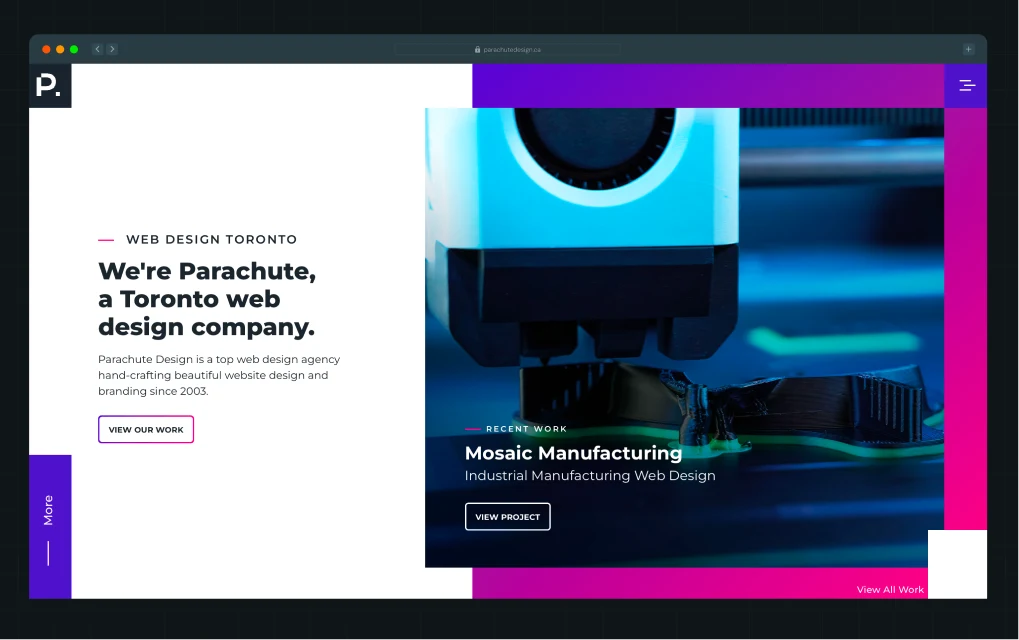
Parachute is a Toronto-based boutique web design firm that's been operating since 2003. They specialize in custom WordPress builds and have a strong SEO-first approach baked into their design process, a practical advantage for SaaS teams who want organic traffic to work harder from launch.
Their work is clean, scalable, and thoughtfully executed. They're not a SaaS-specialist shop, but for mid-stage companies that need a solid, professionally structured site without a massive agency budget, Parachute offers genuine quality.
What is it best for?
- Custom WordPress websites with SEO built into the architecture from day one
- Professional, credibility-building design for B2B companies
- Clean UX and scalable content management for growing marketing teams
- Long-term website partnerships with ongoing support
Who is it best for?
Mid-stage SaaS teams that want a reliable, professional web partner without enterprise price tags.
Notable clients: TBond Brand Loyalty, MaxAssist, Aecon Green Energy Solutions, KiSP Inc.
5. Func Media
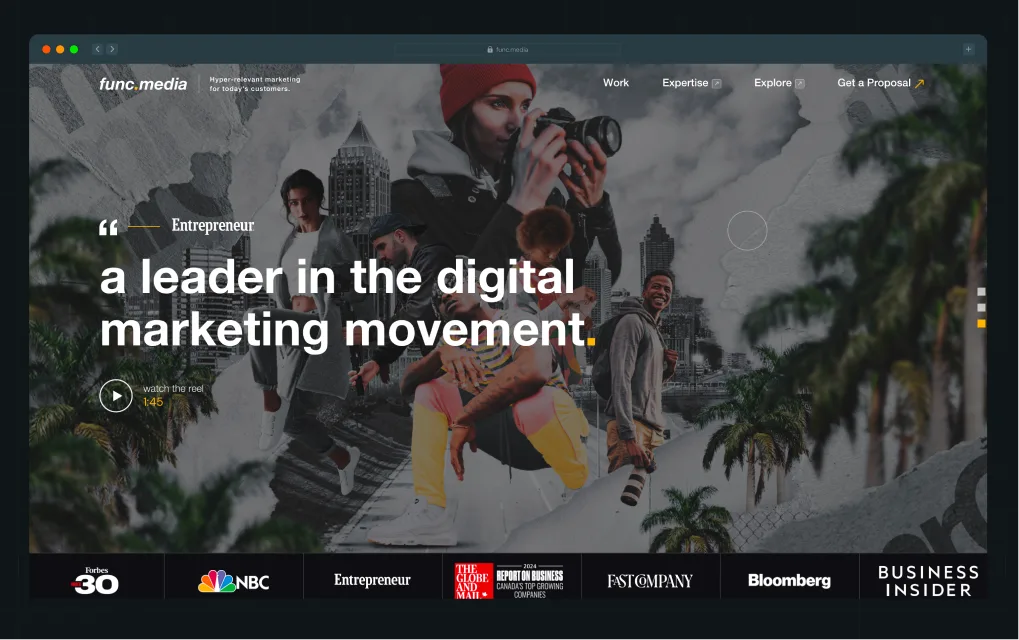
Func Media is a full-service digital agency specializing in web design, development, branding, and performance marketing. Their process is structured around discovery, UX and wireframing, development, and post-launch optimization to ensure continuous performance improvements.
The focus is on building websites that combine strategy, usability, and long-term scalability rather than just visual design. Their work spans end-to-end digital execution for brands that need both creative direction and technical delivery under one roof.
What is it best for?
- Discovery-led website projects for brands that need structured thinking before execution
- UX and wireframe-heavy builds with a strong focus on user journeys and sitemap planning
- Full-service digital execution across design, development, content, and marketing
- Mid-market to enterprise companies that want ongoing optimization after launch
Who is it best for?
Companies that need a process-driven agency capable of handling both strategy and execution across large-scale digital projects.
Notable clients: Musi, Illumi, Deliverr, GGPoker
6. Techno Thinksup Solutions
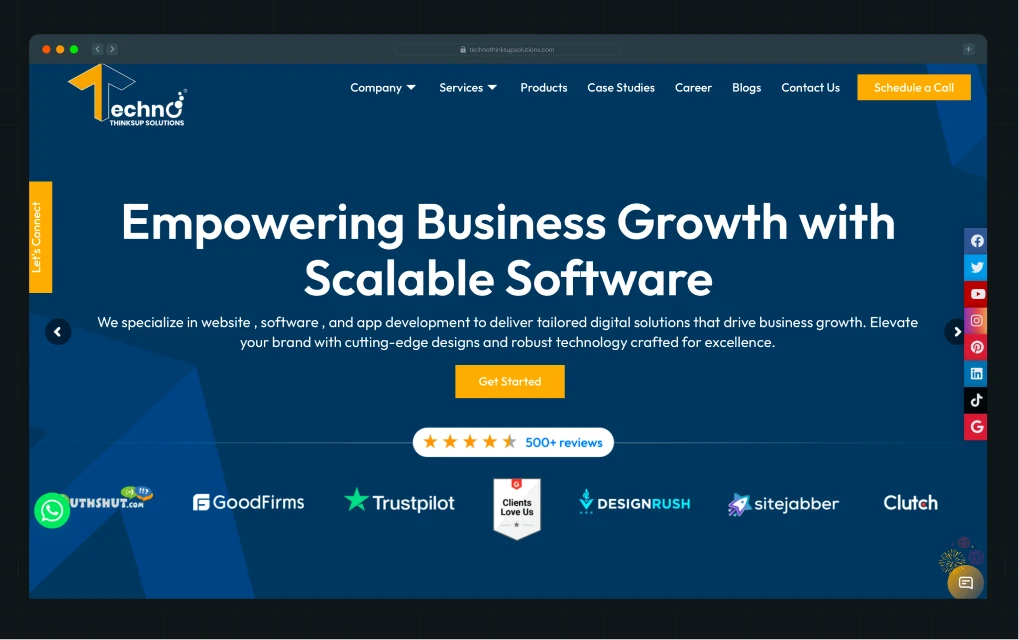
Techno Thinksup Solutions is a full-stack software and digital solutions company based in Canada, focused on web design and development, mobile apps, ERP systems, and AI-driven business tools. The agency positions itself as a “digital transformation” partner for startups and SMEs, offering end-to-end execution from discovery and UX to development and post-launch support.
Their work spans multiple industries, including healthcare, finance, retail, education, and manufacturing, with an emphasis on scalable systems rather than standalone websites.
What is it best for?
- End-to-end web and software design and development for SMEs and startups
- ERP, CRM, and workflow automation systems for operational efficiency
- Multi-industry digital transformation projects (healthcare, retail, education, etc.)
- Companies that need both web presence and backend system development
Who is it best for?
Startups and SMEs that want a single vendor for web, app, and software development, focused purely on conversion strategy or product-led growth websites.
Notable clients: Biz Finder App, The Living Hub, Techno CRM Web Application
7. Digia
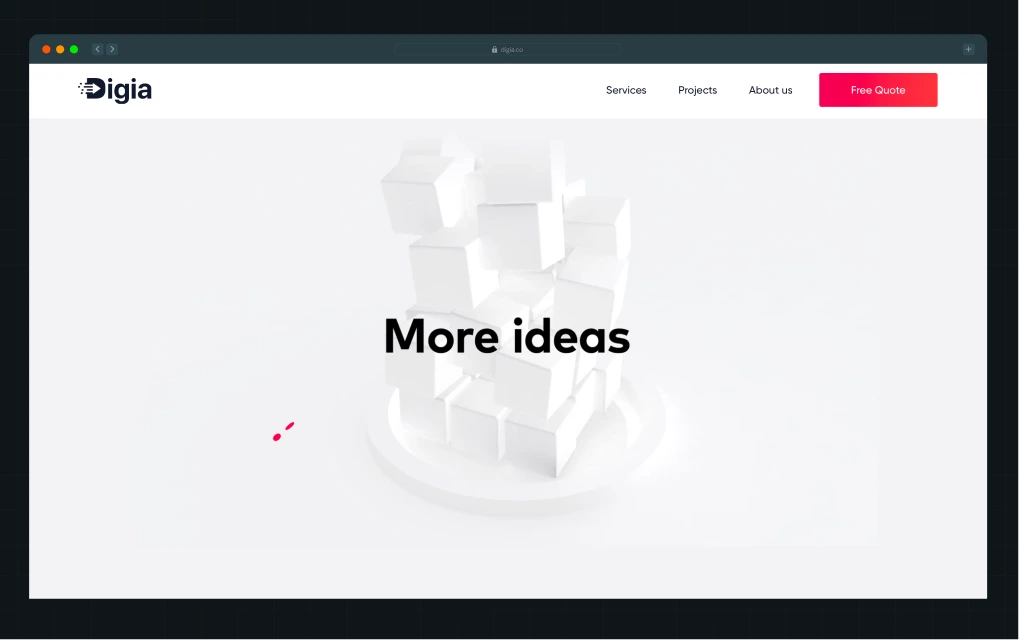
Digia is a development-forward agency with strong technical capabilities across complex builds. If your SaaS product has backend integration requirements, custom functionality, or technical architecture that most design-led agencies can't support, Digia is worth evaluating.
Their design sensibility is secondary to their engineering depth, making them a fit for SaaS companies with complex technical requirements rather than companies primarily focused on positioning and conversion.
What is it best for?
- Complex web builds with custom integrations and backend requirements
- SaaS companies with technically complex product offerings needing matched website infrastructure
- Enterprise-grade builds where performance and security are non-negotiable
- Teams with internal design resources who need a strong development partner
Who is it best for?
SaaS companies with technically complex products where development capability matters more than conversion strategy.
Notable clients: Ubbli, The Urban Writers, Converso, Pharmhill
8. morphsites
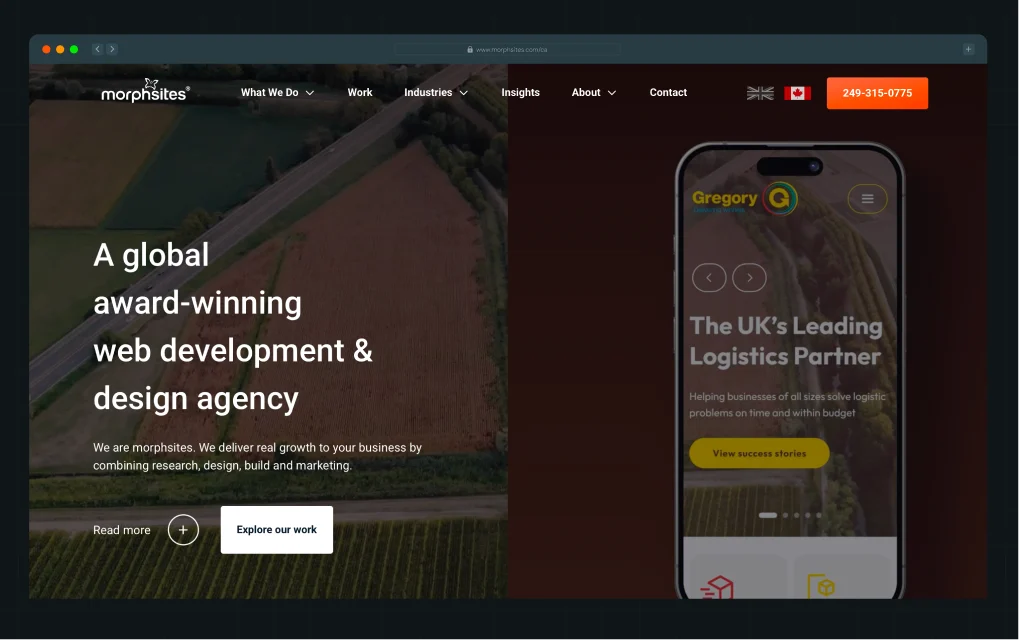
morphsites is a Canada-based, award-winning web development and digital agency that combines research, UX design, development, and marketing to drive measurable business growth. Their work focuses heavily on building complex, performance-driven digital platforms, including e-commerce systems, customer portals, ERP integrations, and lead-generation websites.
Additionally, their portfolio covers high-impact transformation projects such as scaling Coombe Farm Organic from £0 to over £1.2M annual revenue, building high-performance legal and booking platforms, and developing enterprise-grade ordering systems with deep backend integrations.
What is it best for?
- Complex web platforms with heavy integrations (ERP, CRM, ordering systems)
- E-commerce and revenue-focused websites designed for measurable growth
- SEO-driven rebuilds for brands recovering or scaling organic visibility
- Long-term digital partnerships combining design, development, and marketing
Who is it best for?
Mid-market to enterprise businesses that need more than a website, specifically those requiring custom systems, performance optimization, and full-stack digital growth support.
Notable clients: Coombe Farm Organic, PenCarrie, Legend, WilkinsonEyre, First Vehicle Leasing, Devon’s Top Attractions
9. Excited Agency
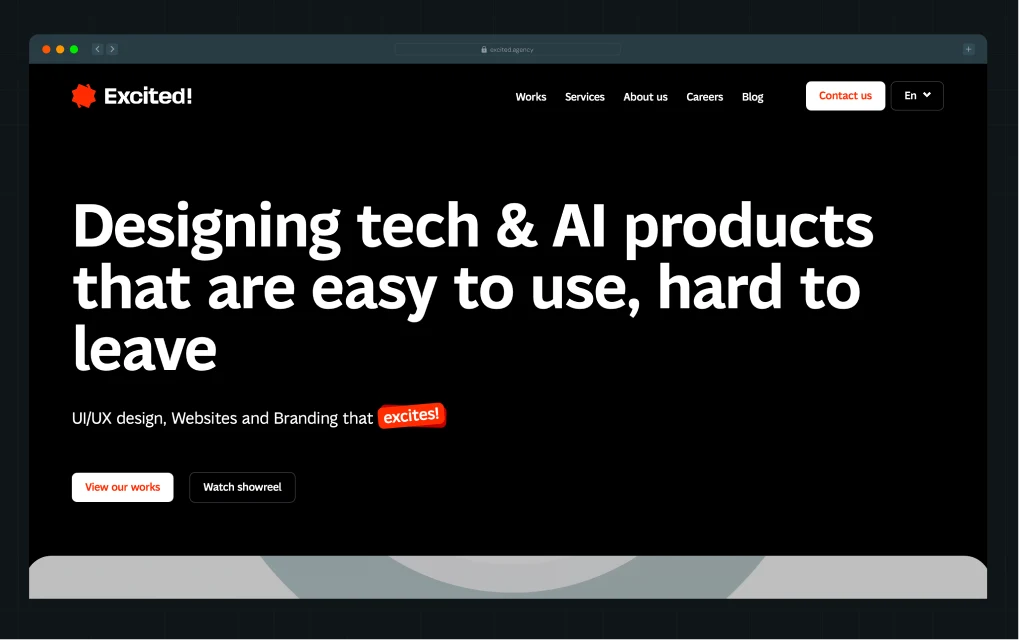
Excited Agency is a SaaS-focused product design and UX agency that specializes in building launch-ready websites, redesigns for product-market fit, and scalable design systems for startups and scale-ups. Their work is centered on product storytelling, conversion-focused UX, and interface design that simplifies complex SaaS products into clear, intuitive user journeys.
The agency operates globally, working across 20+ countries, with a strong emphasis on UX research, prototyping, and iterative design that evolves alongside product growth.
What is it best for?
- Launch-ready SaaS MVP websites for early-stage startups
- UX-driven redesigns focused on improving product-market fit and conversions
- Scalable SaaS design systems for growing B2B platforms
- Product storytelling that simplifies complex software into clear user journeys
Who is it best for?
Early-stage to growth-stage SaaS companies that need a product-aware design partner focused on UX, onboarding, and conversion.
Notable clients: XILO, Verida, ClubReady, Ravel, Doobi, InsuredMine, Timeero, The Streamable, Audzilla, Countd
10. Powered by Search
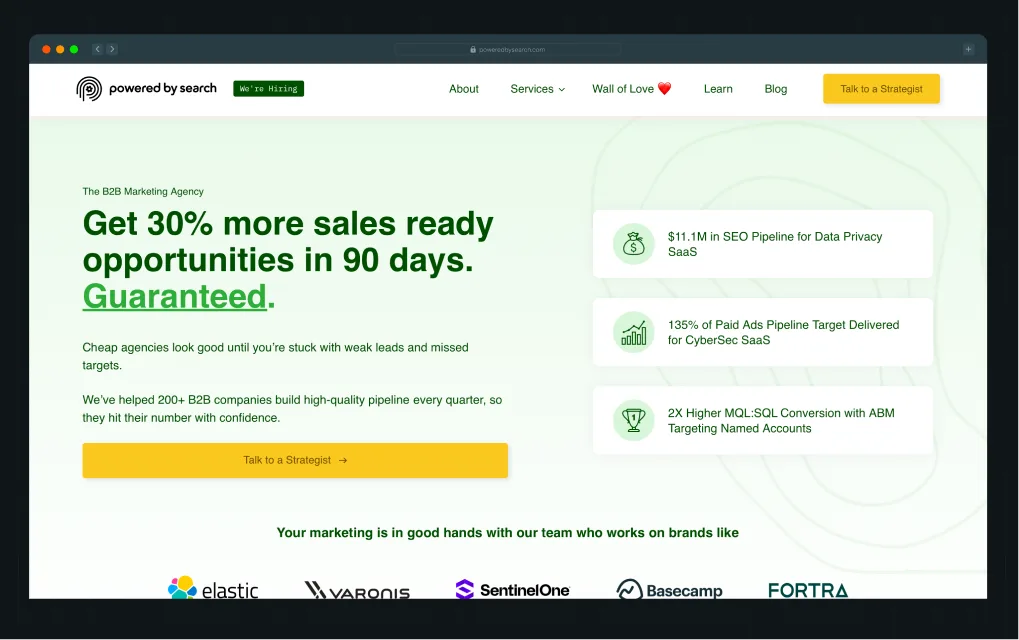
Powered by Search is a B2B SaaS growth agency that focuses on performance-driven digital experiences, with a strong emphasis on landing page design, conversion-focused UX, and SaaS website optimization.
Their “Predictable Growth” methodology extends into how SaaS websites and campaign landing pages are structured, prioritizing clarity of offer, buyer-stage alignment, and continuous optimization. Instead of static marketing sites, they build conversion systems where pages are designed to capture demand, guide users toward high-intent actions, and improve performance through testing and iteration.
What is it best for?
- SaaS landing page design focused on demo and trial conversions
- Conversion-led website and funnel optimization for B2B SaaS
- Messaging and offer structuring for high-intent acquisition pages
- Performance-focused redesigns tied directly to paid and organic traffic
Who is it best for?
Growth-stage SaaS companies that already have traffic and product-market fit and need their website and landing pages optimized for higher conversion rates.
Notable clients: Elastic, Fortra, Basecamp, SentinelOne, PointClickCare, ThreatX, TouchBistro
{{specficService}}
Where Most SaaS Web Design Agencies Go Wrong
Most Canadian web design agencies will show you a portfolio full of beautiful sites, with smooth animations, clean grids, and big hero shots. But "beautiful" and "high-performing" aren't the same thing in SaaS.
Most agencies make the same three mistakes.
1. They start with wireframes instead of positioning
Most agencies open a project by jumping straight into layouts. They ask you for your logo files, your brand guidelines, and a list of pages you want. What they skip is who this website is actually talking to and what that person needs to believe before they'll book a demo.
The result is a pretty website with confused buyers. The homepage looks great in a Figma presentation and falls flat the moment a real prospect lands on it.
2. They treat SaaS websites like brochures
A brochure website is typically a static, information-heavy site that lists a company’s features, services, and credentials in a linear format and does not guide users toward a decision. It works for industries where visitors primarily need awareness or validation like a law firm or local service business, but SaaS buyers need much more context to evaluate fit.
SaaS websites have to do something much harder.
They're decision systems. A SaaS buyer isn't just looking for information; they're running a mini due diligence process. They want to know if your tool handles their use case, beats the tools they're already comparing you against, and has customers who look like them.
A brochure layout gives them a corporate overview. It doesn't give them the answers they need to move forward, and a site that doesn't support that process loses the deal before a conversation ever starts.
You see this problem clearly in SaaS teams with strong products but underperforming websites.
NativeMSG, an enterprise messaging platform, had exactly this issue. Their site leaned heavily on feature lists, and prospects struggled to understand what Rich Communication Services (RCS) could actually do for them.
ThunderClap shifted the site away from a brochure-style structure to a decision-focused experience:
- Built 40+ real message mockups so users could see RCS in action instantly
- Reframed the site around outcomes like engagement, ROI, and conversions
- Created clear product pathways (Creator, Cloud, Connect) to simplify understanding
- Used a distinct visual system to communicate trust, structure, and category leadership
As Ayush Barnwal, Team Lead at ThunderClap, explains:
“They did not want to be another messaging vendor. They wanted to own RCS entirely. Our visual-first approach helped people understand the product in minutes.”
See how NativeMSG’s redesign turned a complex technology into a clear, visually compelling, and authoritative RCS brand.
That’s the difference. A brochure tells. A high-performing SaaS website helps buyers decide.
3. They ignore the sales layer
Your website has to handle objections, handle comparisons, and build trust at every scroll depth. Most agencies don't think beyond the UI.
As Kiran Kulkarni, Partner and Head of Growth at ThunderClap, puts it, most SaaS homepages do not fail on design.
They fail because they are built to impress stakeholders instead of converting buyers. They deliver a launch-ready site that looks polished on day 1 and gives your sales team nothing to work with on day 90.
The objections your buyers raise on the site, the competitors they're mentally comparing you to, the trust signals they look for before they'll share their email address… those aren't afterthoughts.
Best Practices for High-Performing SaaS Websites
Here's what separates SaaS websites that generate pipeline from ones that generate compliments.
They reduce time-to-clarity
Unbounce's conversion benchmark report shows that landing pages written at a 5th to 7th-grade reading level convert at 12.9%, while pages written with professional-level copy convert at just 2.1%.
Within five seconds of landing on your homepage, a buyer should know three things:
- Who this is for
- What it replaces
- Why it matters
If they have to read three paragraphs to get there, you've already lost a portion of them. Top-performing B2B SaaS companies convert visitors to leads at 8–15%, while average companies sit at around 1.5%. The gap almost always comes back to clarity.
They build momentum across pages
High-performing SaaS sites aren't a collection of isolated pages. They're a connected journey:
- The homepage earns the click to the use case page
- The use case page earns the click to the product page
- The product page earns the demo request
Every page has a clear job, and each hands the baton to the next.
Most agency-built sites are designed page by page, which is why they feel fragmented. Visitors are dropped onto a homepage that doesn't link to the features section, which doesn't link to the case studies, which are buried three clicks deep anyway.
They embed proof where decisions happen
98% of buyers read reviews before making a software purchase decision. But the common mistake is collecting that proof on a dedicated case study page that most buyers never visit.
High-performing SaaS sites distribute proof throughout the buying journey. For example:
- A relevant customer quote sits next to pricing
- A logo bar with recognizable names anchors the hero section
- A short video testimonial lives on the features page, right next to the feature it validates
This matters even more in Canada, where SaaS is increasingly export-driven. With over 600 SaaS companies selling globally and competing in mature international markets, buyers are not just comparing you locally. They are comparing you to the best in the US and beyond.
Proof isn't a section of the site. It's a thread woven through every decision point.
They are built for constant change
SaaS companies don't stay still. They release new features, add ICPs and shift their positioning as the market evolves. And the Canadian market is accelerating this.
Cloud adoption is nearly universal, with 92% of Canadian companies using cloud solutions and allocating around 29% of their IT budgets to it. SaaS already accounts for a major share of that spend and continues to grow rapidly.
A website built as a static deliverable becomes a liability within six months.
High-performing SaaS sites are built on flexible systems, such as modular components, content management system (CMS) layers, and design systems, that let your team make changes quickly without involving a developer for every update.
That's the difference between a website that compounds over time and one that ages out by the next funding round.
{{specficBlog}}
How SaaS Teams Actually Pick Agencies (What They Don’t Say Publicly)
Most SaaS companies don’t choose an agency because of an awards page or a polished portfolio.
Those things help get an agency shortlisted. They rarely decide who gets the engagement.
What actually shapes the decision happens much earlier, often during the first discovery call. The strongest agencies reveal themselves through the way they think, the questions they ask, and how quickly they understand the realities of selling software in a crowded market.
They look for "Do they get our product?"
One of the clearest signs you’re talking to the right agency is how quickly they grasp your product, buyer journey, and sales complexity.
A good SaaS agency doesn’t stay at the surface level, asking generic questions about brand colors or preferred layouts. They want to understand:
- How buyers evaluate your product
- Where prospects drop off in the funnel
- What objections sales teams hear repeatedly
- Which features actually influence pipeline
- How does your positioning compare to competitors
Forrester's 2024 Buyers Journey Survey found that 92% of buyers start their purchase journey with at least one vendor already in mind, and 41% have a single preferred vendor selected before formal evaluation begins. This means your website is rarely educating from zero. It helps buyers quickly validate or eliminate you.
The agencies that win are the ones that feel like they already understand the world you're operating in.
Awards and visual portfolio matter less than the quality of the first hour of conversation.
They look for agencies that challenge the brief instead of blindly agreeing with it
74% of B2B buyers say they faced too many competing options in their last major purchase decision. In SaaS website projects, this often shows up as confusion after delivery rather than during briefing.
Execution has become commoditized. Insight is not.
The agencies that command real respect are the ones that push back on the brief, ask what the website needs to do for the sales cycle, and form a point of view on messaging before opening Figma.
This is where real differentiation shows up.
Our work with Wizcommerce is a clear example of this approach in action. Wizcommerce builds AI-assisted sales tools, B2B storefronts, and ERP integrations for wholesale businesses. During discovery, we worked closely with leadership, marketing, and product teams to map buyer personas, sales workflows, and operational challenges.
The process identified key issues such as fragmented systems, unclear messaging, and outdated tools, which slowed down sales teams and confused buyers.
Instead of jumping into design, those insights shaped the foundation of the website strategy. We built a conversion-focused platform that clearly communicated Wizcommerce’s AI-powered sales assistant, storefront capabilities, and ERP integrations across multiple buyer types, including business owners, sales leaders, and operations teams.
The result was a site structured around clarity and decision-making, designed to scale with their growth while supporting SEO and analytics for ongoing optimization.
They prefer agencies that talk about systems, iteration, and scalability early
The best SaaS companies treat their website like a product, not a one-time campaign. That means the right agency will naturally discuss:
- CMS flexibility
- Scalability
- Testing workflows
- SEO structure
- Analytics
- Conversion tracking
- Speed of updates
- Internal team ownership
If every conversation revolves around launch timelines and visual direction while completely ignoring post-launch operations, iteration, and experimentation, the agency may not understand how modern SaaS growth teams operate.
Great SaaS websites evolve continuously as messaging changes, ICPs shift, features expand, pricing evolves, and product categories mature.
The agencies worth hiring build systems that make those changes easier, rather than creating long-term dependencies for every small update.
They avoid agencies that feel like vendors
The clearest signal that a SaaS team will have a great agency engagement is when the agency feels like a partner rather than a supplier. Gartner shows that 61% of B2B buyers prefer a rep-free buying experience and 73% actively avoid vendors that blast irrelevant outreach.
The same dynamic plays out in agency selection. SaaS teams are looking for someone who challenges their assumptions, pushes back when needed, and co-owns the outcome. Agencies that act like order-takers might deliver what you asked for. They rarely deliver what you need.
The Right Agency Starts With the Right Questions
Canada's SaaS market is growing rapidly, and the competition for buyers' attention is intensifying. A website that doesn't convert isn't just missing revenue. It's actively losing ground to competitors whose sites answer buyer questions faster.
Most web design agencies can make your site look good. Very few can make it work the way a SaaS product needs to. Before you shortlist agencies, get clear on what your website actually needs to do:
- Does it need to replace early sales conversations?
- Does it need to educate buyers who've never heard of your category?
- Does it need to handle objections from a skeptical CFO who's evaluating three other tools?
Those questions will tell you more about which agency is right for you than any design portfolio will.
If SaaS conversion strategy and messaging clarity are the priority, start with ThunderClap. Here are a few things that make ThunderClap stand out:
- Revamped 129+ B2B websites for fast-growing companies
- Launched 144+ websites across SaaS, fintech, and AI sectors
- Delivered conversion improvements of up to 50% for clients
The best SaaS website isn't the most beautiful one. It's the one that makes your buyer's next step obvious.
{{ctaBlock}}
FAQs
1. Do web design companies in Canada specialize in specific industries?
Yes, many Canadian agencies develop expertise in certain sectors over time. You'll find agencies that focus on tech and SaaS, healthcare, financial services, and e-commerce. When evaluating agencies, ask specifically about their experience with companies at your stage and in your category, not just startups in general.
2. Can Canadian web design companies handle global projects?
Absolutely. Canada's top agencies regularly work with clients across North America, the UK, and beyond. Most operate remotely or have established workflows for international projects, and English-language SaaS companies in particular experience little friction when working with Canadian teams, regardless of where they're based.
3. Are Indian web design agencies familiar with Canadian market needs?
Some are, particularly those like ThunderClap that have built significant project experience with Canadian and North American B2B SaaS clients. The key is to assess their understanding of your specific buyer, not their geography. Familiarity with Canadian SaaS buying behavior, market positioning, and competitive context matters more than the agency's headquarters location.



.webp)
Browse Similar Articles





Leading 5 SaaS Branding Agencies in Florida (That Actually Understand SaaS Growth)

.svg)

How to Turn Your B2B Website into a Self-Serve Growth Engine? (PLG Ready in 2026)


9-Step Website Copy Audit Checklist to Improve Conversions (Examples from Top B2B Brands)

.webp)

How to Choose the Right Fintech Web Development Company for Your Business
Top B2B Website Design Principles That Turn Visitors into Qualified Leads
%20Audit%20That%20Actually%20Improves%20Revenue.webp)
How to Do a Conversion Rate Optimization (CRO) Audit That Actually Improves Revenue
Web Design Agency vs. Freelancer vs. In-House: What Actually Works in 2026
5 CRO Agencies in London and How to Choose the Best CRO Agency for Your Business

The Ultimate Fintech B2B Positioning Guide for 2026 (That Actually Drives Conversions)
Mapping the B2B Buyer Journey to Improve Conversions Across Every Touchpoint
.webp)
7 Best Website Maintenance Companies in India for Growth-Led B2B Teams (2026)

.webp)
8 Best Healthcare Website Design Agencies for HIPAA-Compliant Sites in 2026

How to Find the Best Web Design Company in Houston, Texas for B2B Brands (6 Best Picks)

Positioning That Wins: How to Make Complex B2B Products Clear and Compelling
The Step-by-Step Website Redesign Process B2B Teams Use to Increase Conversions (Without Killing SEO and Pipeline)
7 Best Video Production Agencies for SaaS Product Walkthroughs and Feature Videos
How to Choose the Best B2B Website Maintenance Company: 9 Questions to Ask Before You Hire One


How to Choose a Web Design Company in San Francisco in 2026 (with Examples)

10 Best Web Design Companies in Florida in 2026 and How to Choose the Right One

How to Use Brand Storytelling on Your Website to Close More B2B Deals and Build Buyer Trust

SaaS CRO Best Practices: What High-Growth Brands Do Differently to Win Conversions
How a Rebranding Agency Can Redefine Your B2B SaaS Identity and Boost Pipeline
B2B Marketing Trends in 2026 That Directly Influence Pipeline and Revenue

Top 7 Video Marketing Agencies Driving B2B SaaS Brand Awareness in 2026
Why Partnering with a B2B Brand Positioning Agency Accelerates Market Differentiation

The Complete Website Redesign Checklist for B2B SaaS Teams Ready to Scale
.avif)
10 Best Webflow Development Agencies in India for 2026 (In-Depth Review)

10 Product Marketing Companies Powering the Fastest-Growing SaaS Brands in 2026
Website Copywriting Services vs In-House: What's Right for Your Business?

How to Choose a Marketing Agency That Understands B2B SaaS Growth Metrics


How to Choose a Video Marketing Agency That Understands B2B Storytelling

Outsourcing Web Design: Cost-Benefit Analysis for Mid-Market & Enterprise Brands

From Leads to Lifetime Value: How Growth Marketing Agencies Scale SaaS Revenue
Build a B2B Website Strategy That Aligns with Sales and Marketing Goals
Webflow vs WordPress: Which Platform Is Better for Your Business Website in 2026?
Fintech Web Design That Builds Trust: 8 UX Principles Every Fintech Site Needs

Optimizing for Intent: How B2B Website Messaging and UX Changes Help Capture Top-Funnel Buyers



12 Best B2B Web Development Agencies in the US to Build Scalable Websites

From Audit to Action: 8-Step Process to Optimize Your B2B Website Strategy for 2026 Buyers
How to Design a High-Converting Landing Page from Scratch (2026 Edition)
From Click to Customer: Proven Landing Page Conversion Optimization Techniques

How to Write Website Copy That Converts: A Step-by-Step Guide for 2026

How to Optimize a Landing Page for Maximum ROI: A Step-by-Step Breakdown


AI Landing Pages That Convert: 7 Design Principles Every AI Platform Should Follow




Interested in seeing what we can do for your website?



.webp)
