















How to Turn Your B2B Website into a Self-Serve Growth Engine? (PLG Ready in 2026)



In 2013, Slack originated as an internal communication tool built by Stewart Butterfield’s team while they were developing the game Glitch. When the game shut down in 2012 after failing to find a player base, the team quickly realized the internal chat tool they had built for themselves was the real gold.
Within 24 hours of public launch, 8,000 companies were on a waitlist. That's a PLG website doing its job.
Today, 58% of B2B SaaS companies already run a PLG motion, and 91% of them are increasing investment in it. Because the data is hard to argue with:
- Freemium models convert visitors at a median conversion rate of 12%, which is 140% higher than free-trial conversion rates.
- PLG strategies produce conversion rates up to 3x higher than sales-driven funnels.
- Top PLG companies hit net revenue retention (NRR) above 120%.
But a free trial alone isn't PLG. Your website has to earn the signup. This guide shows you exactly how.
TL;DR
- PLG websites must communicate product value within seconds and show the product early, wherein abstract branding costs you signups.
- Support self-serve evaluation with transparent pricing, visible product workflows, social proof, and friction-free navigation.
- Guide visitors toward activation with clear calls to action, intuitive onboarding paths, and pages designed around user intent.
- Treat messaging, UX, CRO, and product education as one system instead of optimizing each in isolation.
- The strongest PLG websites reduce friction at every stage of the buyer journey, helping more visitors become active users.
Why Does PLG Change the Role of a B2B Website?
In a traditional sales-led model, the website's job is to generate leads for a sales team to close. In a product-led model, the website is the sales team. It has to do work that used to happen across multiple sales touchpoints, in a single visit, often in under five minutes.
This shift changes the design brief entirely.
For PLG companies, the website is often the first onboarding experience, the first product walkthrough, the first trust signal, and the first conversion moment, all at once. Mixpanel's 2026 State of Digital Analytics report, which analyzed behavior across 12,000+ companies, identified product as the new primary growth channel, with leading B2B companies anchoring their growth strategy on in-product signals such as feature adoption and time-to-value. The website is where that chain starts.
Take Notion and Linear, for example. Neither relies on sales outreach to drive initial adoption.
Notion leads with a clear value proposition, a live product interface, and a prominent "Get Notion free" CTA that encourages immediate product exploration.
.webp)
- Linear communicates performance as a brand value: dark mode by default, sub-100ms interactions, keyboard shortcut indicators visible in the UI.
.webp)
Both sites reduce the number of steps between "first visit" and "first product interaction" to a minimum. They rely on interface-driven storytelling, workflow visibility, and immediate product context instead of traditional enterprise marketing tactics.
What Do Self-Serve Buyers Expect From a PLG Website?
Self-serve buyers don't want to be ‘sold to’ anymore. They want to understand, evaluate, and experience the product on their own terms before ever speaking to a rep.
In fact, a Gartner survey found that 75% of B2B buyers now prefer a rep-free buying experience, a signal that the website has effectively become the first product experience.
Users expect immediate product clarity
Visitors should understand what the product does, who it's for, what workflow it improves, and why it's different within seconds of landing. According to a 2026 analysis of top-performing B2B SaaS landing pages, the average high-converting H1 headline contains 8 words. This constraint forces clarity and eliminates jargon that confuses visitors before they've seen the product.
Factors.ai is a strong example of this approach in practice.
During a busy GTM phase, the company needed a complete website overhaul and rebrand without disrupting momentum. To create a more premium experience while keeping the existing logo and color palette intact, Factors.ai partnered with ThunderClap.
One of the strongest sections on the site visualizes the execution timeline. It shows how teams move from raw buying signals to live campaigns within three weeks. The visual storytelling gives users immediate context about the workflow and expected outcomes without forcing them to read long explanations.
The website also uses bold visual patterns, vibrant colors, customer quotes, and recognizable client logos to guide users through the evaluation process. Enterprise security badges strengthen trust early in the journey. Clear actions like “Get a demo” and “Learn more” appear throughout the experience, helping visitors move forward without any difficulty.
As Ayush Barnwal, Partner at ThunderClap, noted, the redesign helped Factors.ai establish a premium, globally ready brand.
Buyers want to evaluate products independently
B2B buyers want to self-educate and test products before engaging sales, relying heavily on peer reviews and social proof.
A strong PLG website supports this evaluation process with self-serve tools that help buyers move forward without waiting for a sales conversation. This can include free trials, interactive demos, product tours, AI chatbots, documentation, and clear onboarding resources. Each element helps users understand the product better and feel more confident taking the next step.
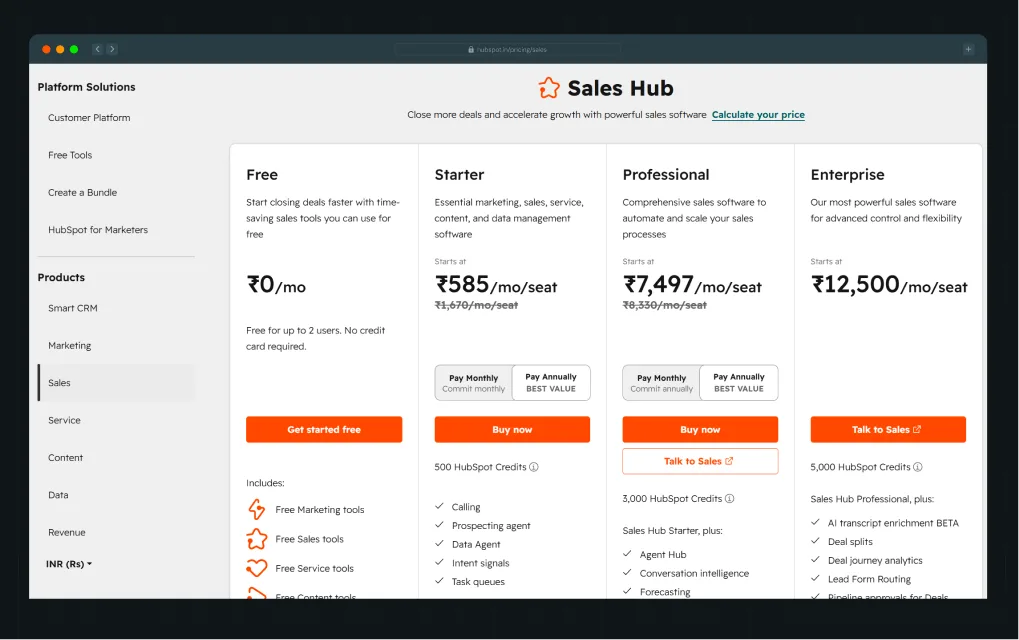
HubSpot's pricing page is an instructive example. It lays out feature tiers, shows what each plan includes, and gives buyers everything they need to self-qualify without a discovery call.
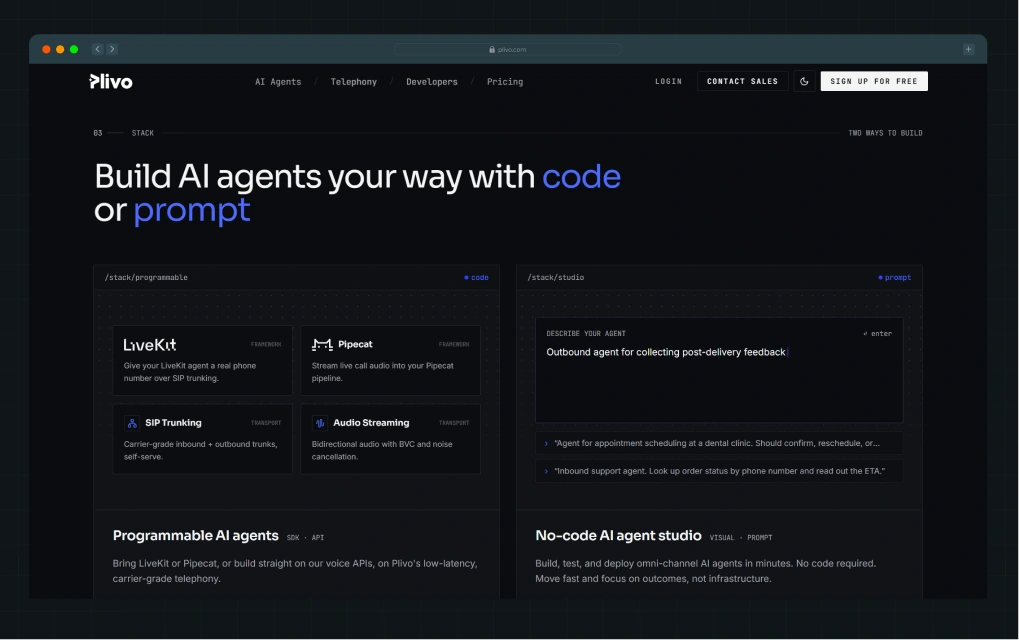
Plivo, the cloud communications platform, does the same for its developer audience, covering API documentation, integration specs, and setup expectations directly on the website so technical evaluators can form a view before any sales contact.
Product visibility builds trust faster than marketing claims
Screenshots, GIF walkthroughs, UI previews, and workflow demonstrations reduce evaluation anxiety faster than any testimonial. For example, Loom's homepage uses a product video shot from a real user's screen.
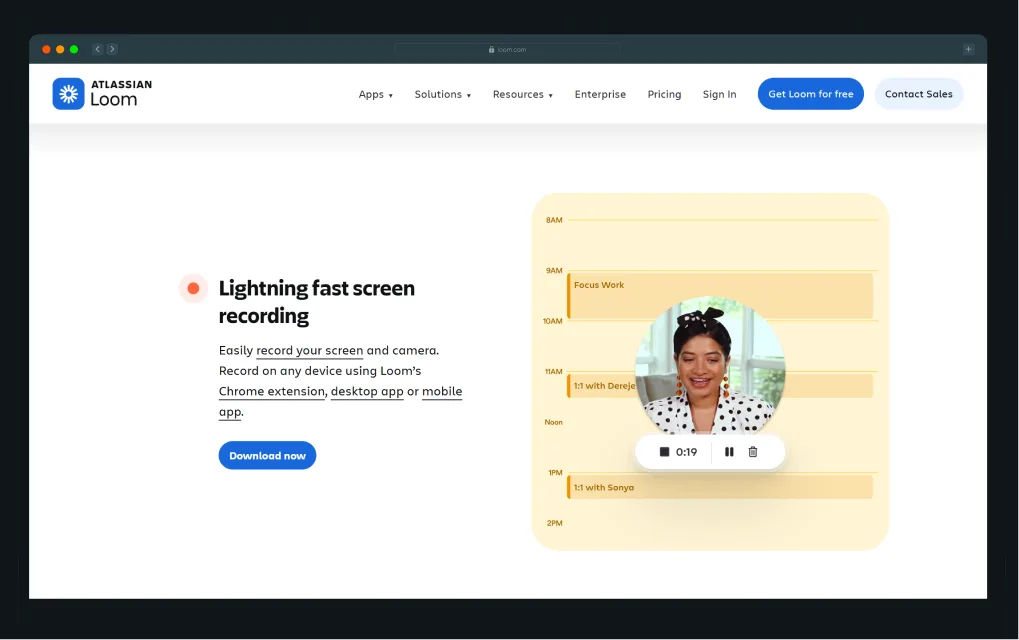
These choices tell visitors these brands are confident enough in this product to show it to you before you've given them your email.
PLG websites reduce uncertainty by helping users mentally experience the product before signing up.
How are the Best PLG SaaS Homepages Structured?
In 2026, the gap between average and elite SaaS homepages has become enormous. According to Unbounce benchmark data aggregated across 57 million conversions, the median SaaS landing page converts at just 3.8%.
Similarly, the top-performing quartile converts at 11%+, proving that homepage structure and clarity now directly shape growth outcomes in PLG SaaS.
Hero sections focus on workflows, not slogans
The best PLG heroes answer three questions within five seconds:
- What is the product?
- What problem does this solve?
- Who is it for?
Twilio’s hero section immediately explains the product category, the use case, and the target audience. The headline, “The platform for conversations in the AI era,” positions Twilio within AI-powered customer communication from the first second. The supporting copy adds operational context by explaining that the platform helps humans and AI agents coordinate conversations across channels.
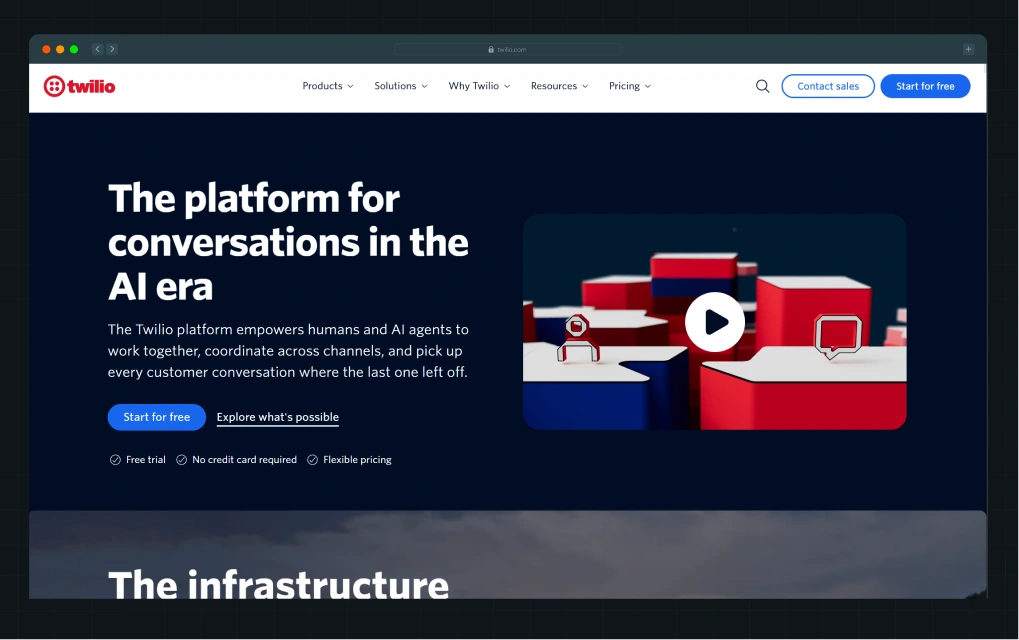
The CTA structure is also clear and intentional. “Start for free” is visually dominant, while “Explore what’s possible” supports users who are still evaluating. Trust signals like “No credit card required” and “Flexible pricing” reduce friction early and support self-serve onboarding.
Multiple competing CTAs can reduce conversion by up to 266%, so hierarchy matters.
Product sections help users understand the experience visually
Figma uses interactive walkthroughs to let visitors move through product experiences at their own pace. Progressive information reveals that where the product story unfolds as the user scrolls reduces cognitive overload and keeps visitors engaged longer.
UI storytelling, where the product interface is the hero visual rather than abstract illustration, has become the dominant pattern in top-performing SaaS sites in 2026.
A strong example of this comes from Deductive AI’s recent rebrand. Instead of explaining observability infrastructure through dense technical messaging, the team built the entire visual system around a single operational insight: “No more digging for root causes in the dark.”
As Ayush suggested in his recent LinkedIn post, the interface visuals, system flows, and product diagrams were designed to make complex telemetry and debugging workflows feel traceable, resulting in significantly higher engagement on the new site.
Strong homepage hierarchy guides users toward action naturally
The page structure that performs well across high-growth PLG companies follows a consistent sequence:
- Value proposition: What this product does and for whom
- Product understanding: A visual demonstration of the core workflow
- Workflow explanation: How this fits into the buyer's day
- Trust signals: Logos, testimonials, usage numbers
- CTA: a low-friction next step (try, explore, start)
Recruiterflow, the recruiting CRM built for agencies, structures its homepage around this hierarchy. They cover the workflow clarity early and use whitespace to reduce visual noise between sections.
Generous whitespace and deliberate section prioritization let the product story breathe rather than compete for attention.
Product-led CTAs reduce friction better than sales-led CTAs
"Book a demo" asks the visitor to commit to a conversation before they've understood the product. "Start free," "Explore template," or "See it in action" ask the visitor to take one low-risk step.
The difference in conversion psychology is significant.
For example, Instantly replaces static CTAs with interactive product experiences, encouraging users to engage with the platform immediately.
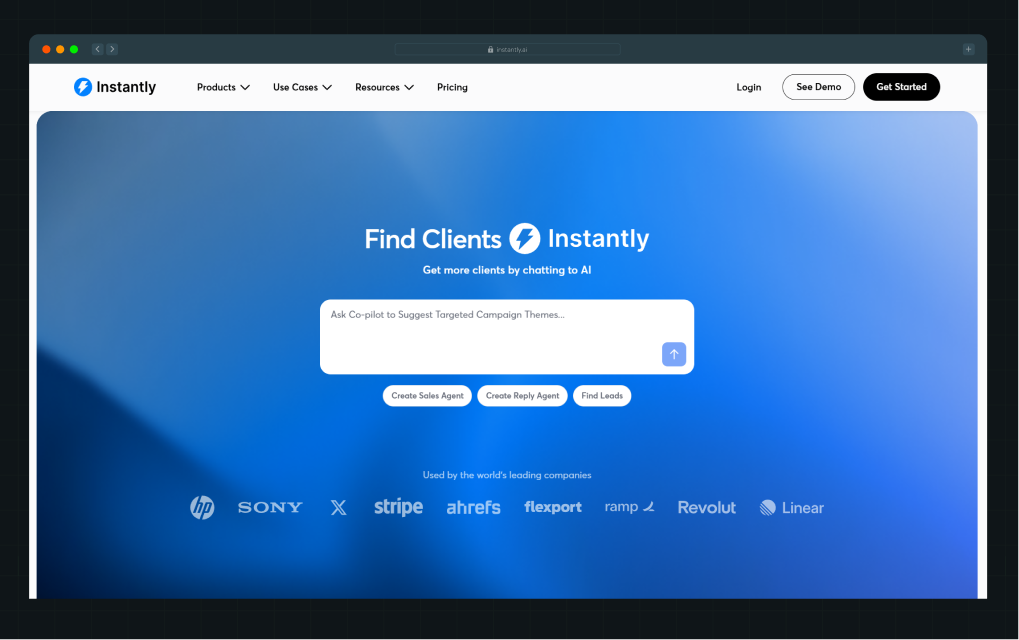
PLG CTAs support self-serve behavior because they match the buyer's actual mindset at that stage. Gartner’s 2025 B2B buying survey found that 73% of buyers actively avoid vendors that send irrelevant outreach. This highlights why low-friction CTAs like “Get started” or “See it in action” outperform demo-first experiences in the early evaluation stages.
“Many B2B buyers feel overwhelmed and frustrated by the outreach they receive from sellers and the seller’s organization. Bad prospecting actively damages relationships with potential customers,” said Robert Blaisdell, VP Analyst in the Gartner Sales Practice.
“CSOs must rethink their outreach strategy to improve engagement and deliver the experience customers demand.”
The best PLG homepages reduce the gap between curiosity and product interaction.
What B2B Website Design Decisions Reduce Friction in Self-Serve Buying?
As self-serve buying becomes the default, even small UX decisions in navigation, onboarding, and pricing now determine whether users convert or quietly drop off before ever signing up.
Navigation should mirror user workflows
Role-based navigation, use-case organization, template libraries, and integration discovery pages let visitors self-direct through the product story that's most relevant to them. A shallow information architecture, with fewer clicks to reach the right answer, matters enormously for PLG sites that see high-volume, high-intent traffic.
Asana structures its website around how different teams work, helping visitors quickly find content that matches their role. Visitors can browse dedicated pages for marketing, IT, operations, and other functions, each with tailored workflows, templates, and resources.
.webp)
From there, they can explore team-specific use cases such as sprint planning, campaign management, product launches, bug tracking, onboarding, and IT request management without having to dig through unrelated content. Its template library is also categorized by department, making it easy for prospects to jump directly to workflows that fit their needs.
Recruiterflow does the same for recruiting agency verticals. This directly affects whether a visitor self-qualifies and moves toward sign-up or bounces in search of relevance.
Signup flows should minimize interruption
OAuth login options, progressive onboarding, fewer required fields, and clear empty-state guidance are the mechanics of a frictionless signup. Each additional required field in a signup form reduces conversion. Each redirect or verification step increases the risk of abandonment.
Calendly's sign-up flow is a masterclass in reducing interruptions. It uses Google, Microsoft, or email login, provides immediate access, and includes an onboarding flow that surfaces value in the first session.
.webp)
The product does not ask users to configure everything before they experience anything.
According to UserGuiding’s State of PLG in SaaS for 2026 Report,
"The expectation has shifted toward instant, direct access: try first, account later; value now, commitment later."
This is partly because users now expect consumer-level immediacy. They want to start using a product instantly, not wait through demos, email verification loops, or complex setup flows.
If users cannot experience value quickly, they leave.
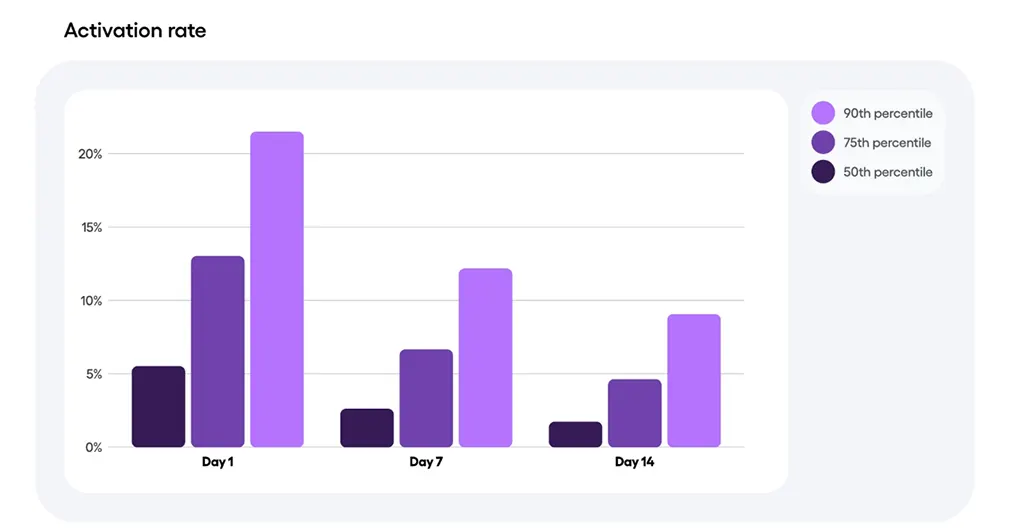
In fact, Amplitude’s 2025 Product Benchmark Report suggests that more than 98% of new users become inactive within two weeks for half of all products. The steep drop in activation rates from Day 1 to Day 14 shows how quickly engagement declines when onboarding introduces friction or delays the delivery of value.
This behavior is also shaped by how users discover products today.
Many users now enter through TikTok workflow videos, AI search recommendations, YouTube demos, or Reddit discussions. They arrive with context and intent already formed. They expect the product to work immediately.
That is why strong PLG onboarding removes unnecessary steps, reduces setup challenges, and helps users take meaningful action as quickly as possible.
Pricing pages are part of the onboarding journey
In a PLG model, the pricing page is where self-serve buyers complete their evaluation. Transparent pricing, tiered feature comparisons, implementation expectations, and clear self-qualification language all reduce the uncertainty that kills conversion.
As we saw earlier, HubSpot's pricing page lets visitors choose their role, see relevant features by tier, and understand what free versus paid access unlocks.
Interactive product experiences improve self-serve conversion
Guided walkthroughs, template libraries, sandbox demos, and onboarding previews give visitors a controlled product experience before signup. Supademo's platform is specifically built to create these interactive demo experiences, and high-growth SaaS companies increasingly embed them directly into product and use-case pages.
Small UX decisions compound significantly in self-serve acquisition funnels.
How Do PLG Websites Reduce Time-to-Value (TTV)?
Time-to-value (TTV) measures how quickly users experience meaningful product value after landing on the website or signing up.
According to OpenView Partners benchmarks, TTV should stay under 30 minutes for PLG SaaS products, with leading companies achieving TTVs of 5 to 15 minutes. The website is where the TTV clock starts, not the product dashboard.
Great PLG websites compress the learning curve
Great PLG websites reduce time-to-value fast. For example, Canva asks a simple question upfront: “What will you design today?”
Based on the answer, users enter a workflow built around presentations, social media posts, resumes, or other goals. This simple decision helped Canva cut time-to-value significantly, with many users reaching their first successful output in just 2 to 3 minutes.
The same pattern appears across top PLG products. Loom gets users to their first video in around 30 seconds. Calendly helps users create a booking link in roughly 2 minutes. Grammarly delivers visible value within seconds through live writing corrections.
The faster users experience value, the more likely they are to activate and convert. Best-in-class PLG products typically deliver time-to-value in under 5 minutes.
Users who complete onboarding are also far more likely to return. According to industry benchmarks, activated users are 38% more likely to come back after one week. Every minute removed from onboarding improves the odds of retention.
Product education is embedded into the website itself
Stripe is one of the strongest examples of this model. Its documentation, API references, sample code, and interactive testing environment allow developers to understand implementation requirements before creating an account.
The documentation itself is part of the product experience and helps users independently evaluate complexity, integrations, and use cases.
GitLab follows a similar approach through deep onboarding resources, workflow documentation, and public user journey mapping.
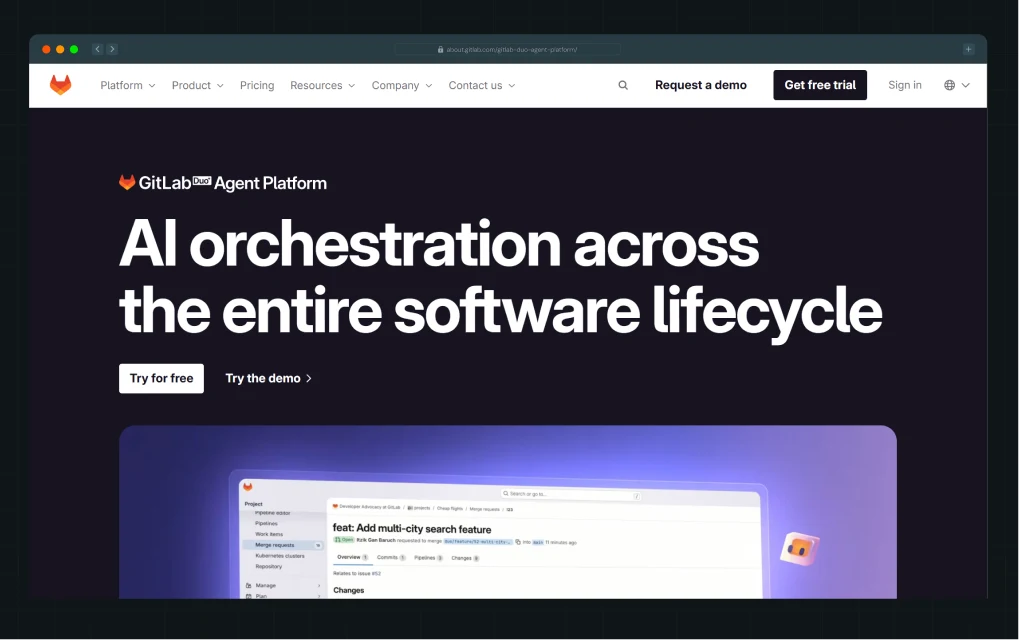
Visitors can explore deployment flows, UX processes, implementation guides, and platform capabilities directly on the website without first entering a sales cycle.
This approach reduces hesitation during evaluation. When users understand onboarding expectations, the implementation effort, and real workflows before signing up, they arrive with greater confidence and clearer intent.
Activation matters more than traffic
One of the biggest PLG challenges is the gap between signup and actual product activation. Many SaaS companies focus heavily on increasing traffic and signups while overlooking whether users ever reach meaningful value inside the product.
Growth Marketing and Product Strategy leader Oluwasemiloore Akoni shared a strong example of this problem in his LinkedIn post. Despite attracting 300,000 monthly website visitors, the product’s activation rate sat at just 1.6%. The issue was the large gap between signing up and the user’s first successful outcome.
His team redefined activation around a user’s first successful transaction. Then, they removed or delayed every onboarding step that did not directly help users reach that outcome faster.
Within three months, activation increased from 1.6% to 3.4%. Retention improved alongside it, even though the team never introduced separate retention tactics. Users simply returned because they had experienced real value early.
The example above suggests that the goal is not just to generate signups. It is to attract the right users, set the right expectations, and move people toward meaningful product adoption as quickly as possible.
Which Pages Matter Most in a PLG SaaS Website?
In PLG SaaS, every page is a conversion surface, not just a destination. The most effective websites are designed as connected intent layers, where each page answers a specific stage of the buyer journey and quietly moves users closer to activation.
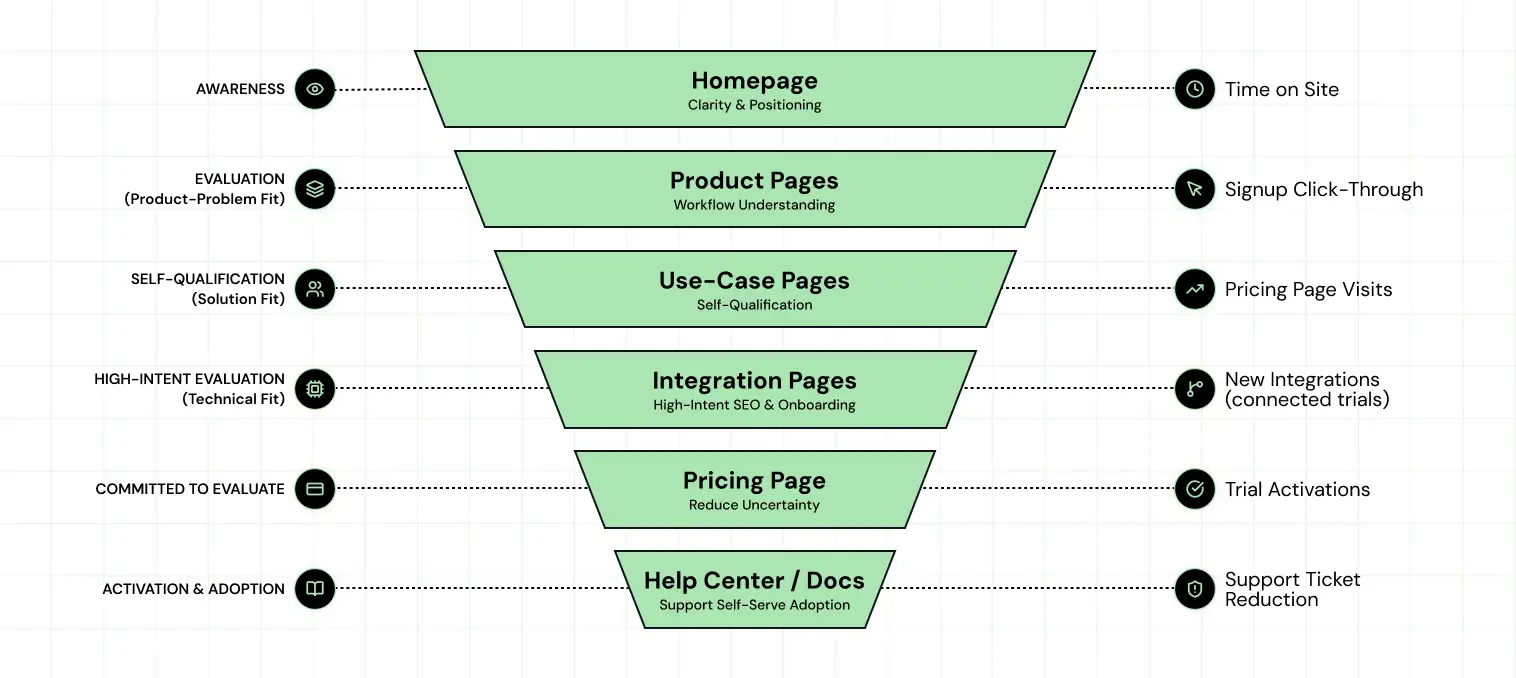
Each page in this list serves a specific stage in the self-serve buyer's journey.
- Product pages that only list features without showing workflows miss the point.
- Use-case pages that speak to every persona equally serve none of them.
- Integration pages that hide behind generic descriptions lose the high-intent, comparison-stage traffic that should convert at the highest rate.
What Common PLG Website Design Mistakes Hurt Sign-Ups?
In PLG SaaS, small website mistakes can quietly hurt sign-ups. Most of them end up confusing users rather than helping them quickly understand the product and take the next step.
- Hiding the product behind abstract branding: If your hero section features a lifestyle illustration, a motion graphic of circles, or an abstract visual metaphor (and no actual product UI), you've replaced product clarity with brand performance. Visitors who can't picture themselves using the product within the first scroll will leave before they scroll.
- Using vague messaging instead of workflow clarity: "Transforming how teams collaborate" tells a visitor nothing. "Manage engineering sprints, flag blockers, and ship faster without switching tools" tells them exactly what the product does and why it matters. The messaging hierarchy on a PLG website must flow from outcome to workflow to feature, never the reverse.
- Overloading the homepage with features: Feature-dense homepages create cognitive overload and dilute the core value proposition. Visitors don't come to your homepage to learn about all 47 features. They come to understand whether this product solves their specific problem. Every feature added above the fold is a decision a visitor must process before they can take action.
- Forcing demo calls too early: Placing a "Book a Demo" CTA as the primary or sole conversion path tells self-serve buyers that they can't evaluate your product independently. For PLG companies targeting high-volume sign-up funnels, this is a structural CAC problem. In this case, you're spending sales resources on users who could have self-served, and you're losing the ones who won't.
- Making onboarding feel complex before sign-up: If your sign-up page asks for company size, team structure, use case, and a phone number before a visitor has seen the product, you hurt sign-ups, turning it into an interview rather than a simple first step. Progressive onboarding works better because it only asks for details when they are actually needed.
A PLG website is a functional part of the product experience. It should behave like one: fast, clear, interactive, and oriented around what the user wants to accomplish.
How Do Startup and Enterprise SaaS Companies Approach PLG Design Differently?
In simple terms, startups focus on getting users to try the product as fast as possible, while enterprises focus on building trust, clarity, and support for complex buying decisions.
Here’s how.
Startup PLG websites prioritize speed and activation
For a web design agency serving startups in the PLG space, the brief is almost always the same. That is, to build something lean that gets users to activation quickly.
These sites usually focus on one main action, like signing up, starting a trial, or exploring a template. The messaging is simple and often tested and changed quickly. The navigation stays minimal, and the product story focuses on one key use case instead of many.
At this stage, getting users to sign up quickly matters more than adding depth or complexity. The website should be easy to build, easy to change, and quick to improve, so even a small team can update it without needing engineers.
Enterprise PLG websites prioritize scalability and trust
A web design agency for enterprises building PLG sites faces a different challenge:
How to maintain self-serve simplicity while also supporting multi-stakeholder evaluation, governance requirements, and integration complexity?
Layered navigation, security and compliance pages, deep integration documentation, and scalable design systems become essential as PLG companies move upmarket.
HubSpot and Webflow both demonstrate this balance well. HubSpot maintains a self-serve signup path while simultaneously offering enterprise-grade documentation, partner ecosystem pages, and stakeholder-specific product tours. Webflow includes both a "start building" path and an enterprise contact flow without making either feel like an afterthought.
According to a 2025 analysis from T2D3, companies with established self-serve motions often exceed $300k in revenue per employee, compared with under $100k for companies without them.
Enterprise PLG design doesn’t remove self-serve. It builds on it and supports more complex buying needs.
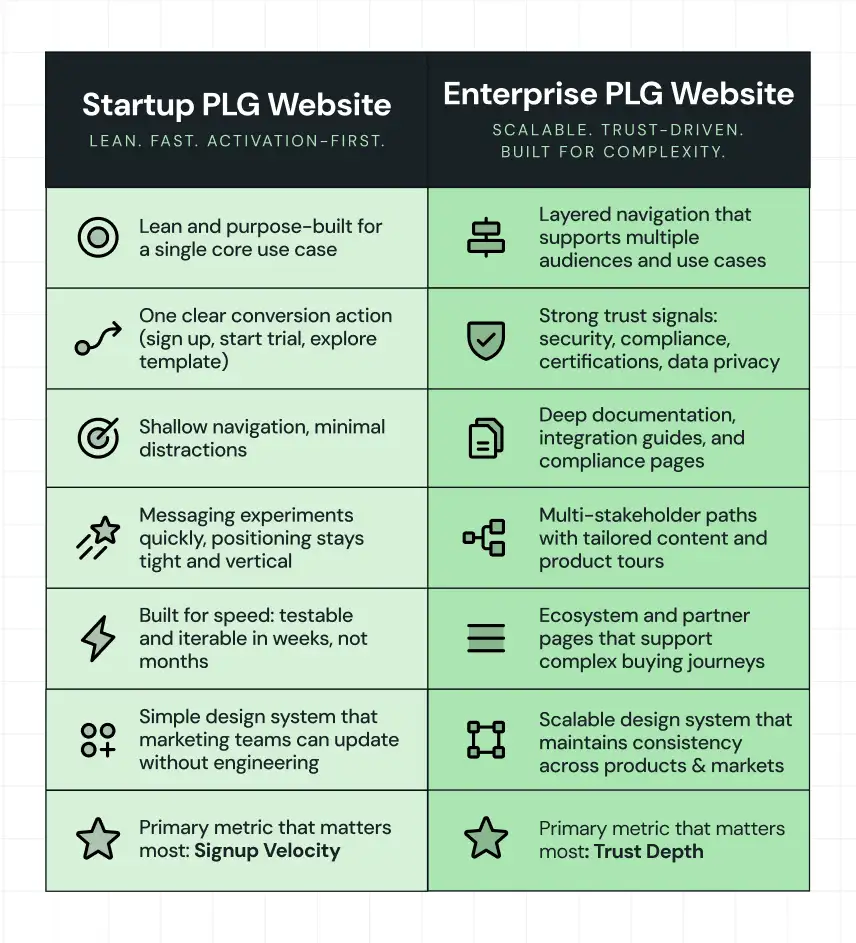
As PLG companies scale, the website must support both self-serve simplicity and enterprise complexity, and the design system holds them together.
When Should SaaS Teams Work With a PLG Web Design Agency Like ThunderClap?
A specialized PLG web design agency like ThunderClap becomes valuable when your website needs to do more than explain your product. If self-serve buyers need to understand workflows, evaluate features, and move toward activation without sales involvement, your website needs a different approach than a traditional marketing site.
SaaS teams usually reach this point when:
- Their messaging does not clearly communicate the product value to self-serve buyers
- Visitors struggle to understand the product without booking a demo
- Conversion rates have plateaued despite steady traffic
- The website lacks product-led elements like interactive demos, onboarding flows, or clear user paths
- Marketing, product, and sales teams are not aligned around the website experience
This is where specialized PLG agencies bring value. They combine messaging strategy, UX design, CRO thinking, and product storytelling to create websites built around activation and adoption.
A successful PLG website brings together messaging, UX, product education, and website strategy to help users reach value faster. For SaaS teams looking to turn their website into a self-serve growth channel, working with a specialized partner can help bridge the gap between product strategy and website execution.
At ThunderClap, we help B2B SaaS companies build conversion-focused websites that combine buyer research, PLG messaging, scalable design systems, and product-led experiences.
{{ctaBlock}}
FAQs
1. What is a self-serve B2B website?
A self-serve B2B website lets buyers research, evaluate, and sign up for a product without talking to a sales rep. It gives visitors transparent pricing, visible product demos, and a frictionless signup path so they can make a purchase decision independently.
2. Why are self-serve websites important for B2B companies?
Self-serve websites reduce customer acquisition costs and speed up the buying cycle. Since 75% of B2B buyers prefer a rep-free sales experience, a website that supports independent evaluation converts more of your traffic into active users without proportionally scaling your sales team.
3. What is time-to-value (TTV) in PLG websites?
Time-to-value is how quickly a user experiences meaningful product value after their first visit or sign-up. For high-performing PLG products, your TTV should be under 30 minutes, with top companies hitting 5 to 15 minutes. Your website directly influences TTV by setting expectations, simplifying onboarding, and showing product value before the user signs up.
4. How do PLG websites improve conversion rates?
PLG websites improve conversion by showing the product early, reducing signup friction, using workflow-oriented messaging, and giving buyers everything they need to self-qualify. PLG strategies like interactive demos and contextual upgrade prompts produce conversion rates up to 3x higher than purely sales-driven funnels.
5. What is the best website design for PLG-led SaaS businesses?
The best website design approach for PLG-led SaaS businesses helps users understand, evaluate, and experience the product independently. It combines clear messaging, product-led UX, interactive demos, and conversion-focused design. For SaaS companies looking for a specialized partner, ThunderClap helps B2B SaaS teams build PLG-focused websites that connect product strategy with user experience. Its approach combines messaging, UX, CRO, and product storytelling to create websites designed around activation and self-serve growth.



.webp)
Browse Similar Articles




Leading 5 SaaS Branding Agencies in Florida (That Actually Understand SaaS Growth)

.svg)
9-Step Website Copy Audit Checklist to Improve Conversions (Examples from Top B2B Brands)

.webp)

How to Choose the Right Fintech Web Development Company for Your Business
Top B2B Website Design Principles That Turn Visitors into Qualified Leads

%20Audit%20That%20Actually%20Improves%20Revenue.webp)
How to Do a Conversion Rate Optimization (CRO) Audit That Actually Improves Revenue
Web Design Agency vs. Freelancer vs. In-House: What Actually Works in 2026
5 CRO Agencies in London and How to Choose the Best CRO Agency for Your Business

The Ultimate Fintech B2B Positioning Guide for 2026 (That Actually Drives Conversions)
Mapping the B2B Buyer Journey to Improve Conversions Across Every Touchpoint
.webp)
7 Best Website Maintenance Companies in India for Growth-Led B2B Teams (2026)

.webp)
8 Best Healthcare Website Design Agencies for HIPAA-Compliant Sites in 2026


How to Find the Best Web Design Company in Houston, Texas for B2B Brands (6 Best Picks)
Positioning That Wins: How to Make Complex B2B Products Clear and Compelling
The Step-by-Step Website Redesign Process B2B Teams Use to Increase Conversions (Without Killing SEO and Pipeline)

7 Best Video Production Agencies for SaaS Product Walkthroughs and Feature Videos
How to Choose the Best B2B Website Maintenance Company: 9 Questions to Ask Before You Hire One


How to Choose a Web Design Company in San Francisco in 2026 (with Examples)

10 Best Web Design Companies in Florida in 2026 and How to Choose the Right One
How to Use Brand Storytelling on Your Website to Close More B2B Deals and Build Buyer Trust
SaaS CRO Best Practices: What High-Growth Brands Do Differently to Win Conversions

How a Rebranding Agency Can Redefine Your B2B SaaS Identity and Boost Pipeline

B2B Marketing Trends in 2026 That Directly Influence Pipeline and Revenue
Top 7 Video Marketing Agencies Driving B2B SaaS Brand Awareness in 2026
Why Partnering with a B2B Brand Positioning Agency Accelerates Market Differentiation

The Complete Website Redesign Checklist for B2B SaaS Teams Ready to Scale
.avif)
10 Best Webflow Development Agencies in India for 2026 (In-Depth Review)

10 Product Marketing Companies Powering the Fastest-Growing SaaS Brands in 2026
Website Copywriting Services vs In-House: What's Right for Your Business?

How to Choose a Marketing Agency That Understands B2B SaaS Growth Metrics


How to Choose a Video Marketing Agency That Understands B2B Storytelling
Outsourcing Web Design: Cost-Benefit Analysis for Mid-Market & Enterprise Brands

From Leads to Lifetime Value: How Growth Marketing Agencies Scale SaaS Revenue
Build a B2B Website Strategy That Aligns with Sales and Marketing Goals
Webflow vs WordPress: Which Platform Is Better for Your Business Website in 2026?
Fintech Web Design That Builds Trust: 8 UX Principles Every Fintech Site Needs
Optimizing for Intent: How B2B Website Messaging and UX Changes Help Capture Top-Funnel Buyers

12 Best B2B Web Development Agencies in the US to Build Scalable Websites

From Audit to Action: 8-Step Process to Optimize Your B2B Website Strategy for 2026 Buyers
How to Design a High-Converting Landing Page from Scratch (2026 Edition)
From Click to Customer: Proven Landing Page Conversion Optimization Techniques

How to Write Website Copy That Converts: A Step-by-Step Guide for 2026

How to Optimize a Landing Page for Maximum ROI: A Step-by-Step Breakdown


AI Landing Pages That Convert: 7 Design Principles Every AI Platform Should Follow
From Traffic to Pipeline: B2B Website Growth Strategy for Scaling Teams
B2B Website Optimization Strategy: Speed, UX, SEO, and CRO in One Playbook




Interested in seeing what we can do for your website?



.webp)
